
Skip to product information
1 of 7

My Store

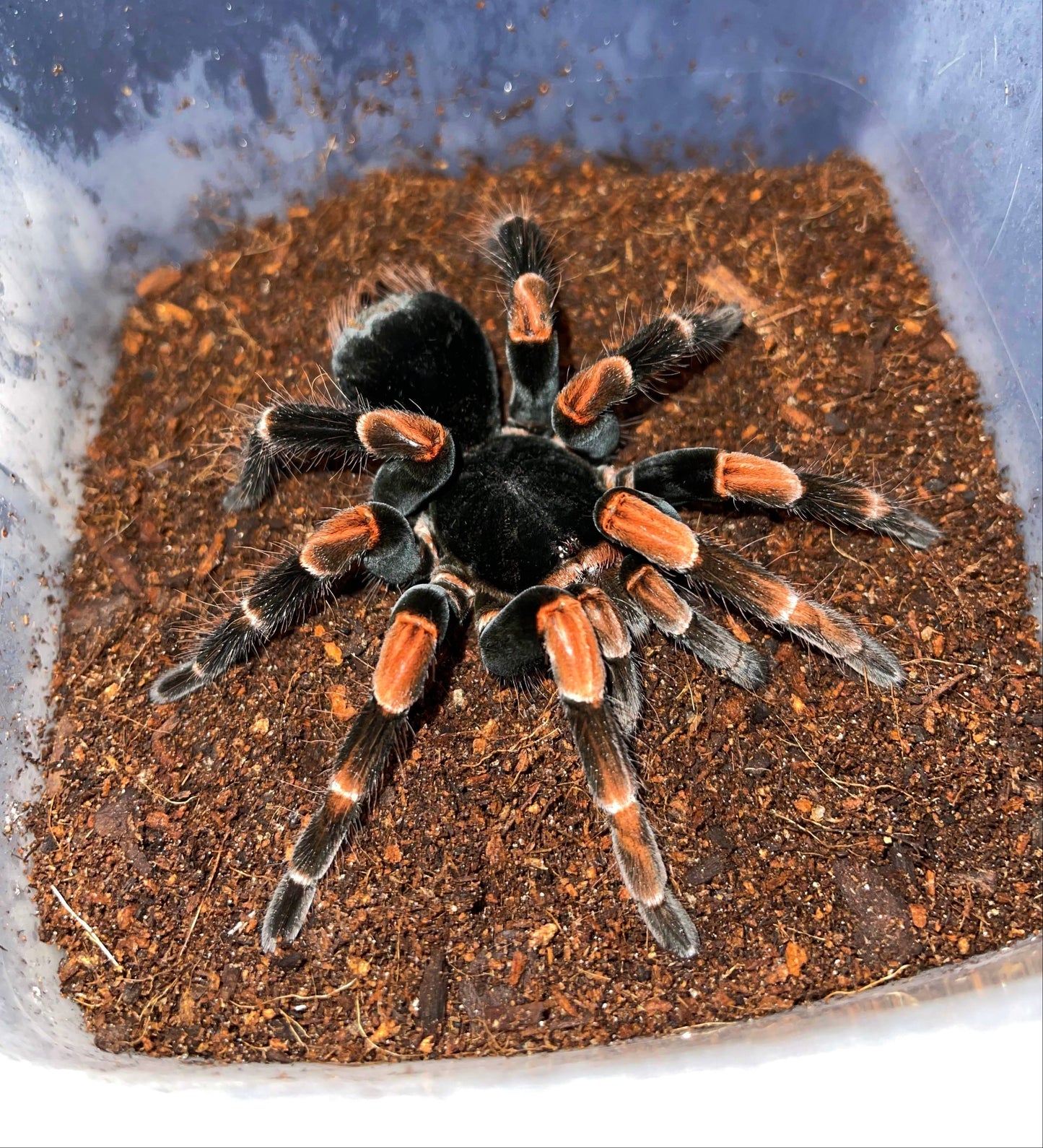
Abdomegaphobema mesomelas - Costa Rican Red Leg - For Sale

Abdomegaphobema mesomelas - Costa Rican Red Leg - For Sale

Regular price $250.00
Regular price Sale price $250.00
Sale Sold out
Shipping calculated at checkout.
Size and Sex

Abdomegaphobema mesomelas – Costa Rican Red Leg

A Rare Jewel From Costa Rica’s Cloud Forests

The Costa Rican Red Leg (Abdomegaphobema mesomelas) is one of those tarantulas that becomes increasingly impressive with every molt. Mature specimens develop a deep velvet-black body contrasted by brilliant red-to-orange coloration across the legs, creating the dramatic appearance responsible for its famous common name. Native to Costa Rica, this uncommon New World terrestrial comes from cool, wet upland forest habitat and remains considerably harder to find in U.S. collections than most commonly available terrestrial species. 

A Species With Serious Collector Appeal

For longtime keepers, much of the appeal of A. mesomelas comes from its scarcity. This isn’t another commonly produced red-kneed terrestrial that appears on availability lists every month. Captive specimens have historically been considerably harder to obtain, making established females particularly desirable for collectors interested in uncommon Central American species.

Beautiful, But Not a Tarantula I Recommend Handling

While this is a New World species, I would not choose the Costa Rican Redleg specifically for handling. Younger specimens can be nervous and defensive when disturbed, and like other theraphosines, the species possesses urticating setae. Give her a secure enclosure and allow her to establish herself; the payoff is an unusual terrestrial that can become an incredible centerpiece animal without needing constant interaction. 

Care That Reflects Where This Species Actually Comes From

The Costa Rican Redleg should not be maintained exactly like an arid Aphonopelma or Grammostola. Its natural environment includes cool, wet upland forest, so I recommend temperatures around 65–75°F, moisture retained in the deeper substrate, and strong ventilation. The substrate should never become swampy or stagnant. A deep terrestrial setup with a secure cork-bark retreat, water dish, and good airflow provides a much more appropriate long-term environment.

View full details
WESTSIDE TARANTULAS

Species Profile

Everything You Need To Know At A Glance.
Experience Level
Intermediate
Temperament
Confident & Defensive
Type
Terrestrial / New World
DLS
Adult Size
6-8” DLS
Country of Origin
Costa Rica
Life Span
♀20-25+ Years

Care & Husbandry Guide

🏠 Enclosure & Substrate

Provide a terrestrial enclosure with generous floor space and several inches of compactable, moisture-retentive substrate. A soil-based tarantula mixture with a cork-bark hide works well and allows the animal to create or modify its own retreat. Keep climbing height relatively low because this is a robust, heavy-bodied terrestrial. Prioritize deep substrate, a secure hide, good ventilation, and usable ground space rather than vertical enclosure height.

🌡️ Temperature & Humidity

Keep this cool-climate species around 65–75°F and avoid prolonged high temperatures. Maintain moisture within the lower substrate while allowing adequate airflow across the enclosure; the goal is moisture without swampy conditions. A drainage layer can be useful in larger setups, particularly if it helps prevent saturated substrate. Strong ventilation is important because cool, moist conditions should never become stagnant. Its natural habitat includes wet upland/cloud-forest environments cooler than Costa Rica’s lowlands.

 🍽️ Feeding & Water 

Offer appropriately sized crickets, roaches, or similar feeders approximately once a week for juveniles. Larger females can receive a substantial meal every 7–14 days depending on body condition and appetite. This species can display an impressive feeding response, something you’ve specifically observed with your females. Keep a clean water dish available at all times and remove uneaten prey when the animal enters premolt.

🕷️ Species-Specific Care 

Abdomegaphobema mesomelas is a rare Costa Rican terrestrial adapted to cool, moist upland forest environments. Unlike many terrestrial New World species that tolerate predominantly dry conditions, the Costa Rican Redleg benefits from consistent moisture deeper within its substrate while still requiring excellent ventilation. Provide a secure ground-level retreat, minimize unnecessary disturbance, and expect juveniles to be more nervous or defensive than established adults. This is best treated as a display species rather than a handling tarantula. Field observations have documented the species occupying retreats in wet, cool upland forest.