


Westside Tarantulas
Acanthoscurria maga - Molten Ruby Bird-Eater - Female For Sale
Acanthoscurria maga - Molten Ruby Bird-Eater - Female For Sale
Couldn't load pickup availability
Acanthoscurria maga – Molten Ruby Bird-Eater
A Historic First for U.S. Collectors
This is not simply another rare Acanthoscurria. These Acanthoscurria maga represent specimens from the first-ever import of this species into the United States, giving American collectors access to a tarantula that has historically been virtually absent from the U.S. hobby. For collectors who specifically seek species with genuine scarcity, unusual provenance, and the potential to become important foundation animals within the hobby, the Molten Ruby Bird-Eater is an opportunity that does not come around often.
The Largest A. maga Currently Available in the United States
What makes this offering even more exceptional is the size. These are not tiny, delicate slings from that original import. These are the largest A. maga specimens currently available in the U.S., giving collectors the opportunity to skip much of the early developmental stage and acquire a substantially established example of an extraordinarily difficult-to-source species. When dealing with something this scarce, established size matters—and specimens of this caliber simply have not been readily available domestically.
A Molten Ruby Color Palette
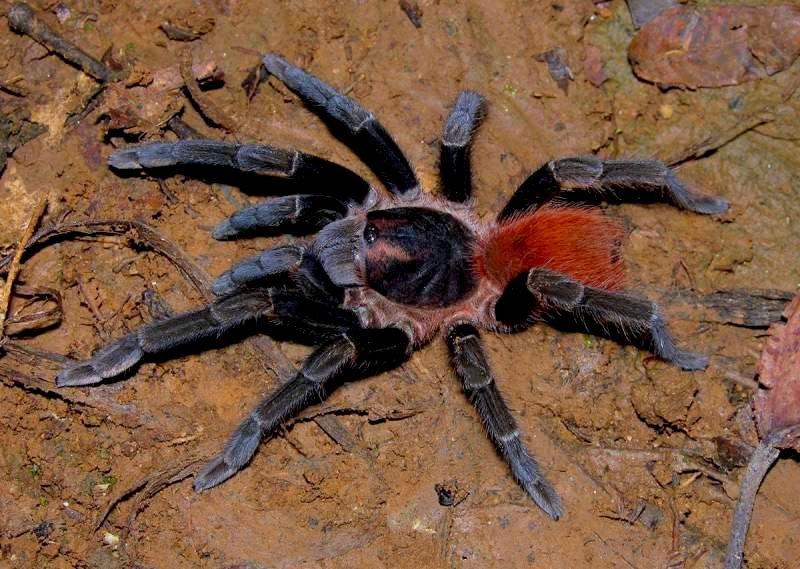
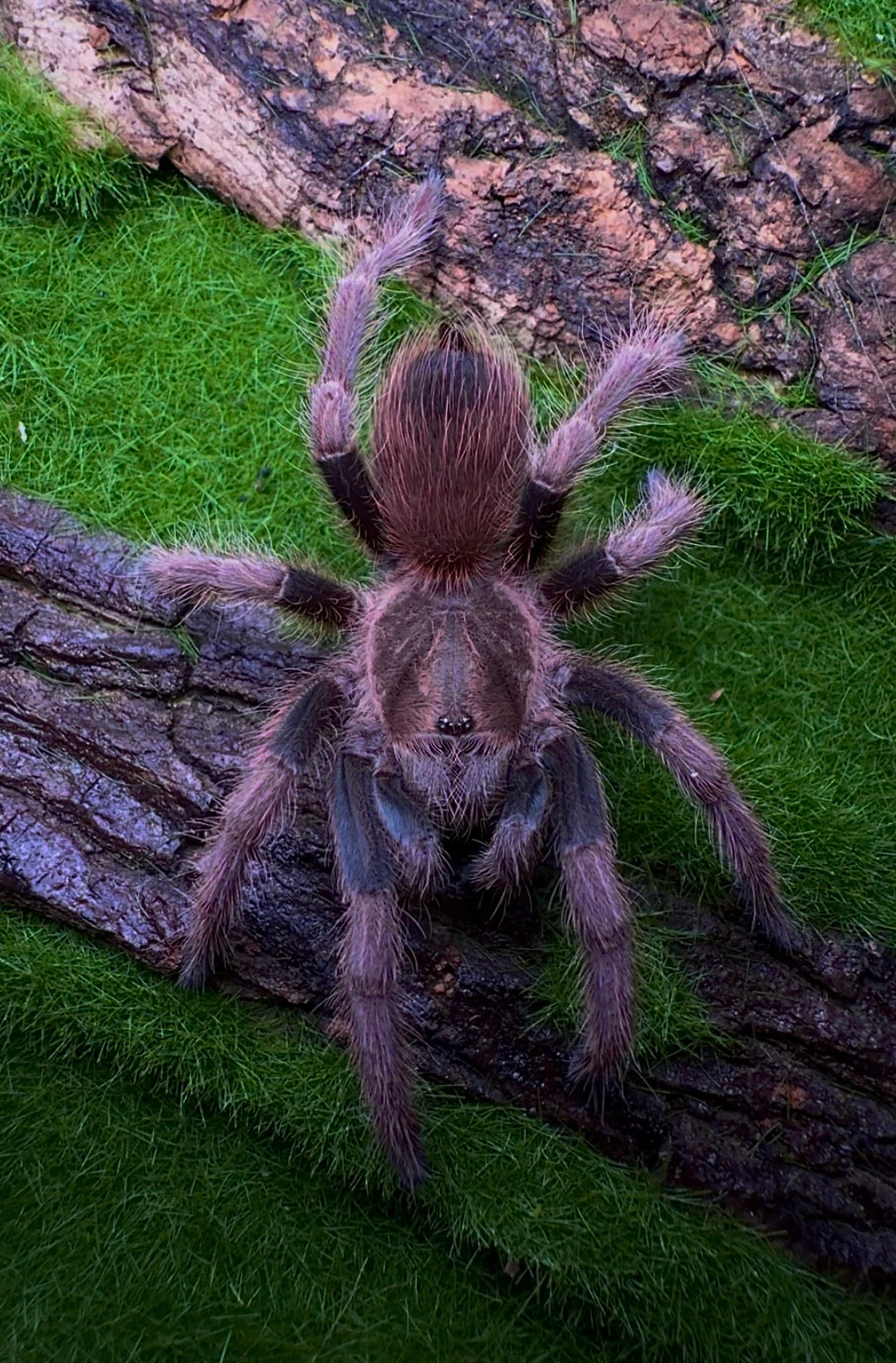
The name Molten Ruby Bird-Eater perfectly captures what makes this species visually special. Rather than the stark black-and-white contrast associated with species such as A. geniculata, A. maga develops a much warmer appearance dominated by deep burgundy, reddish-brown, copper, and ruby tones. Under the right lighting, those colors produce a rich molten appearance across the legs and body that gives this species an identity completely its own.
An Acanthoscurria Almost Nobody Has
Acanthoscurria contains several extremely popular species, but A. maga occupies an entirely different category of rarity in American collections. Its accepted distribution is within the Lesser Antilles, including St. Lucia, Dominica, and Martinique, rather than Brazil where many familiar members of the genus originate. That unusual geographic origin combined with its extremely limited presence in U.S. collections makes this a particularly exciting acquisition for serious Acanthoscurria collectors.
Established Specimens With Serious Breeding Potential
The significance of this import goes beyond owning something rare. With so few established A. maga currently represented in the country, specimens from this original group could become particularly important as the species begins establishing itself within U.S. captive collections. For breeders and advanced collectors, that makes acquiring a well-started specimen especially compelling—you are getting into this species at a point when very few other keepers in the country have had the opportunity to do the same.
Big Appetite, Big Personality
Like you would expect from an Acanthoscurria, these are robust terrestrial tarantulas with an impressive feeding response and plenty of presence. They should be provided with substantial substrate, a secure hide, and enough floor space to comfortably establish themselves. Their combination of rarity, coloration, feeding response, and substantial adult build makes them excellent display animals, although their defensive capabilities and urticating hairs mean I recommend appreciating them as display specimens rather than handling animals.
Not Just Rare — Historically Significant
There are plenty of tarantulas marketed as “rare.” A. maga is different. These animals come directly from the first group ever imported into the United States, and the specimens being offered here are already the largest examples currently available domestically. Once animals from this founding import become dispersed into private collections and future captive-bred generations eventually become available, that distinction can never be recreated.
For the collector who wants something genuinely unusual—not simply another color form or commonly imported species—Acanthoscurria maga is an opportunity to acquire an established specimen from the very beginning of this species’ history within the U.S. hobby.
Share


Species Profile
Care & Husbandry Guide
🏠 Enclosure & Substrate
Provide a terrestrial enclosure with substantially more floor space than height. Use several inches of compactable, moisture-retentive substrate and include cork bark or another secure ground-level hide. Give juveniles enough depth to excavate and modify their retreat. As with other large-bodied terrestrial tarantulas, keep climbing height limited to reduce the risk of injury from a fall.
🌡️ Temperature & Humidity
Maintain comfortable room temperatures around 72–78°F. Because this species originates from the tropical Lesser Antilles, I would maintain some moisture in the deeper substrate rather than keeping the enclosure completely bone-dry, while still providing strong ventilation. Allow the upper surface to partially dry between watering and avoid stagnant or waterlogged conditions. The species’ documented range includes St. Lucia, Dominica, and Martinique.
🍽️ Feeding & Water
Offer appropriately sized crickets, roaches, or similar feeders approximately once a week for growing juveniles. Larger specimens can receive a substantial meal every 7–14 days depending on appetite and abdomen condition. Expect a strong feeding response, so use care during feeding and enclosure maintenance. Keep a clean water dish available at all times and remove uneaten prey when the tarantula enters premolt.
🕷️ Species-Specific Care
Acanthoscurria maga, the Molten Ruby Bird-Eater, is an exceptionally uncommon Caribbean Acanthoscurria prized for its rich reddish-burgundy coloration and robust, heavy-bodied appearance. This New World terrestrial should be maintained as a display species with plenty of substrate and a secure ground-level retreat. Like other Acanthoscurria, expect a powerful feeding response and the possibility of urticating hairs when disturbed. Its rarity in U.S. collections makes established specimens particularly appealing for collectors looking beyond the more commonly available members of the genus.