
Westside Tarantulas
Anqasha sp. Blue - Majestic Blue Tiger - Extremely Rare!
Couldn't load pickup availability
The Majestic Blue Tiger! (Anqasha sp. Blue)
A Beginner Friendly Blue Species!
Meet the hobby’s most jaw-dropping newcomer! The Majestic Blue Tiger (Anqasha sp. Blue)! Hailing from the cool, high-elevation provinces of the Andes, this incredibly rare dwarf species is quickly winning hearts with its unique beauty and exceptional temperament.
Vibrant Blue Beauty!
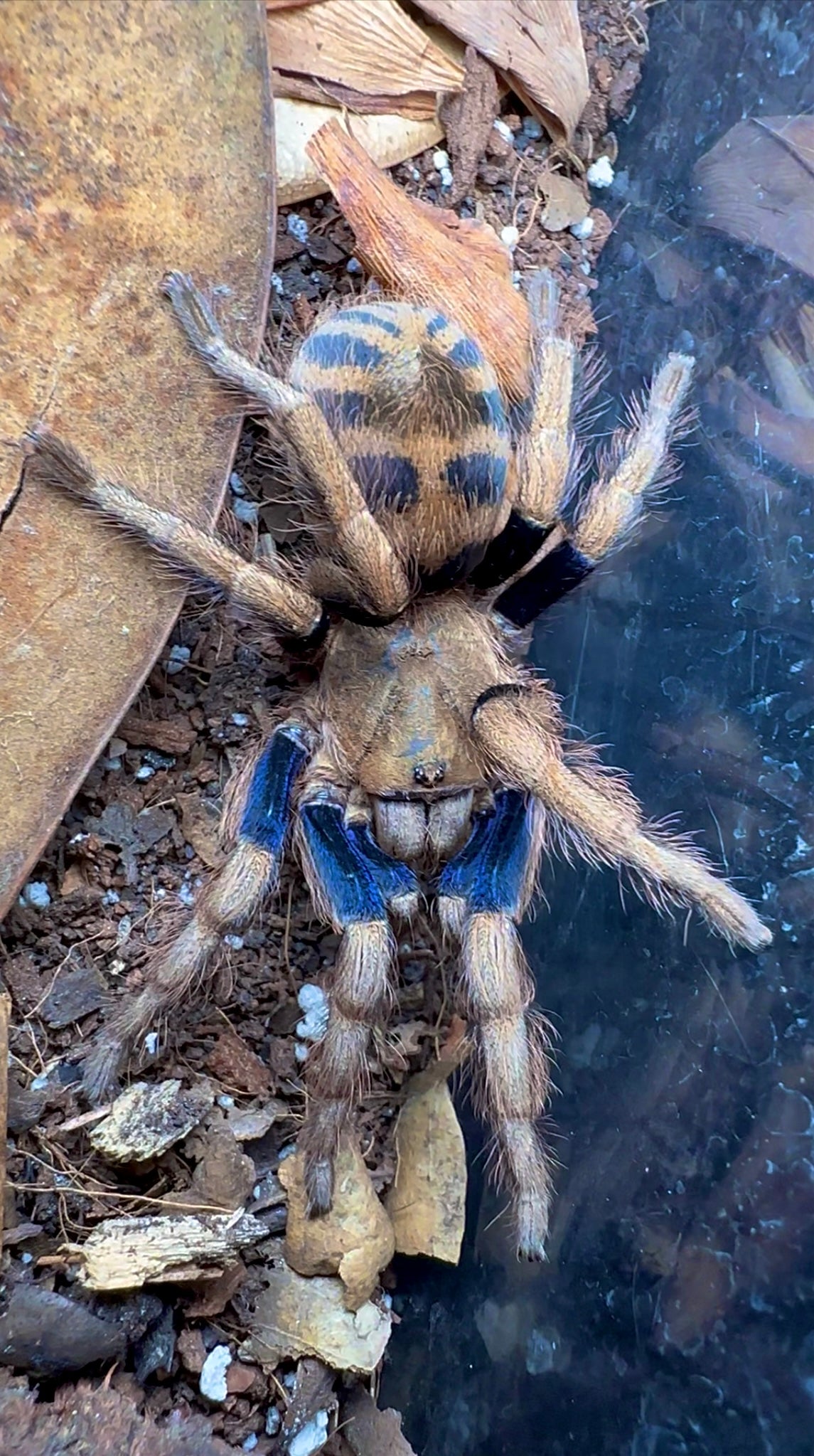
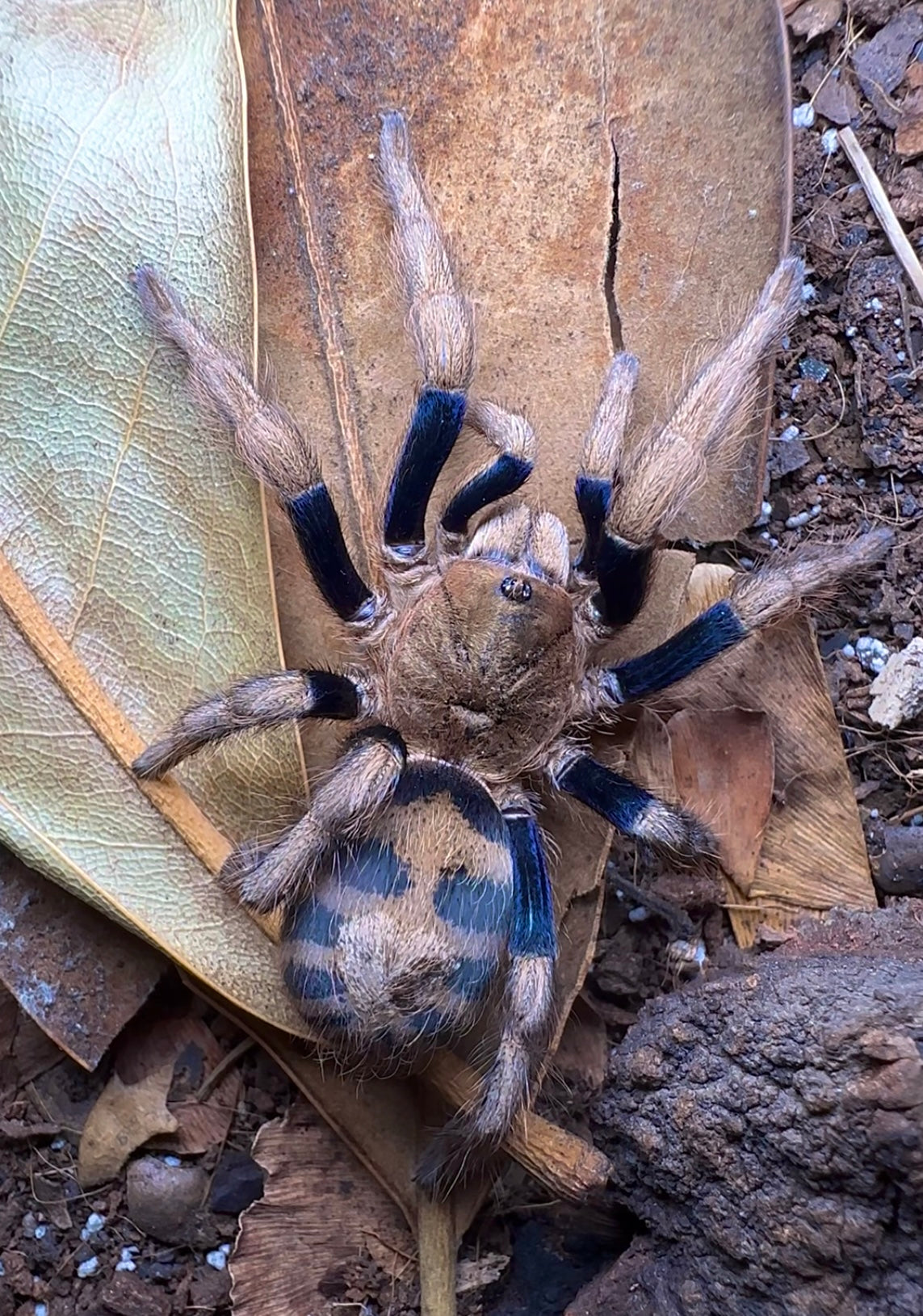
The Anqasha sp. Blue is practically a living gemstone. This tarantula showcases brilliant metallic blue femurs, light blue tiger-striped markings across its abdomen, and a creamy orange to golden carapace, crowned by a distinctive heart-shaped patch of urticating setae. The contrast of its vivid blues against warm, earthy tones makes it look almost unreal, almost as if someone drew a picture of their dream tarantula!
A Docile Dwarf Species!
Despite its flashy appearance, this species is incredibly laid-back. Showcasing a calm, slow-moving, and curious nature, the Majestic Blue Tiger is an ideal choice for keepers who love display tarantulas. Impressively, they never kick hairs or show defensive behavior, making them both a beginner-friendly and veteran-worthy addition. While slings may burrow occasionally, adults are surprisingly bold, often lounging out on the surface like a miniature Grammostola. As a true dwarf species, you can expect Anqasha sp. Blue to reach 4+ inches DLS. Surprisingly, slings tend to be fast growers and will molt at least once a month up until that 1.5 to 2 inch range! Unlike most beautifully blue tarantulas, the Majestic Blue Tiger is very susceptible to overheating. This is due to the harsh, high elevation, terrain that the spider is native to! You see this spider will thrive in temps as low as 45°F and as high as 75°F any warmer than that and they will overheat. That said it’s important to keep the species on the cooler side. I recommend nothing warmer than low 70°F.
Extremely docile, non-skittish, and very tolerant of handling!
What makes this species a standout isn’t just its vivid coloration or gentle personality — it’s the fact that it may be the only known tarantula in its entire genus, Anqasha. Its harsh evolutionary pressures has forced this tarantula to evolve into something unlike anything else seen in the hobby. Plus its combination of metallic blues and pumpkin-like tones puts it in a class of its own. With so few in captivity and so much more to uncover about the Majestic Blue Tiger, owning one isn’t just about adding another spider to your shelf — it’s about being part of a groundbreaking/historical moment in the tarantula hobby!
Share

Species Profile
Care & Husbandry Guide
🏠 Enclosure & Substrate
Provide a terrestrial enclosure with adequate floor space and compactable substrate. I would maintain approximately half of the substrate slightly moist and the other half somewhat drier, matching the husbandry already established in your collection. Give slings enough substrate to construct a shallow burrow if desired; this behavior has also been observed by other keepers. As specimens mature, they may become substantially more surface-oriented, so a secure ground-level hide and usable floor space become increasingly important.
🌡️ Temperature & Humidity
Temperature control is especially important for this species. Your established range of approximately 50–75°F should remain in the guide, with the low 70s or cooler preferred and temperatures above 75°F avoided. Rather than chasing a specific humidity percentage, maintain roughly half of the substrate with some moisture while allowing the opposite portion to remain comparatively dry, providing the tarantula with a moisture gradient and good ventilation. Its Peruvian high-elevation origin is independently consistent with cooler husbandry than many tropical species.
🍽️ Feeding & Water
Offer slings and growing juveniles appropriately sized crickets or roaches approximately once a week, adjusting according to abdomen condition and appetite. Your experience with this species shows surprisingly rapid early development, with young specimens capable of molting frequently until roughly the 1.5–2” range. Keep clean water available to larger specimens and lightly maintain moisture in part of the substrate rather than allowing the entire enclosure to become completely dry.
🕷️ Species-Specific Care
The Majestic Blue Tiger is an exceptionally rare high-elevation Andean terrestrial that behaves very differently from many brightly colored tarantulas. Slings may construct shallow burrows, but your established juveniles and adults become increasingly surface-oriented and visible as they mature. The most important consideration with this species is temperature: its high-elevation origin makes excessive heat a much greater concern than with typical tropical tarantulas. Once established under cool, stable conditions, its calm demeanor, striking coloration, and unusual natural history make it one of the most distinctive New World species in the collection.