
Skip to product information
1 of 3

Westside Tarantulas

Aphonopelma Marxi (Sky Island C.F.) - The American Blue Fuego - For sale

Aphonopelma Marxi (Sky Island C.F.) - The American Blue Fuego - For sale

Regular price $275.00
Regular price Sale price $275.00
Sale Sold out
Shipping calculated at checkout.
Size and Sex

The American Blue Fuego - Aphonopelma marxi

The Poor man’s Mexican Jade Fuego 

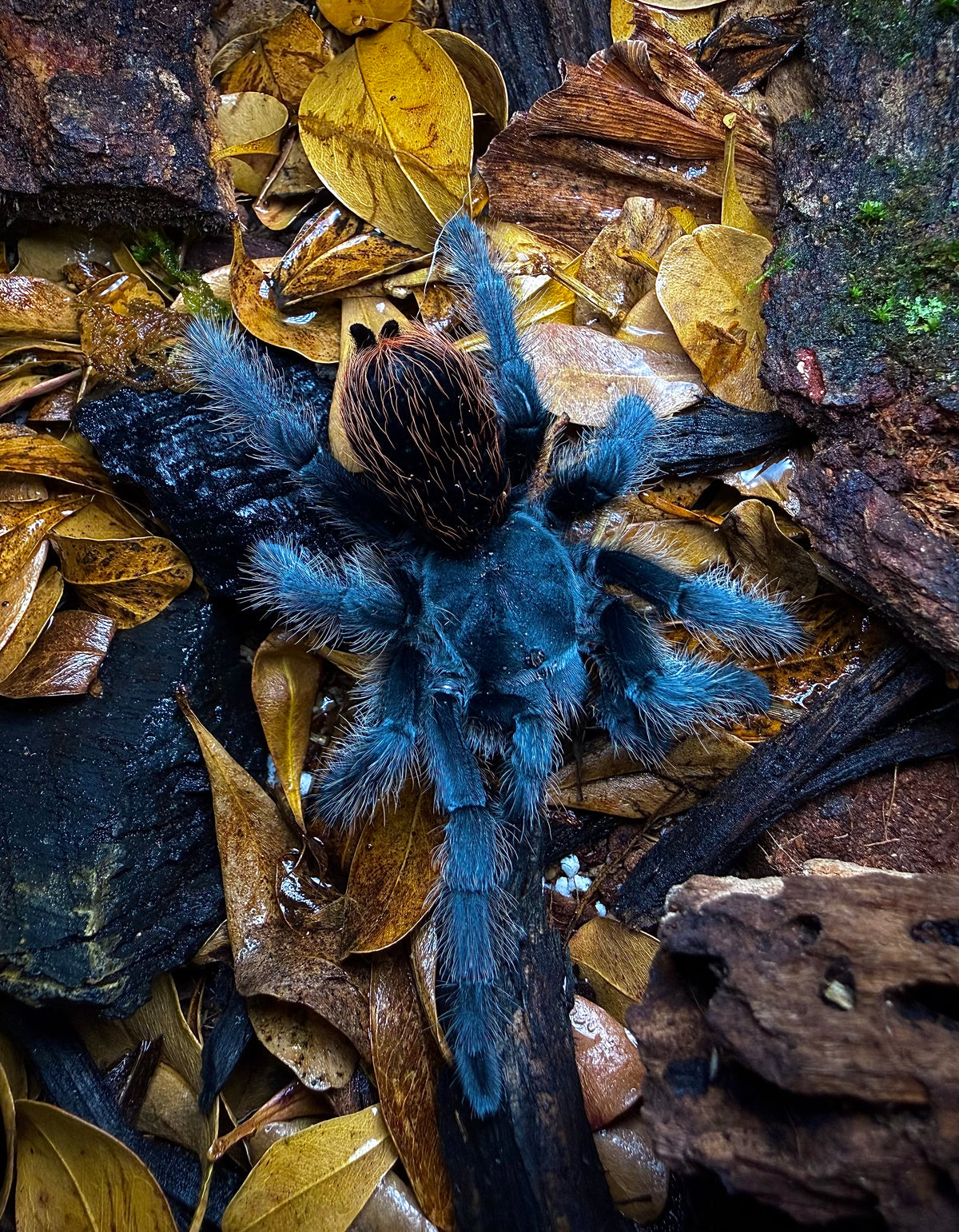
Introducing the American Blue Fuego — a breathtaking terrestrial species that radiates smoldering intensity with its Light Blue Body and smoldering red abdomen. Much like the Mexican Jade Fuego, Aphonopelma Marxi will raise its its bright orange abdomen in the air to ward off predators, This unique defensive mechanism is only seen in the American and Mexican Fuego species. Native to the arid highlands of the American Southwest, Aphonopelma marxi is one of the most underrated and visually striking Aphonopelmas native to the United States. With its compact build, calm demeanor, and shimmering hues, it offers an exceptional alternative to the nearly impossible-to-acquire Aphonopelma moorea (aka Mexican Jade Fuego), at a fraction of the rarity barrier.

Docile, Durable and Beginner Friendly 

This species is incredibly docile and slow-moving, making it a top-tier choice for first-time keepers and display-focused collectors alike. Its temperament is often compared to that of the G. pulchra, or the Arizona Blonde but with a more colorful and dramatic twist. Marxi are known to be resilient and long-lived, with lifespans reaching well past 30+ years in females and 8–10 years in males. These tarantulas are fossorial by nature, often creating shallow burrows or utilizing hides, but can be kept like any other terrestrial and captivity.

The Importance of Captive Breeding! 

Unlike the few wild-caught specimens that surface through illegal or untraceable sourcing, this listing features captive-bred, well-started slings, raised carefully to ensure strong genetics and healthy growth. Captive-bred A. marxi are extremely rare in the U.S. hobby, and this offering represents one of the few legitimate opportunities to own a true American jewel. by choosing captive breed specimens you were supporting American breeders, who prioritize captive breeding efforts over the easier and cheaper method of wild harvesting that not only destroys natural habitats, but also eliminates native populations. so if you want to support sustainable breeding efforts of this absolutely gorgeous species choose these captive, bred babies today! 

View full details
WESTSIDE TARANTULAS

Species Profile

Everything You Need To Know At A Glance.
Experience Level
Beginner
Temperament
Extremely Docile & Relaxed
Type
Terrestrial / New World
DLS
Adult Size
5.5” DLS
Country of Origin
United States
Life Span
♀30+ Years

Care & Husbandry Guide

🏠 Enclosure & Substrate

Provide a terrestrial enclosure with deep, firmly packed substrate capable of supporting a shallow burrow. A cork-bark hide or starter burrow gives the tarantula a secure retreat while allowing it to excavate if desired. Young specimens should receive enough substrate to burrow naturally, while larger established animals can be kept much like other terrestrial Aphonopelma. Keep climbing height low because this is a heavy-bodied terrestrial species. 

🌡️ Temperature & Humidity

Comfortable room temperatures around 65–75°F are ideal, and excessive heat should be avoided given the species’ naturally high-elevation distribution. For slings below approximately 2” DLS, your established husbandry is to maintain some moisture within the substrate. As specimens approach 2.5” DLS, transition toward considerably drier conditions with a water dish and occasional overflow to provide localized moisture. Good ventilation should always be maintained. 

 🍽️ Feeding & Water 

Offer slings appropriately sized prey approximately once a week, adjusting according to abdomen size and appetite. Larger juveniles and adults can be fed less frequently because this species has an exceptionally slow metabolism and growth rate. Long fasting periods, especially surrounding premolt, should not immediately be considered abnormal. Once specimens reach approximately 2.5” DLS, provide a clean water dish at all times and feed according to body condition rather than trying to force faster growth. 

🕷️ Species-Specific Care 

Aphonopelma marxi, the American Blue Fuego, is a remarkably hardy, slow-growing American terrestrial adapted to higher-elevation environments of the Southwest. This species is naturally inclined to use burrows and secure retreats, although established captive specimens can be maintained successfully in a traditional terrestrial setup. Its extremely slow growth is part of what makes larger specimens so valuable—this is a species measured in years rather than months. Once established, its relaxed temperament, longevity, and subtle blue-black coloration make it an exceptional long-term display species.