

Westside Tarantulas
Aphonopelma seemanni “Blue C.F.” – Costa Rican Stripe Knee Tarantula - RARE!!!
Aphonopelma seemanni “Blue C.F.” – Costa Rican Stripe Knee Tarantula - RARE!!!
Couldn't load pickup availability
Aphonopelma seemanni “Blue C.F.” – Costa Rican Stripe Knee Tarantula
The Beginner’s Dream Blue Tarantula
If you’ve always wanted a blue tarantula but don’t want the speed, attitude, or advanced care that usually comes with them, then look no further than the Aphonopelma seemanni Blue Color Form. Combining gorgeous metallic blue tones with one of the calmest personalities in the hobby, this incredible New World species offers the best of both worlds. It’s no surprise that the Blue C.F. has become one of my absolute favorite beginner tarantulas.
The Rare Blue Color Form
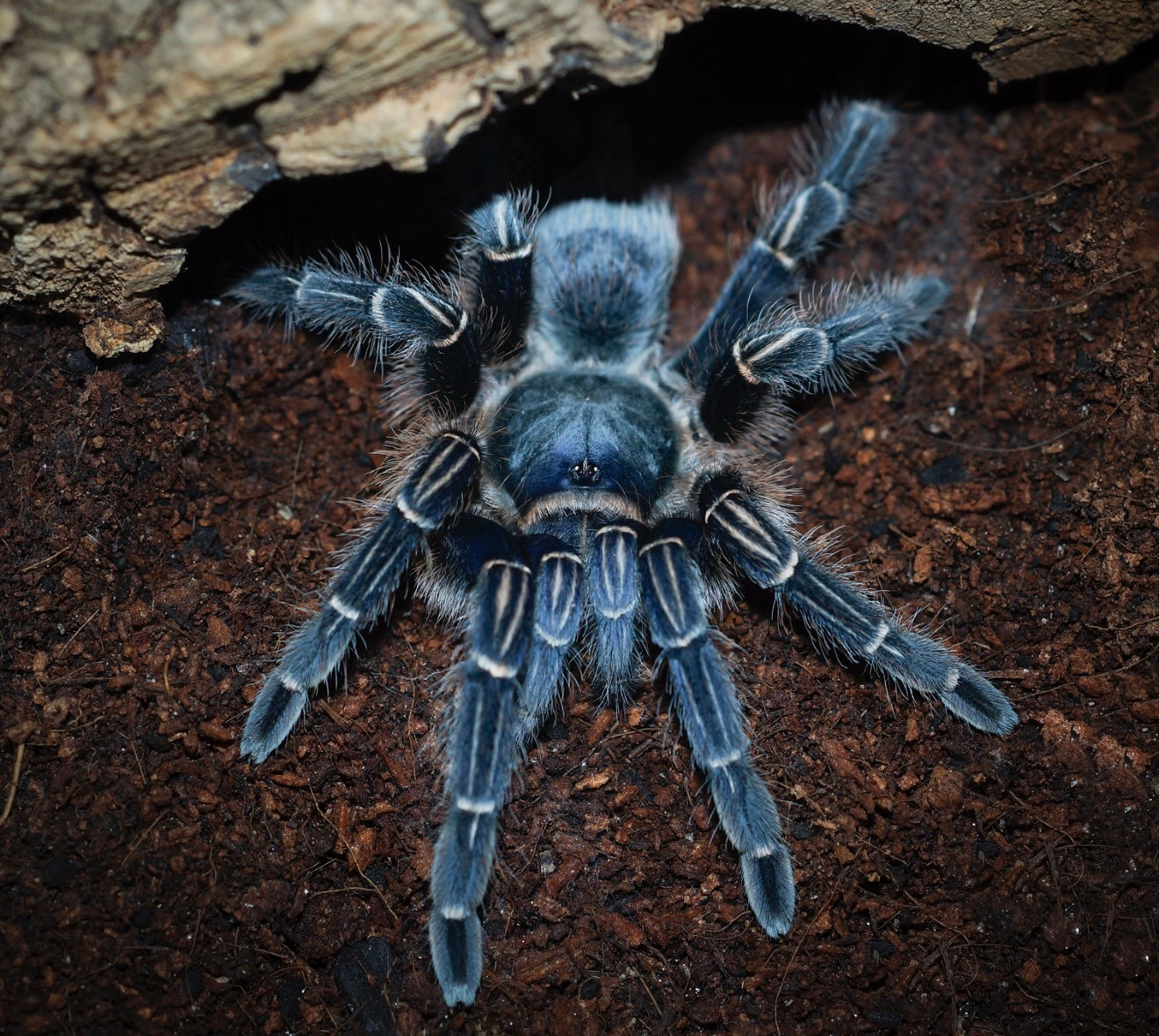
Most hobbyists are familiar with the classic Normal Color Form (NCF)—a beautiful brown and black tarantula sporting its iconic zebra-striped knees. However, only a select few have had the opportunity to own the much rarer Blue Color Form (Blue C.F.). Instead of earthy tones, these stunning specimens develop rich steel-blue, sapphire, and slate-blue coloration while retaining the unmistakable white-striped knees that made the species famous. It’s a familiar hobby staple transformed into something truly extraordinary.
One of the Best First Tarantulas You Can Own
Finding a tarantula that’s both beginner-friendly and genuinely colorful isn’t easy. Fortunately, Aphonopelma seemanni Blue C.F. checks every box. Naturally calm, slow-moving, and tolerant of gentle handling, this species is perfect for first-time keepers who want an interactive pet they can confidently enjoy. While every tarantula has its own personality, this species has earned its reputation as one of the most forgiving and easygoing spiders in the hobby.
Practically Impossible to Care for Incorrectly
One of the biggest reasons this species has remained a hobby favorite for decades is just how adaptable it is. Native to Costa Rica, these tarantulas experience extremely dry summers followed by months of heavy rainfall, making them incredibly tolerant of a wide range of enclosure conditions. Whether your enclosure dries out a little between waterings or stays slightly more humid, these hardy spiders adapt exceptionally well. For beginners still learning husbandry, that resilience provides tremendous peace of mind.
Years of Growth—Ready to Impress Today
The one downside to this incredible species is that they grow very slowly. Reaching those breathtaking blue tones takes years of patient raising. Luckily, I’ve already done the hard part for you. These captive-bred Blue Color Form specimens have been in my care for nearly three years, allowing them to develop the beautiful sapphire-blue coloration that makes this locality so highly sought after. Instead of starting with a tiny sling, you’re getting well-started specimens already showcasing the colors everyone wants.
If you’ve been searching for your first tarantula, want something that can be appreciated both inside and outside the enclosure, or simply want one of the rarest color forms of a beloved hobby classic, the Costa Rican Blue Stripe Knee is an easy recommendation. With only a limited number of captive-bred females available, this is an opportunity that’s becoming harder and harder to find.
Share

Species Profile
Care & Husbandry Guide
🏠 Enclosure & Substrate
Provide a terrestrial enclosure with deep, firmly packed substrate and more floor space than height. This species is an enthusiastic burrower when given the opportunity, so I would fill approximately half or more of the usable enclosure height with compactable substrate and provide cork bark or a starter burrow. Keep excessive open climbing height to a minimum. A secure hide and enough substrate to express natural burrowing behavior are considerably more important than decorative vertical space.
🌡️ Temperature & Humidity
Comfortable room temperatures around 68–76°F work well. Spiderlings benefit from slightly more moisture within the substrate, while established juveniles and adults can be maintained with predominantly drier upper substrate, a full water dish, and occasional localized moisture. Good ventilation is important, and the enclosure should never remain saturated or stagnant. Published husbandry guidance similarly recommends slightly damper conditions for spiderlings and progressively drier conditions as specimens mature.
🍽️ Feeding & Water
Offer growing juveniles appropriately sized crickets, roaches, or similar feeders approximately every 7–10 days, adjusting frequency according to abdomen condition and appetite. Larger specimens can be fed less frequently as growth slows. Extended fasting can be completely normal for established Aphonopelma, especially before a molt. Keep a clean water dish available to established juveniles and adults, remove uneaten prey during premolt, and never attempt to force-feed a specimen that has sealed itself inside a burrow.
🕷️ Species-Specific Care
Aphonopelma seemanni “Blue C.F.” takes the familiar Stripe Knee body plan and elevates it with the cool blue-gray coloration that makes this particular form so desirable. It is a terrestrial, opportunistic burrower that appreciates significantly more substrate than many surface-oriented terrestrials. Once established, expect a hardy, slow-growing tarantula that may spend periods inside its retreat but often becomes more visible around feeding time and after settling into a permanent enclosure. Its combination of unusual coloration, manageable care, longevity, and limited availability makes the Blue C.F. particularly appealing to collectors who already know the standard A. seemanni. General husbandry references likewise characterize A. seemanni as a slow-growing terrestrial/opportunistic burrower.