


Westside Tarantulas
Aphonopelma sp. Aqua Fuego - The Blonde Blue Fuego - SWOLLEN BALLS RARE!
Aphonopelma sp. Aqua Fuego - The Blonde Blue Fuego - SWOLLEN BALLS RARE!
Couldn't load pickup availability
Aphonopelma sp. Aqua Fuego - The Blonde Blue Fuego
The Rarest “FUEGO” in the Country
Introducing what is quite possibly the rarest Aphonopelma species in the entire hobby! The Blonde Blue Fuego. A close relative of the Iconic Mexican Jade Fuego (Aphonopelma moorea), the Aqua Fuego takes everything collectors love about the Mexican Jade… and elevates it into something truly next-level. With extremely limited stock and virtually no presence in the U.S. market, this is not a species you’ll find from any other vendor… in fact, the opportunity to acquire one is nearly nonexistent. Thus, Aphonopelma sp. Aqua Fuego is true top-tier collector status.
A Color Scheme like No Other!
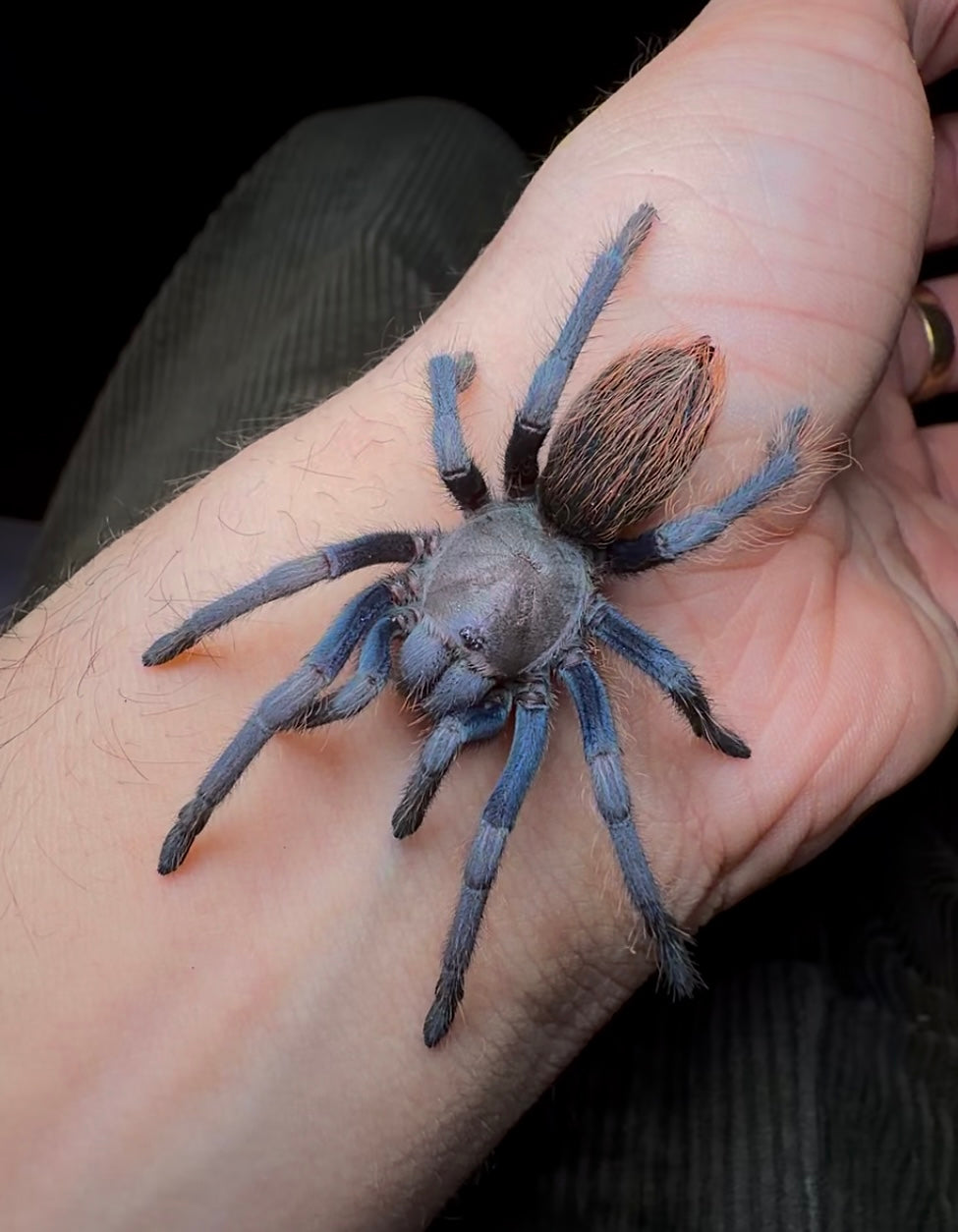
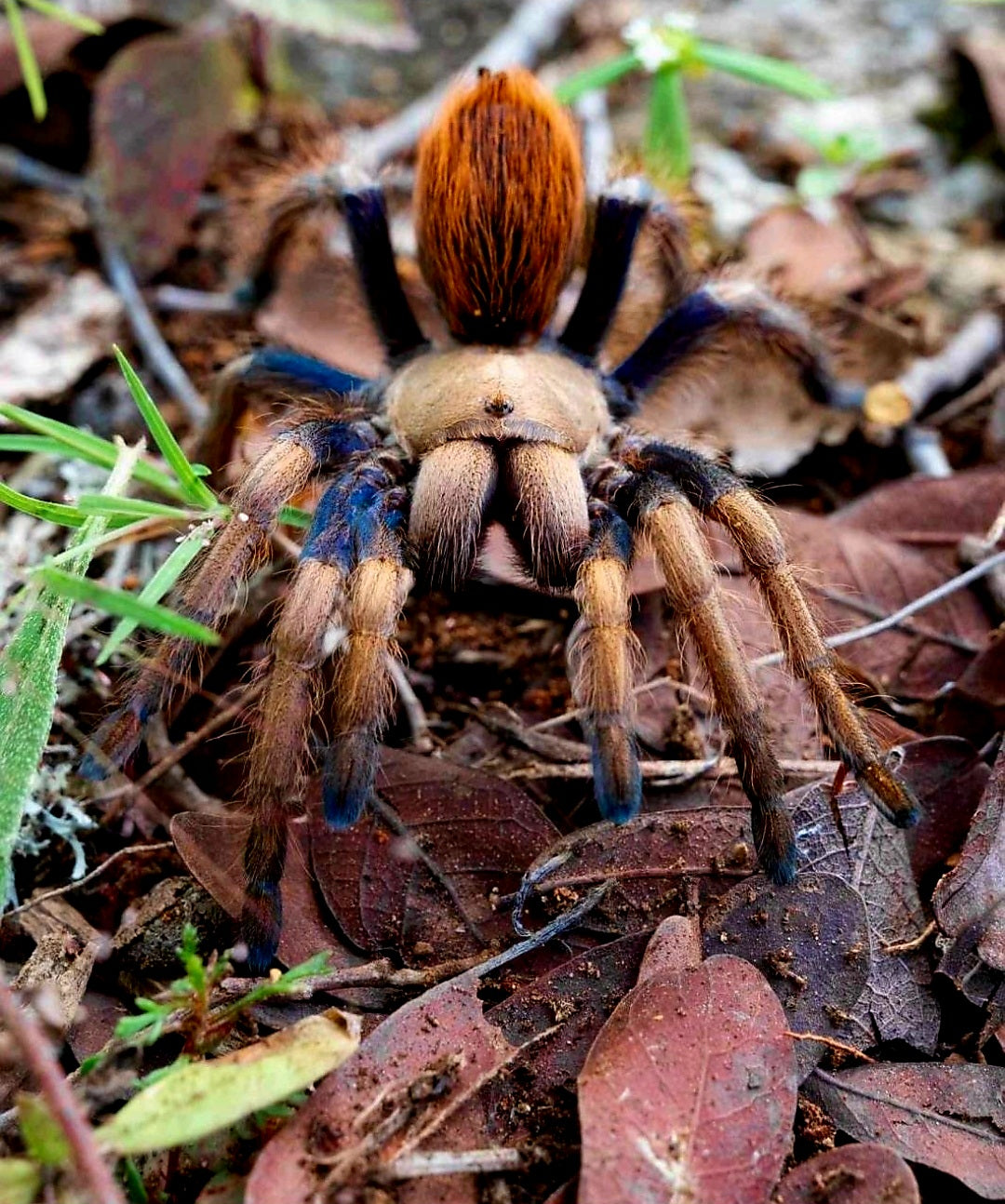
Visually, the Blonde Blue Fuego looks like an Arizona Blonde crossed with a Mexican Jade Fuego. It’s one of a kind, Espresso Blonde Carapace & Legs - Flame Orange abdomen - and Electric Blue Femurs & Toe Tips contrast beautifully, giving this species a surreal, designer look. One of the most exciting aspects of the Blonde Blue Fuego is its dramatic color shift as it matures. Juveniles typically start off much more muted with an overall blue color scheme! As the Aqua Fuego grows, it will begin displaying those soft tan/blonde tones. But with each molt, that transformation becomes more pronounced. Those blues deepen into a rich, electric hue, while the body begins to develop more saturated tones. By the time this species reaches adulthood, the contrast is absolutely stunning, as the Blonde Blue Fuego begins to embody that signature high-end look collectors chase. It’s the kind of species that truly rewards patience, becoming more impressive with every single molt.
Classic Fuego Attitude—Without the Drama
Just like its cousin A. moorea, this species has that iconic “booty up in the air” defensive posture, often raising its abdomen in a like an adorable drama queen. But don’t let that fool you, this is still a highly docile and handleable species. Unlike many New Worlds, they are extremely reluctant to kick hairs, making them a fantastic choice for keepers who want an energetic personality without the usual “hair kicking” drawbacks. That said, expect this tarantula to be interactive, expressive, and surprisingly docile.
Bulletproof Husbandry!
Being an Aphonopelma, this species is about as hardy and forgiving to beginners as it gets. You see, this tarantula thrives on a dry substrate with access to a water dish, and can tolerate both types extreme temperatures! Additionally, they are incredibly forgiving when it comes to feeding schedules. It’s not uncommon for them to go weeks—even months—without eating, making them one of the most durable species you can own. Their slow growth rate is typical of the genus, but that also means a longer lifespan! So expect this beauty to be a part of your family for literal decades!
A True One-of-One Opportunity
Between its unmatched rarity, unique coloration, hardy nature, and iconic “Fuego” personality, the Blonde Blue Fuego stands in a league of its own. This isn’t just another tarantula… it’s the kind of species that people talk about… the kind that serious collectors hunt for years and never find. If you’re looking to own something that nobody else has… this is your chance.
Aphonopelma sp. Aqua Fuego Care - The Blonde Blue Fuego (Aphonopelma sp. “Aqua Fuego”) is incredibly easy to care for and thrives in a simple, dry terrestrial setup. Use a well-ventilated enclosure with a few inches of substrate for light burrowing, keep the substrate dry, and always provide a small water dish for hydration. This species does best at room temperatures between 68–85°F, and like most Aphonopelma, it has a slow metabolism, meaning it may refuse food for up to months at a time, (especially as adults) - But this is completely normal. For those wanting to speed up the tarantulas metabolism, the warmer you keep this species the faster they will process their food, molt and grow! Feed appropriately sized prey every 1–2 weeks, remove uneaten food, and avoid overwatering. Overall, this is a very hardy, low-maintenance and forgiving tarantula that is perfect for both beginners and experienced keepers alike.
Share

Species Profile
Care & Husbandry Guide
🏠 Enclosure & Substrate
Provide a terrestrial enclosure with several inches of firmly compacted substrate, a secure cork-bark hide or starter burrow, and considerably more usable floor space than climbing height. Younger specimens should be given enough substrate to excavate if desired. Larger animals can be maintained in a straightforward terrestrial setup, but keep the distance between the substrate and lid relatively low because a fall can be dangerous for a heavy-bodied Aphonopelma.
🌡️ Temperature & Humidity
Maintain stable room temperatures around 68–76°F and avoid unnecessary extremes. Smaller specimens can be provided with some moisture retained within part of the substrate, transitioning toward predominantly drier conditions as they become established juveniles. Larger animals should have constant access to fresh water with occasional localized moisture rather than a continuously wet enclosure. Prioritize good ventilation and stability over attempting to maintain an exact humidity percentage.
🍽️ Feeding & Water
Offer appropriately sized crickets, roaches, or similar feeders approximately every 7–10 days for growing juveniles, adjusting according to appetite and abdomen condition. Larger specimens can be fed less frequently due to their slower metabolism and growth. Extended fasting, particularly around premolt, should not automatically be considered abnormal. Keep a clean water dish available to established juveniles and adults at all times and remove uneaten prey when the animal enters premolt.
🕷️ Species-Specific Care
Aphonopelma sp. “Aqua Fuego,” the Blonde Blue Fuego, is an extraordinarily rare collector Aphonopelma distinguished by its unusual combination of cool blue coloration and contrasting blonde setae. Like other slow-growing Aphonopelma, this is a species where patience is essential: established specimens represent years of development that cannot simply be replaced by quickly growing out another sling. Once settled, these spiders are calm, deliberate, and exceptionally rewarding display animals. Because so little formal information exists for this particular hobby form, stable husbandry and careful observation of the individual animal are especially important.