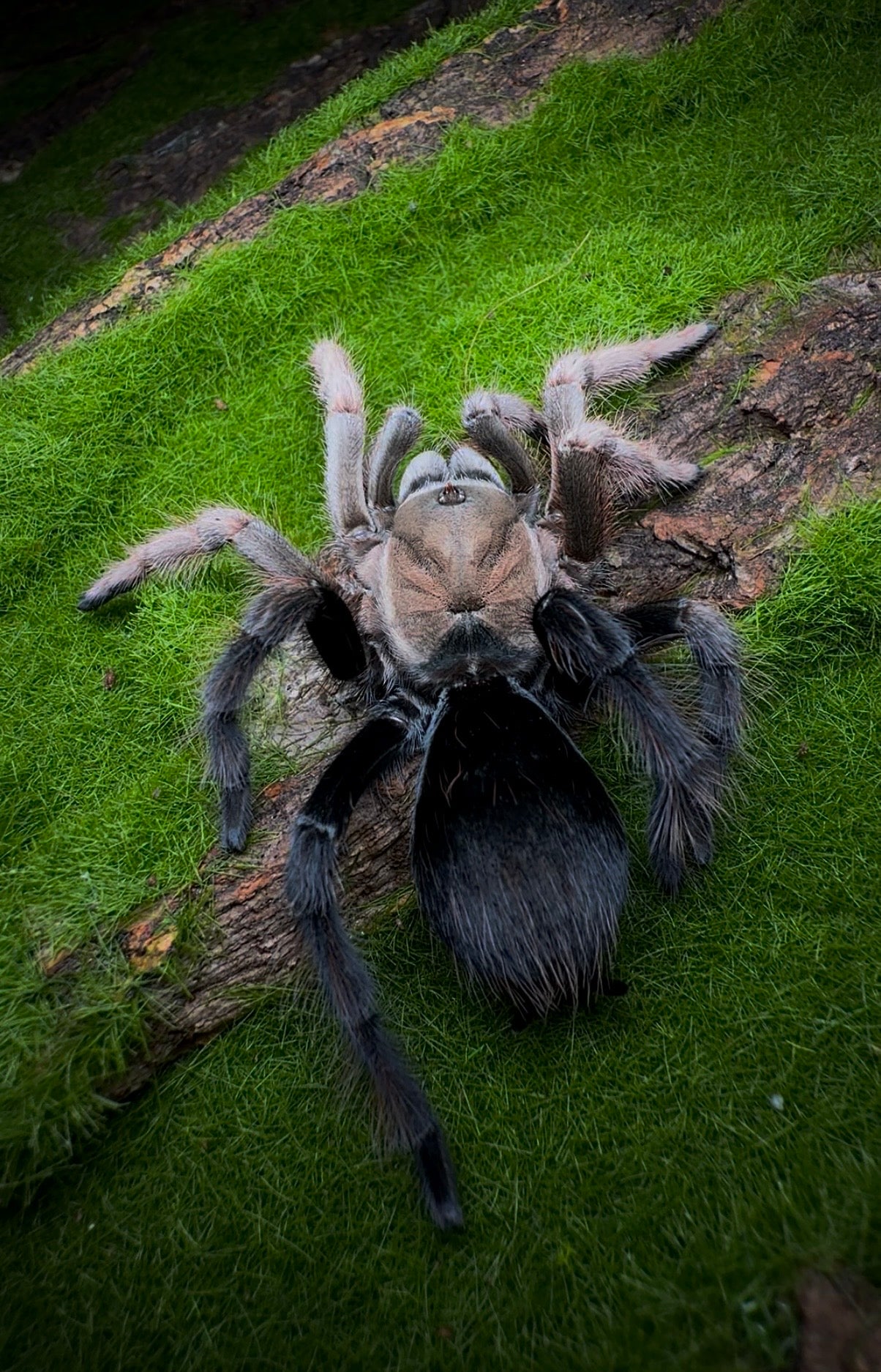
Aphonopelma sp. Diamond Back – Mexican Black & Blonde
A Rare Beginner-Friendly Aphonopelma With Serious Collector Appeal
The Mexican Black & Blonde, Aphonopelma sp. “Diamond Back,” is one of those species that perfectly bridges the gap between a beginner-friendly tarantula and a genuinely rare collector animal. This beautiful Mexican Aphonopelma features a deep black abdomen and darker leg bases contrasted by soft blonde, silver, and smoky gray coloration across the carapace and distal portions of the legs. The result is a very clean, high-contrast tarantula with a classic Aphonopelma look—but with a much more unusual appearance than the commonly available beginner species. If you want something calm and easy to keep without settling for something ordinary, this is exactly the kind of species to look for.
Docile, Slow Moving & Perfect for New Keepers
One of the biggest selling points of the Mexican Black & Blonde is its temperament. This species is naturally calm, slow moving, and generally very tolerant of routine enclosure maintenance, which makes it an excellent choice for newer keepers who want a larger-bodied tarantula that isn’t constantly trying to bolt. Like many Aphonopelma, it tends to rely on remaining still rather than reacting aggressively, and well-established specimens are often incredibly easy to work around. For someone wanting their first “rare” tarantula without jumping into something fast or defensive, this is a fantastic option.
Extremely Hardy & Almost Effortless to Maintain
Aphonopelma are famous for their durability, and the Diamond Back is no exception. This species does exceptionally well in a simple terrestrial setup and tolerates drier conditions extremely well. There is no complicated humidity balancing, no elaborate enclosure design, and no demanding feeding schedule. Give it adequate substrate, a hide, a full water dish, and occasional appropriately sized prey, and this species does the rest. That forgiving nature is exactly why Aphonopelma have remained some of the most trusted beginner tarantulas in the hobby.
Slow Growth Is Part of What Makes Them Special
This is not a tarantula that races to adulthood—and for many hobbyists, that is actually one of the biggest appeals. Aphonopelma sp. Diamond Back is a very slow-growing species, meaning you get to enjoy each stage of its development for years rather than months. Slow growth is also closely tied to the incredible longevity Aphonopelma are known for. A female can remain with you for decades, making this far more than a short-term addition to a collection. It is the kind of tarantula you purchase once and potentially keep for a huge portion of your life.
Rare Without Being Difficult
Usually, the rarer a species gets, the more demanding or advanced the husbandry becomes. The Mexican Black & Blonde is the opposite. You are getting an uncommon, seldom-offered Aphonopelma while still enjoying the same straightforward husbandry and calm personality people expect from the genus. That combination—rarity, beauty, durability, and beginner-friendly temperament—is what makes this species such an easy recommendation for both first-time keepers and serious Aphonopelma collectors.
A Long-Term Display Tarantula Worth Owning
If your idea of the perfect tarantula is something rare, hardy, docile, slow moving, easy to care for, and incredibly long-lived, the Mexican Black & Blonde checks essentially every box. Add in its striking charcoal-black and blonde coloration, deliberate personality, and extremely slow growth rate, and you have one of those understated species that becomes more impressive the longer you own it. This is a true long-term keeper and an excellent example of why the Aphonopelma genus remains so beloved within the hobby.