
Skip to product information
1 of 3

Westside Tarantulas

Avicularia purpurea - The Purple Pink Toe - For Sale

Avicularia purpurea - The Purple Pink Toe - For Sale

Regular price $850.00
Regular price Sale price $850.00
Sale Sold out
Shipping calculated at checkout.
Size and Sex

The Purple Pink Toe (Avicularia purpurea)

Color That Turns Heads!

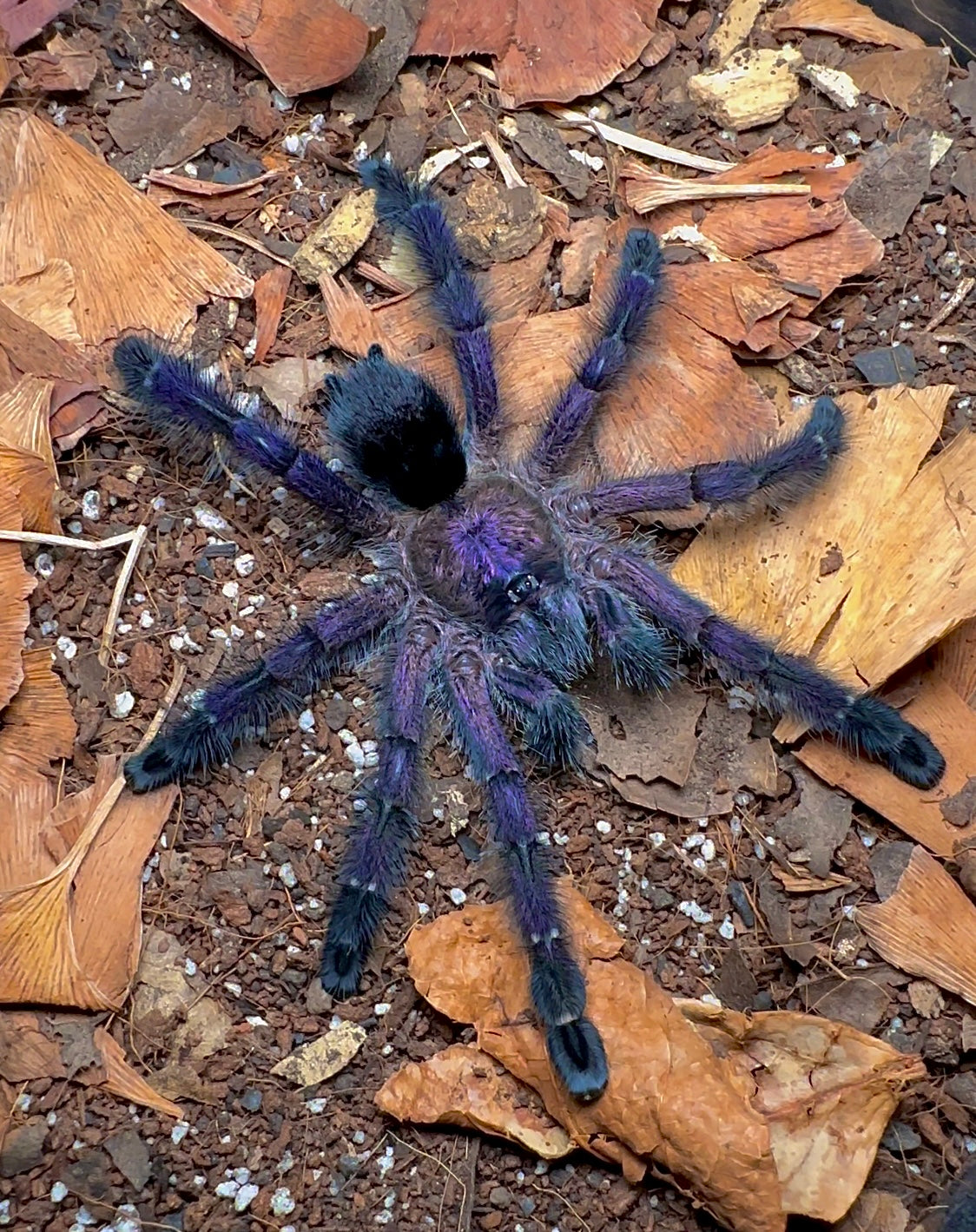
The Purple Pinktoe (Avicularia purpurea) is hands down one of the crown jewels of the tarantula hobby — a breathtaking arboreal species that stuns with its rich, iridescent hues. Being the largest of the purple Avicularia species and one of only three formally described by science, Avicularia purpurea holds an iconic status among keepers worldwide.This species boasts a mesmerizing blend of metallic violet, lavender, and magenta tones that shimmer across its legs and carapace, while its fluffy black abdomen adds striking contrast. When mature, their coloration deepens, making adult specimens look like they were sculpted from amethyst after a fresh molt. Compared to the “Royal Purple” pinktoe, Avicularia purpurea grows about 1.5 inches larger and tends to display slightly warmer, pinkish undertones in its purple sheen — a true standout in any collection.

A Must Have For Collectors! 

Avicularia purpurea reaches an adult size of around 5.5 inches in diagonal leg span, making it a medium-to-large arboreal tarantula. While they’re a bit more on the skittish and jumpy side, especially compared to other pinktoes, they never show defensive behavior. However, keepers should still avoid handling, as their fast, springy movements can startle even the most experienced keepers as they will unexpectedly dart off in only a split second! Furthermore, this species has a ferocious appetite and will enthusiastically tackle crickets, roaches, and other insect prey. Though not the fastest-growing Avicularia, their steady growth rate rewards patient keepers with dazzling adult coloration that’s worth the wait. If you’re passionate about adding rare color morphs to your collection, the Purple Pinktoe is nonnegotiable. With its shimmering purple tones and status as a hobby classic, Avicularia purpurea delivers both rarity and beauty in one remarkable package — a true living gem for any keeper.

View full details
WESTSIDE TARANTULAS

Species Profile

Everything You Need To Know At A Glance.
Experience Level
Beginner–Intermediate
Temperament
Shy, Skittish & Non-Aggressive
Type
Arboreal / New World / Medium Sized / Pinktoe
DLS
Adult Size
5–5.5” DLS
Country of Origin
Ecuador
Life Span
♀15+ Years

Care & Husbandry Guide

🏠 Enclosure & Substrate

Provide a vertically oriented arboreal enclosure with excellent cross-ventilation. Include upright cork bark, foliage, and several elevated anchor points so the spider can construct its characteristic silken retreat toward the upper portion of the enclosure. A modest substrate layer is sufficient; prioritize usable vertical space, airflow, and webbing structure. Provide larger specimens with an appropriately sized water dish.

🌡️ Temperature & Humidity

Maintain comfortable room temperatures around 70–75°F. Prioritize strong cross-ventilation and accessible hydration rather than trying to maintain an artificially high humidity percentage. Provide occasional drinking droplets and localized moisture while allowing good air exchange. Modern husbandry sources likewise emphasize that chronic wetness combined with poor airflow should be avoided. 

 🍽️ Feeding & Water 

Offer appropriately sized crickets or roaches approximately once a week, adjusting according to size, appetite, and abdomen condition. This species can have an excellent feeding response despite its shy personality. Lightly mist part of the webbing to create accessible drinking droplets and provide a water dish once the specimen is large enough. Remove uneaten prey during premolt and avoid keeping the enclosure continuously wet.

🕷️ Species-Specific Care 

Avicularia purpurea is one of the most recognizable purple arboreals in the hobby, developing a gorgeous metallic violet-to-purple sheen across the legs and carapace as it matures. Compared with many of your calmer Avicularia, this species tends to be more shy, springy, and quick to retreat when disturbed, but your experience has not shown it to be an aggressive species. Give it a well-ventilated vertical enclosure with plenty of elevated structure and webbing anchors, and it makes an exceptional display Pink Toe.