Euathlus sp. Tigre Esmeralda - True Chilean Emerald Tiger
Unreal Color From Every Angle
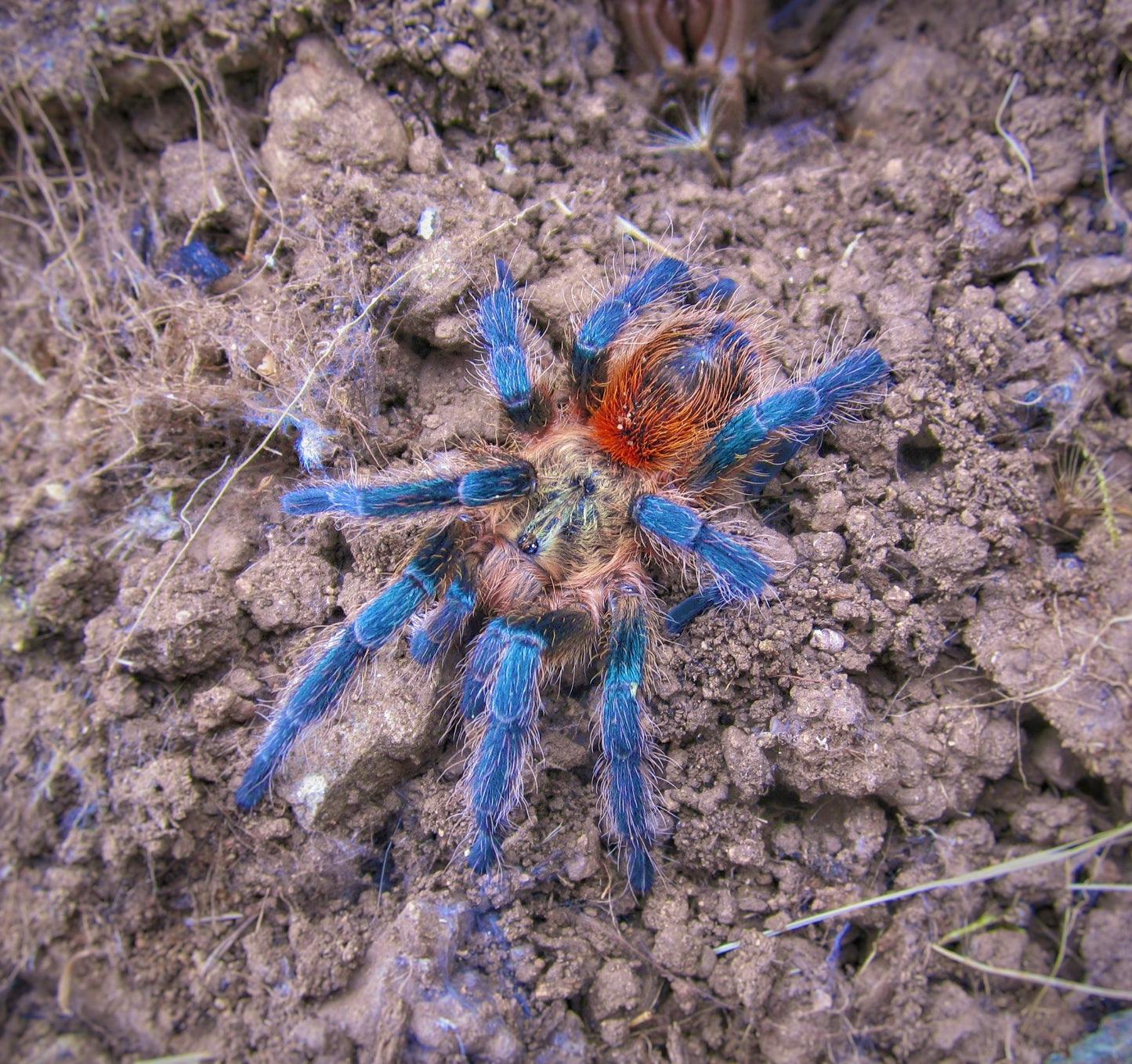
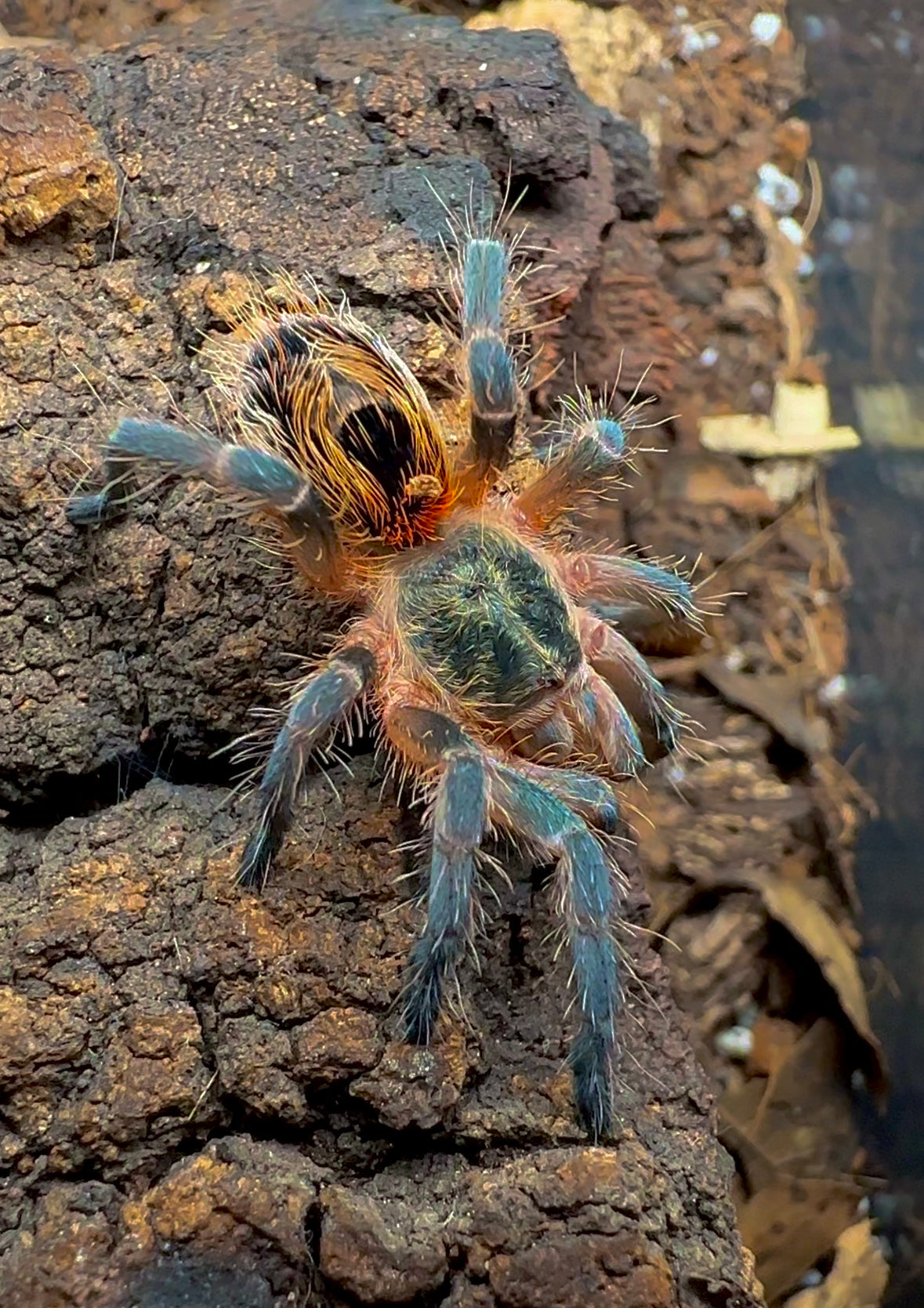
Euathlus sp. “Tigre Esmeralda” is easily one of the most beautiful Euathlus I’ve ever worked with, and the photos honestly speak for themselves. This species has an incredible mix of electric blue legs, emerald-green tones, and fiery orange/red coloration that almost looks painted on. What I love most is how much the colors can change depending on the lighting and angle you’re viewing them from. In person, the blues and greens can be incredibly vibrant, while the orange creates a beautiful contrast that makes this species unlike any other Euathlus in my collection.
Small Spider, Huge Personality
At only around 4” DLS as adults, the Chilean Emerald Tiger stays relatively compact—but it has a ton of personality. My specimens are extremely curious and regularly explore every part of their enclosure. Even as tiny babies, they spend a surprising amount of time sitting completely out in the open rather than disappearing into a burrow. That makes this one of those rare species that’s actually enjoyable to watch grow rather than something you only see at feeding time.
Exceptionally Docile & Beginner Friendly
One of my favorite things about this species is just how relaxed it is. My specimens have been docile, calm, slow-moving, and extremely tolerant of gentle handling. Individual temperament can always vary, but I have found Tigre Esmeralda to be one of the most manageable Euathlus I’ve worked with. Combine that personality with their hardy nature and straightforward husbandry, and you get an incredibly rare collector species that doesn’t require expert-level care.
Cool, Dry & Surprisingly Simple Care
These tarantulas prefer things cooler and drier, with temperatures anywhere from the low 60s to mid-70s°F working well for my animals. I provide a water dish and mostly dry substrate rather than trying to maintain high humidity. Give them plenty of floor space to wander and explore. Interestingly, mine will also take advantage of branches, cork, or a little extra vertical space when offered. I don’t consider a hide necessary for my animals—they’re incredibly confident and regularly choose to remain out on display.
Why They’re So Difficult to Find
Part of what makes Chilean Euathlus so special in the U.S. hobby is how difficult these animals can be to establish and maintain here. Chile regulates its native wildlife, and several Euathlus species have conservation concerns within the country; Chilean government assessments list multiple members of the genus as threatened. Once a particular bloodline disappears from American collections, replacing it isn’t necessarily as simple as importing another shipment. That’s why maintaining and reproducing the Euathlus already established here is so important.
A Major Westside Breeding Milestone
This species has been a breeding project of mine for several years, and I recently accomplished something I’ve been working toward for a very long time: I successfully produced my first captive-bred sac of Tigre Esmeralda here in the United States. The egg sac and babies pictured on this listing are from that breeding project.
For me, producing them is much bigger than simply having babies available for sale. Many of the rarer Euathlus maintained in the U.S. are extremely difficult to reproduce consistently, and we’ve already watched certain Euathlus bloodlines become harder and harder to find within the hobby. After years of working with this species, I finally figured out the conditions that worked for my animals and successfully produced a healthy captive-bred generation.
Keeping Rare Euathlus in the U.S. Hobby
That’s ultimately the goal of this project. The more Euathlus we can successfully captive breed here, the less dependent the hobby becomes on future imports and the better chance these incredible bloodlines have of remaining established for future keepers. Seeing this first generation of tiny Emerald Tigers emerge after years of working toward it has easily been one of my favorite breeding accomplishments at Westside Tarantulas.