
Skip to product information
1 of 4

Westside Tarantulas

Ephebopus murinus – Skeleton Leg Tarantula - Adult Female For Sale

Ephebopus murinus – Skeleton Leg Tarantula - Adult Female For Sale

Regular price $715.00
Regular price Sale price $715.00
Sale Sold out
Shipping calculated at checkout.
Size and Sex

Ephebopus murinus – Skeleton Leg Tarantula

The Ultimate Halloween-Themed Tarantula

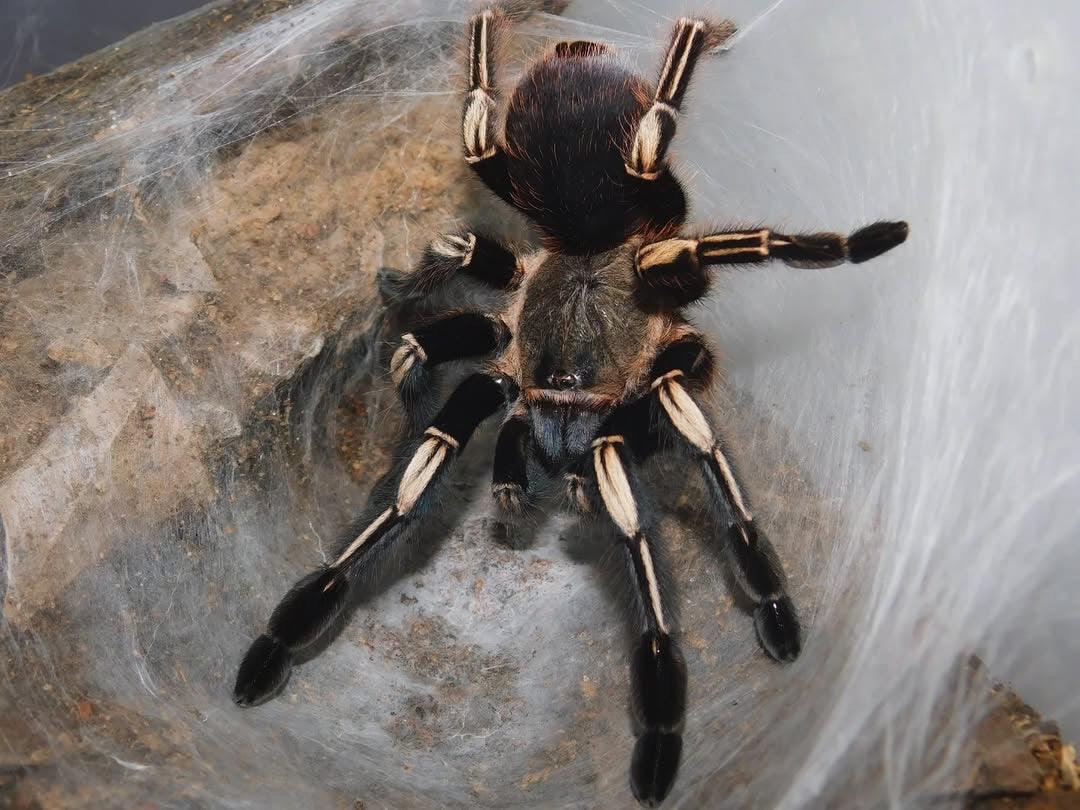
Few tarantulas are as instantly recognizable as Ephebopus murinus, better known as the Skeleton Leg Tarantula. With its jet-black body dramatically contrasted by bright ivory “bone-like” leg markings, this species looks like it crawled straight out of a Halloween movie. The bold skeletal patterning is unlike anything else in the hobby, making this one of the most visually unique New World tarantulas you can own. If you’re looking for a species that immediately grabs attention every time someone walks into the room, the Skeleton Leg Tarantula is impossible to overlook.

A New World That Behaves Like an Old World

What truly separates Ephebopus murinus from nearly every other New World tarantula is its behavior. Unlike almost every New World species, it does not possess urticating hairs on its abdomen. Instead, this remarkable tarantula has evolved urticating hairs on its front legs (pedipalps). When threatened, it raises into an intimidating threat posture before rapidly striking downward to launch those defensive hairs toward a predator.

This fascinating adaptation gives the Skeleton Leg Tarantula a much more defensive personality than most New World species, causing many keepers to describe it as behaving much more like an Old World tarantula. For hobbyists who eventually want to keep Old Worlds, Ephebopus murinus provides the perfect stepping stone while still offering the safety net of remaining a New World species.

An Incredible Display Species

Despite spending much of its time inside elaborate silk tunnels, the Skeleton Leg Tarantula is an exceptionally heavy webber that transforms its enclosure into an intricate network of white silk. Watching this species construct extensive webbing throughout its habitat is nearly as enjoyable as observing the spider itself. The contrast between the bright white webbing and the black-and-ivory coloration creates one of the most visually striking displays in the hobby.

Fast, Feisty, and Full of Personality

This is not your average slow-moving beginner tarantula. Ephebopus murinus is alert, food-aggressive, incredibly responsive, and always keeps its keeper on their toes. Every feeding is exciting, every rehousing demands respect, and every interaction reminds you why this species has become such a favorite among experienced hobbyists looking for something with real personality.

A Truly One-of-a-Kind Species

There simply isn’t another tarantula quite like the Skeleton Leg Tarantula. Its unique defensive adaptations, spectacular Halloween-inspired coloration, heavy webbing behavior, and bold personality combine to create one of the most distinctive New World species available. If you’re ready to take the next step beyond typical beginner tarantulas and experience a species that bridges the gap between New World and Old World behavior, Ephebopus murinus is one of the finest choices you can make.

View full details
WESTSIDE TARANTULAS

Species Profile

Everything You Need To Know At A Glance.
Experience Level
Intermediate
Temperament
Defensive & Fast
Type
Fossorial / New World
DLS
Adult Size
5–6” DLS
Country of Origin
French Guiana / Suriname region
Life Span
♀15+ Years

Care & Husbandry Guide

🏠 Enclosure & Substrate

Provide a terrestrial/fossorial enclosure with deep, compactable substrate capable of supporting an extensive burrow. A soil-based tarantula mix or coco-fiber blend works well, especially when packed firmly enough to hold tunnels. Give the spider a starter burrow beneath cork bark to encourage it to establish its retreat. Floor space is useful, but substrate depth and a secure burrowing area are the priorities.

🌡️ Temperature & Humidity

Maintain comfortable room temperatures around 72–78°F. This species benefits from more moisture retention than an arid terrestrial tarantula, particularly within the deeper substrate surrounding its burrow. Keep the lower substrate moderately moist while maintaining good ventilation and allowing the surface to remain less saturated. Avoid both completely drying the enclosure for prolonged periods and creating stagnant, waterlogged conditions.

 🍽️ Feeding & Water 

Offer appropriately sized crickets, roaches, or similar feeders about once a week, adjusting frequency according to body condition and appetite. Adults generally do well with a substantial meal every 7–14 days. Prey can be offered near the entrance of an established burrow, where the tarantula will often ambush it. Keep clean water available at all times and remove uneaten prey, particularly during premolt.

🕷️ Species-Specific Care 

Ephebopus murinus is a striking South American New World species famous for its dramatic cream-colored leg striping and secretive, fossorial lifestyle. Unlike a typical terrestrial display species, the Skeleton Leg should be given enough substrate to construct a substantial burrow and establish its own retreat. Once settled, it can spend considerable time underground and may rapidly retreat when disturbed. This is a powerful, fast-moving species best appreciated as a display animal rather than handled.