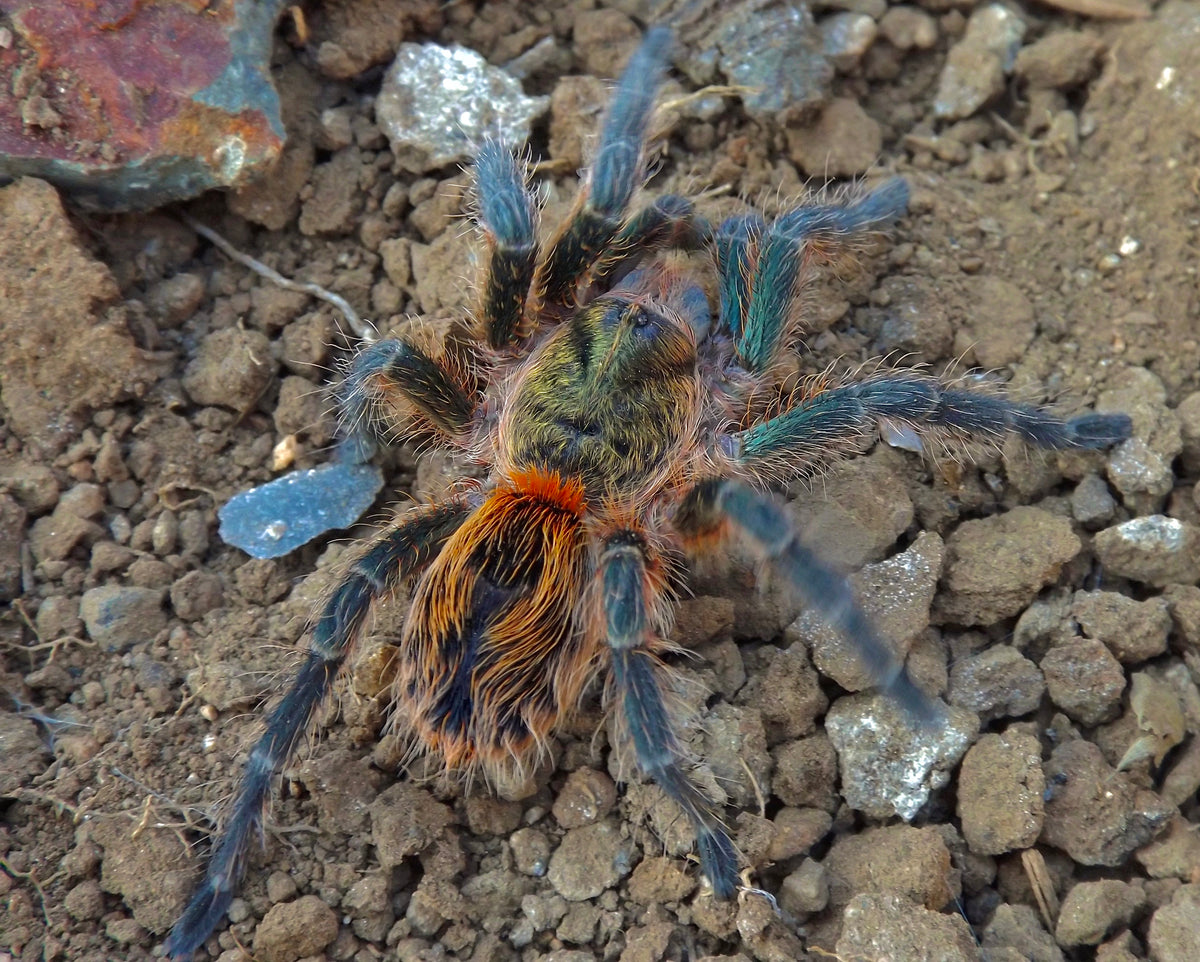
Euathlus sp. “Smaragd Tiger” – Chilean Jeweled Tiger
A Living Chilean Jewel
The Chilean Jeweled Tiger is one of those tarantulas that looks completely different depending on the lighting. My females develop an incredible mixture of emerald and olive green, metallic blue, copper, orange, and black, with each color becoming more noticeable as you look at the animal from different angles. The female pictured is a perfect example—her green carapace almost looks metallic, while the blue-green legs and warm orange hairs give her a color combination you just don’t see on most tarantulas.
One of My Favorite Euathlus Personalities
The personality is every bit as impressive as the coloration. Like most of the Euathlus I work with, my Smaragd Tigers are extremely docile, slow-moving, curious, and very tolerant of gentle handling. Individual tarantulas can always behave differently, but mine would much rather slowly walk around and investigate what’s happening than bolt or become defensive.
A Tarantula You’ll Actually See
Another reason I love this species is how comfortable they are being out in the open. Even my younger specimens spend a surprising amount of time sitting where you can actually see them. They’re naturally curious animals and will regularly walk around and investigate different parts of their enclosure. For such a rare collector species, they’re incredibly enjoyable animals to actually keep and observe rather than simply own.
Hardy & Incredibly Easy to Keep
Smaragd Tigers don’t require complicated husbandry. Mine do best cool and mostly dry, generally anywhere from the low 60s through the mid-70s°F, with a water dish always available. Give them plenty of floor space to walk around and explore, because these little guys love using their entire enclosure. They’ll even climb onto low cork and branches when offered. My specimens are so comfortable sitting in the open that I don’t find a traditional hide necessary.
Small Size, VERY Long-Term Pet
Adults only reach around 4” DLS, making them an awesome option for someone who wants a smaller terrestrial without going all the way down to a true dwarf species. The tradeoff is that Euathlus are extremely slow growers. My animals take years to put on substantial size, but that’s also part of what makes a larger established specimen so special. Your current Westside page describes individuals taking five years or more to reach around 3 inches.
Extremely Rare in the United States
This is where Smaragd Tiger becomes a completely different animal from your typical beginner species. Chilean Euathlus are incredibly difficult to replace once they’re lost from the U.S. hobby. Chile’s native tarantula fauna includes narrowly distributed species and forms, and even scientifically described Euathlus still have major gaps in what is known about their distribution. Recent Chilean research continues to add new locality records for the genus.
Because of that, the Euathlus bloodlines already established here are incredibly important. We have watched Chilean species become harder and harder to find over the years, and once one disappears from U.S. collections, there’s no guarantee we’ll simply be able to bring it back.
Exactly Why I Love Working With Euathlus
This genus really represents everything I love about collecting tarantulas. You get unusual coloration, ridiculously calm personalities, hardy care requirements, manageable adult sizes, and animals that can remain with you for decades. The only downside is patience—they grow painfully slowly. For me, that’s also what makes them so rewarding. Watching a tiny Smaragd Tiger slowly develop those greens, blues, oranges, and tiger markings over several years is completely different from raising a species that reaches adult size almost overnight.