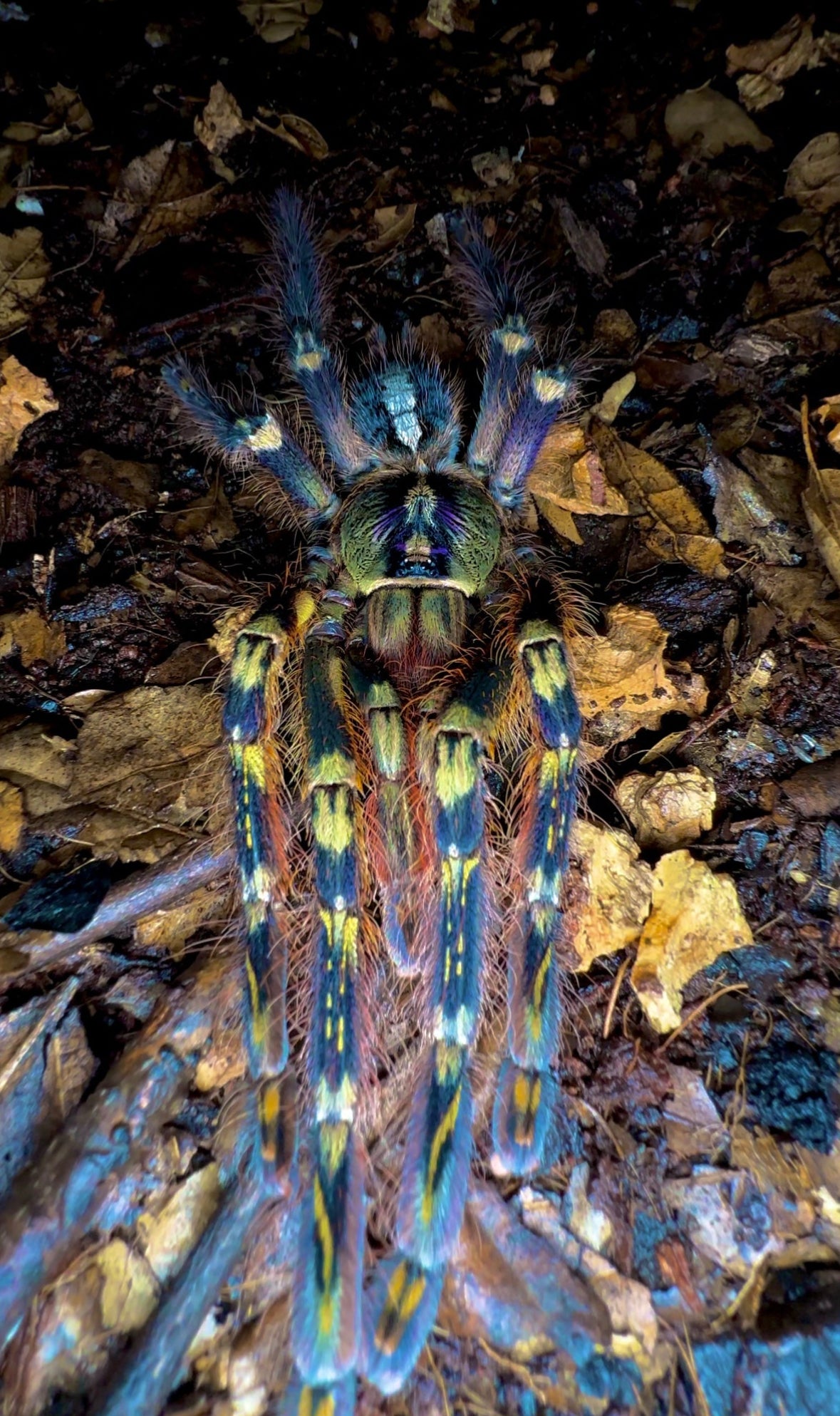
Poecilotheria ornata – Fringed Ornamental
One of the Biggest Poecilotheria You Can Own
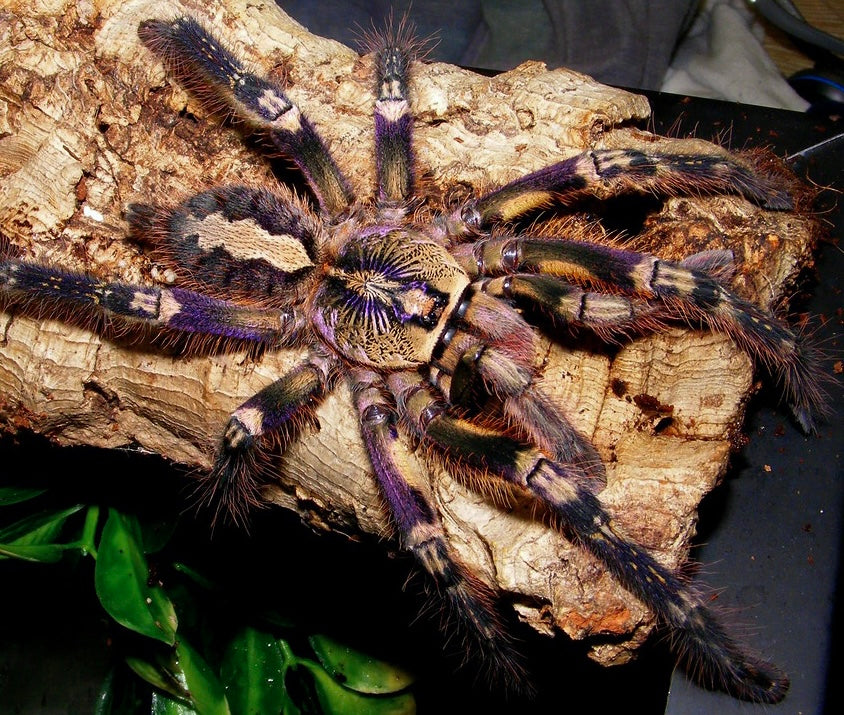
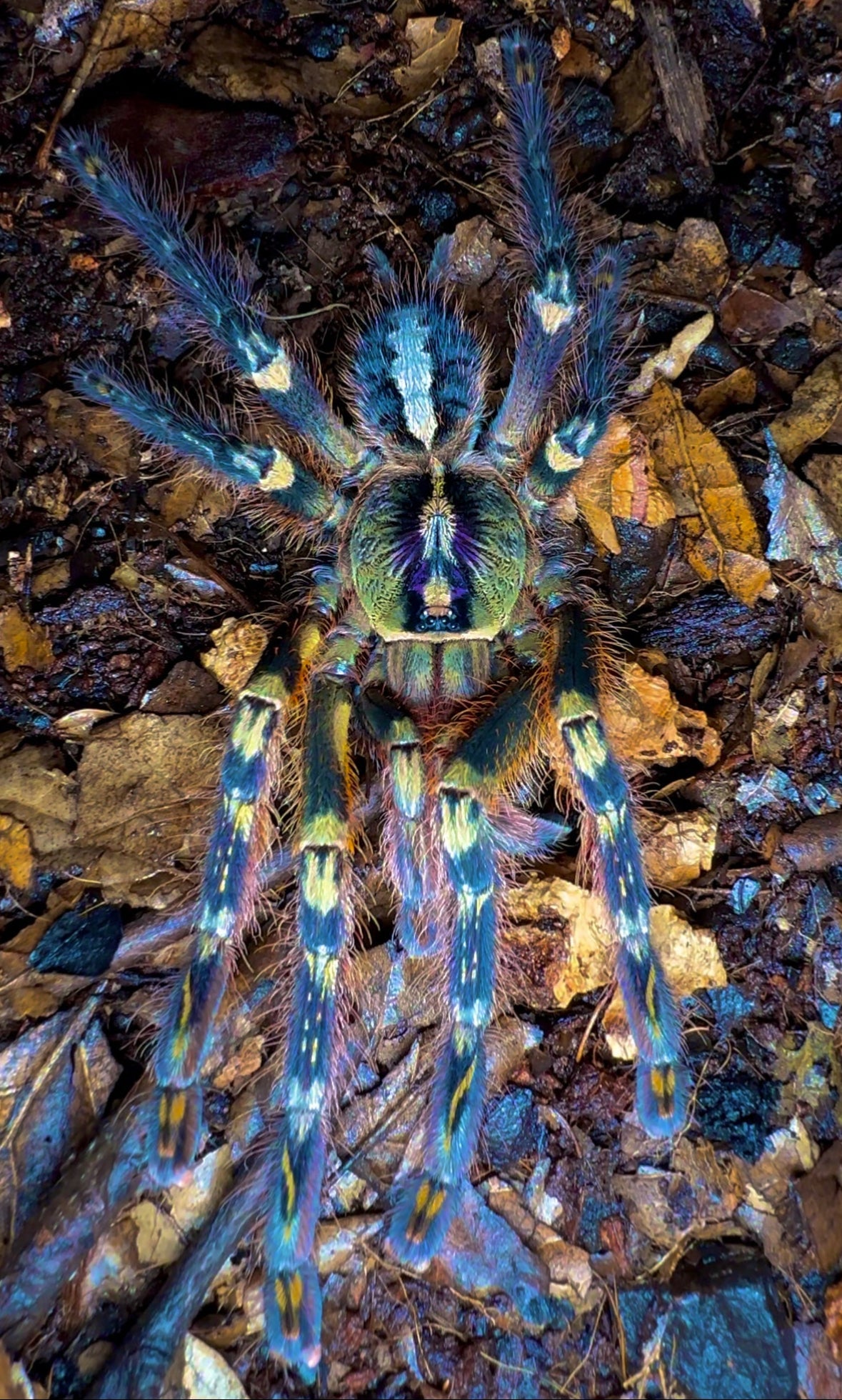
Poecilotheria ornata is an absolute monster of an arboreal. Adult females can push 8–9” DLS, making this one of the largest species in the genus and easily one of the most impressive tarantulas you can put in a display enclosure. And unlike a big brown terrestrial, this thing is covered in yellow, purple, black, cream, and silver patterning from front to back.
Built to Be Seen
One of the things I like most about P. ornata is how confident they become as they grow.
Compared with some of the more reclusive Poecilotheria, established ornata are much more likely to sit out where you can actually appreciate them. A large female stretched across cork bark with those bright yellow leg markings is the kind of spider that immediately grabs your attention.
They Grow FAST
If you want a species that actually rewards you for growing it out, ornata is hard to beat.
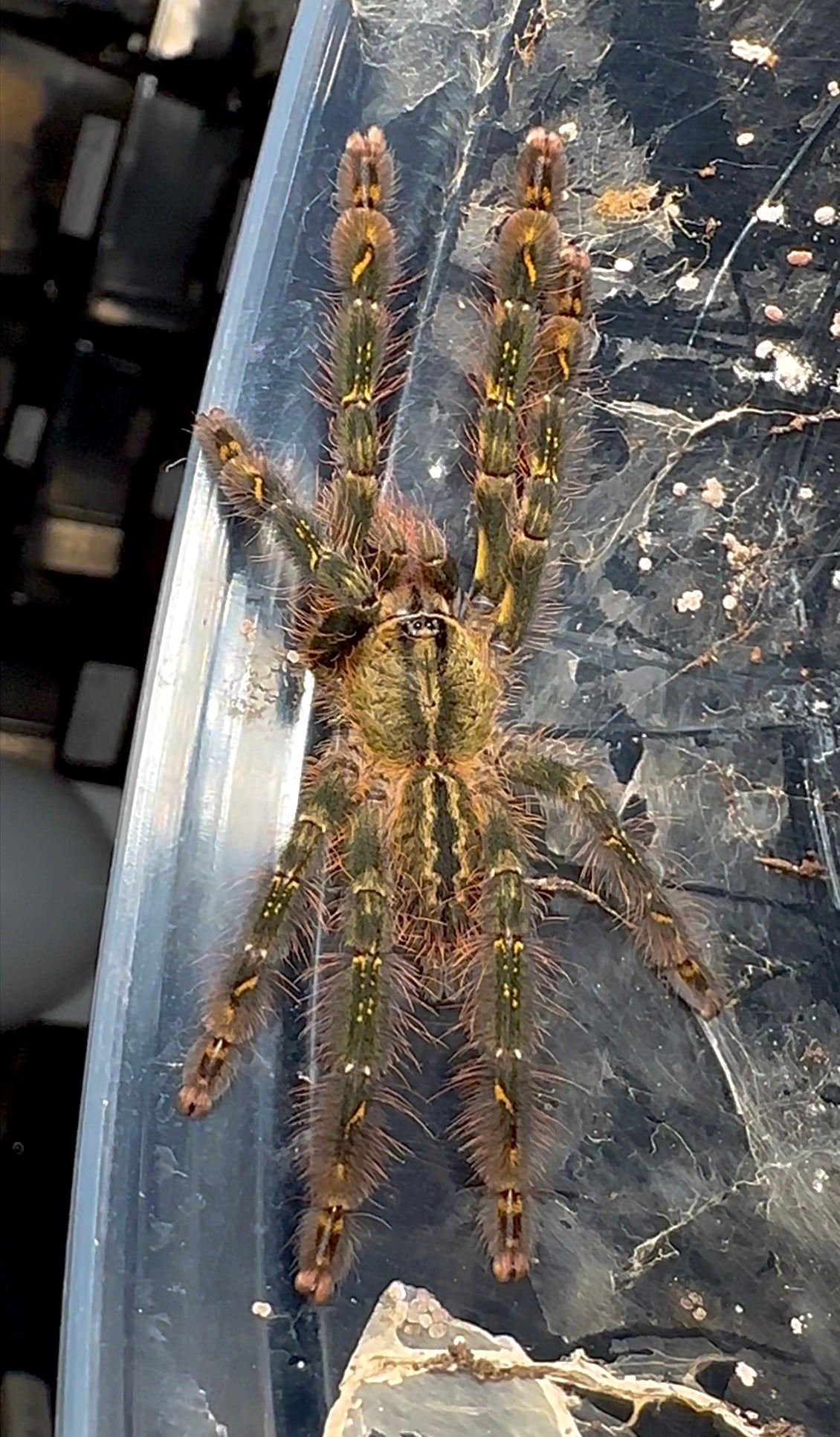
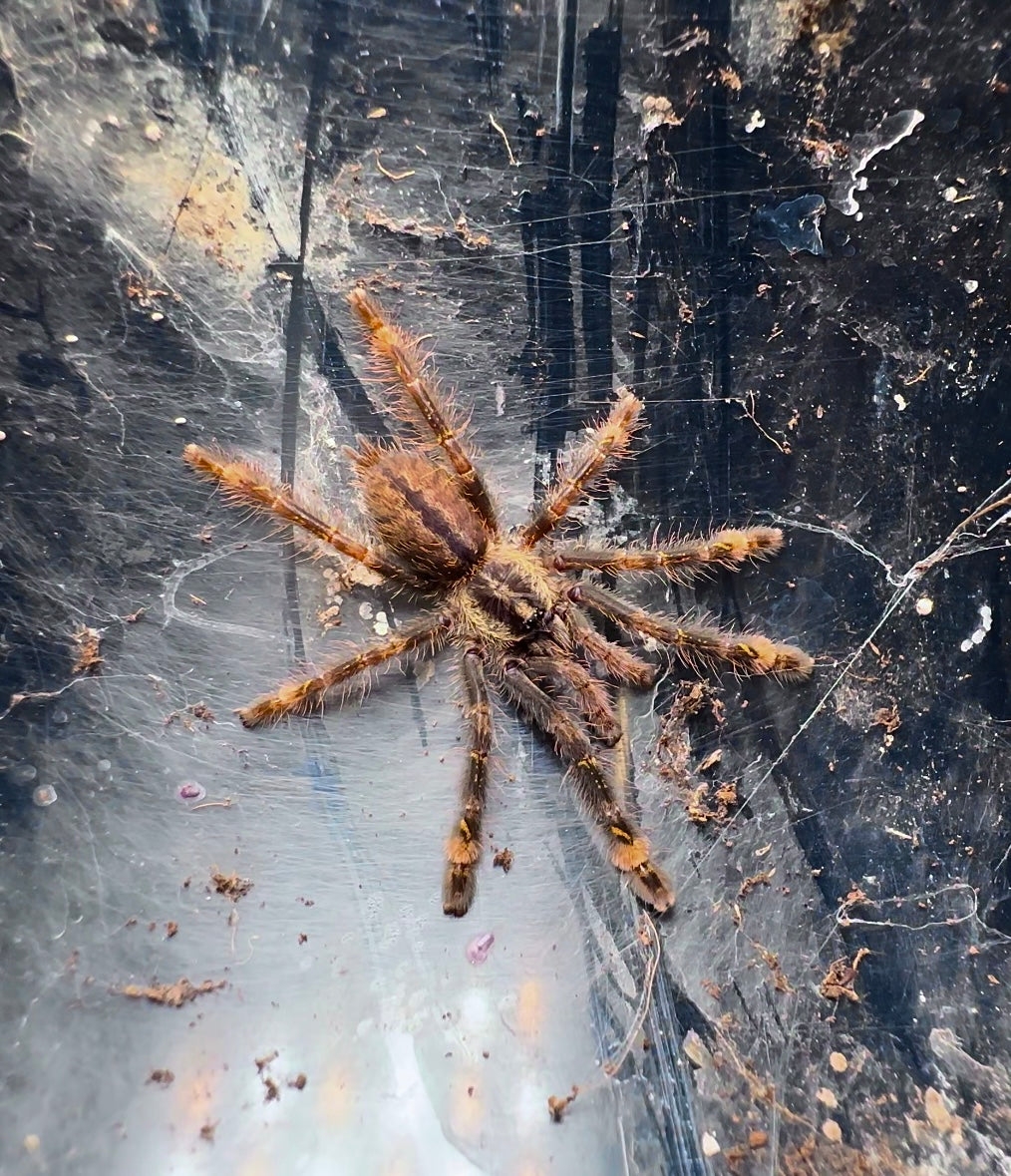
These guys eat hard, molt often, and put on size incredibly fast. My well-started juveniles are already around 1.5+” DLS and taking 1–2 large crickets a week, and this is one of those species where you can watch a relatively small spider turn into something seriously impressive in a surprisingly short amount of time.
Huge Feeding Response
P. ornata are not shy feeders. Once prey hits the enclosure, they can go from sitting calmly on the cork to full feeding mode instantly. Their confidence, speed, and appetite are a huge part of what makes them so fun to keep.
If you like tarantulas that actually act like predators, this species delivers.
Gorgeous From Every Angle
The underside is just as impressive as the top. Bright yellow warning colors on the legs, deep black patterning, cream highlights, and a subtle purple cast across the body give P. ornata one of the most dramatic looks in the entire genus. This is one of those tarantulas where size and color both hit at the same time.
Definitely a Look-Don’t-Touch Species
This is also one species I personally do not handle. They’re fast, bold, and capable of throwing a defensive posture when they feel cornered. Like all Poecilotheria, they also have medically significant venom, so this is a species to appreciate from inside the enclosure.