
Skip to product information
1 of 2

Westside Tarantulas

Harpactira pulchripes - Golden Blue Legged Baboon - For Sale!

Harpactira pulchripes - Golden Blue Legged Baboon - For Sale!

Regular price $78.00
Regular price Sale price $78.00
Sale Sold out
Shipping calculated at checkout.
Size and Sex

Harpactira pulchripes – Golden Blue Legged Baboon

One of the Most Iconic Tarantulas in the Entire Hobby!

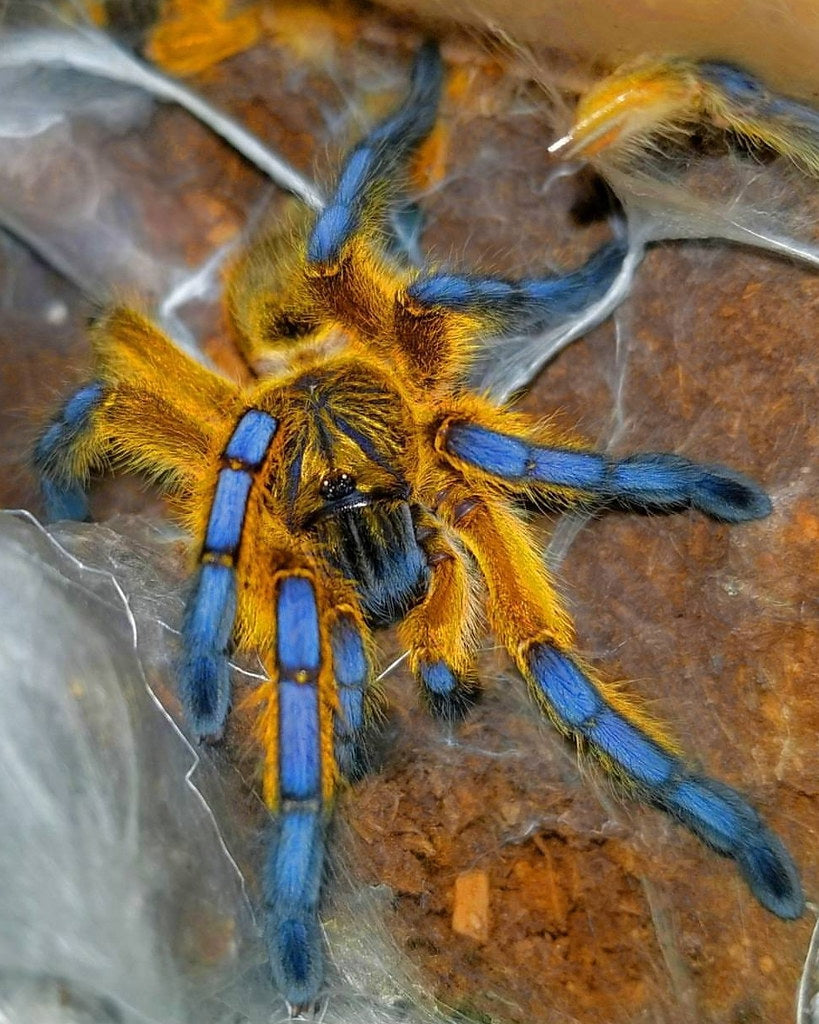
There are very few tarantulas that have achieved legendary status quite like Harpactira pulchripes, the Golden Blue Legged Baboon. Native to South Africa, this breathtaking Old World species has become one of the most recognizable and desirable tarantulas ever discovered. With impossibly vibrant metallic blue legs contrasted against a glowing golden-orange body, it almost looks AI-generated. Pictures simply don’t do this species justice. It’s one of those tarantulas that every serious collector dreams of owning—and once you see one in person, it’s easy to understand why.

Electric Blue Meets Liquid Gold

The color combination on this species is nothing short of unbelievable. Brilliant cobalt-blue legs seem to glow under natural light, while the rich golden body and intricate black striping create one of the highest-contrast color palettes found in any tarantula. Every molt brings out even deeper blues and richer golds, transforming this already spectacular spider into an absolute showpiece. If you’re searching for a species that immediately grabs attention every time someone walks into your reptile room, the Golden Blue Legged Baboon belongs at the very top of your wishlist.

The Definition of an Icon

Some tarantulas are popular… others become icons. Harpactira pulchripes falls into the second category. For decades this species has been featured in books, documentaries, magazines, calendars, YouTube videos, and countless hobby collections around the world. Ask almost any experienced keeper to name the most iconic Old World species, and this tarantula will almost always be part of the conversation. Its legendary reputation isn’t based on rarity alone—it’s earned through sheer beauty. Simply put, no serious tarantula collection feels complete without one.

Fast Growing, Heavy Webbing & A True Display Animal

Beyond its unbelievable coloration, Harpactira pulchripes is an incredibly rewarding species to keep. It grows relatively quickly, creates extensive sheets of webbing throughout the enclosure, and spends far more time visible than many other Old World tarantulas. Watching it transform an enclosure into a maze of tunnels and webbing is one of the most enjoyable aspects of keeping this species. Its enthusiastic feeding response and constant construction projects make it a fascinating display animal that rarely disappoints.

An Essential Species for Every Advanced Collector

While this species possesses one of the calmest reputations within the Old World hobby, it is still an Old World tarantula and should only be kept by experienced hobbyists who understand their speed and defensive nature. Give this spider the respect it deserves and you’ll be rewarded with one of the most spectacular tarantulas on the planet. Whether you’re building a colorful display collection or checking off the hobby’s all-time classics, Harpactira pulchripes is one species every advanced keeper should experience.

View full details
WESTSIDE TARANTULAS

Species Profile

Everything You Need To Know At A Glance.
Experience Level
Beginner - Intermediate
Temperament
Rarely Defensive & Generally Retreat-Oriented
Type
Terrestrial / Old World / Heavy Webber
DLS
Adult Size
5–6” DLS
Country of Origin
South Africa
Life Span
♀10–15+ Years

Care & Husbandry Guide

🏠 Enclosure & Substrate

Provide a terrestrial enclosure with several inches of compactable substrate and a piece of cork bark or starter burrow. Give them plenty of anchor points because they’ll often cover the surrounding area in webbing and incorporate it into their retreat. Prioritize substrate depth and floor space over height—this species would much rather dig and web than climb.

🌡️ Temperature & Humidity

Keep this species around 70–78°F with mostly dry conditions and good ventilation. They don’t require tropical humidity or constantly wet substrate. I prefer keeping most of the enclosure dry while occasionally adding a little moisture near the water dish. Good airflow is much more important than trying to maintain a specific humidity percentage.

 🍽️ Feeding & Water 

H. pulchripes have an excellent feeding response and are usually aggressive predators when food hits their web. Growing specimens can be offered an appropriately sized cricket or roach about once a week, while larger animals can be fed every 7–14 days depending on body condition. Keep a clean water dish available for larger specimens and remove uneaten prey whenever the tarantula enters premolt.

🕷️ Species-Specific Care 

Golden Blue Legged Baboons are hardy and surprisingly straightforward to care for once established. They prefer a mostly dry terrestrial setup with plenty of substrate to dig and anchor their webbing. This species will often create an impressive combination of burrows, tunnels, and heavy webbing throughout the enclosure. Despite their incredible appearance, their husbandry isn’t particularly difficult, making them a great introduction to Old World species for an experienced keeper.