
Skip to product information
1 of 3

Westside Tarantulas

Iridopelma sp. Rosa - Ruby Bloom Pink Toe - For Sale

Iridopelma sp. Rosa - Ruby Bloom Pink Toe - For Sale

Regular price $1,650.00
Regular price Sale price $1,650.00
Sale Sold out
Shipping calculated at checkout.
Size and Sex

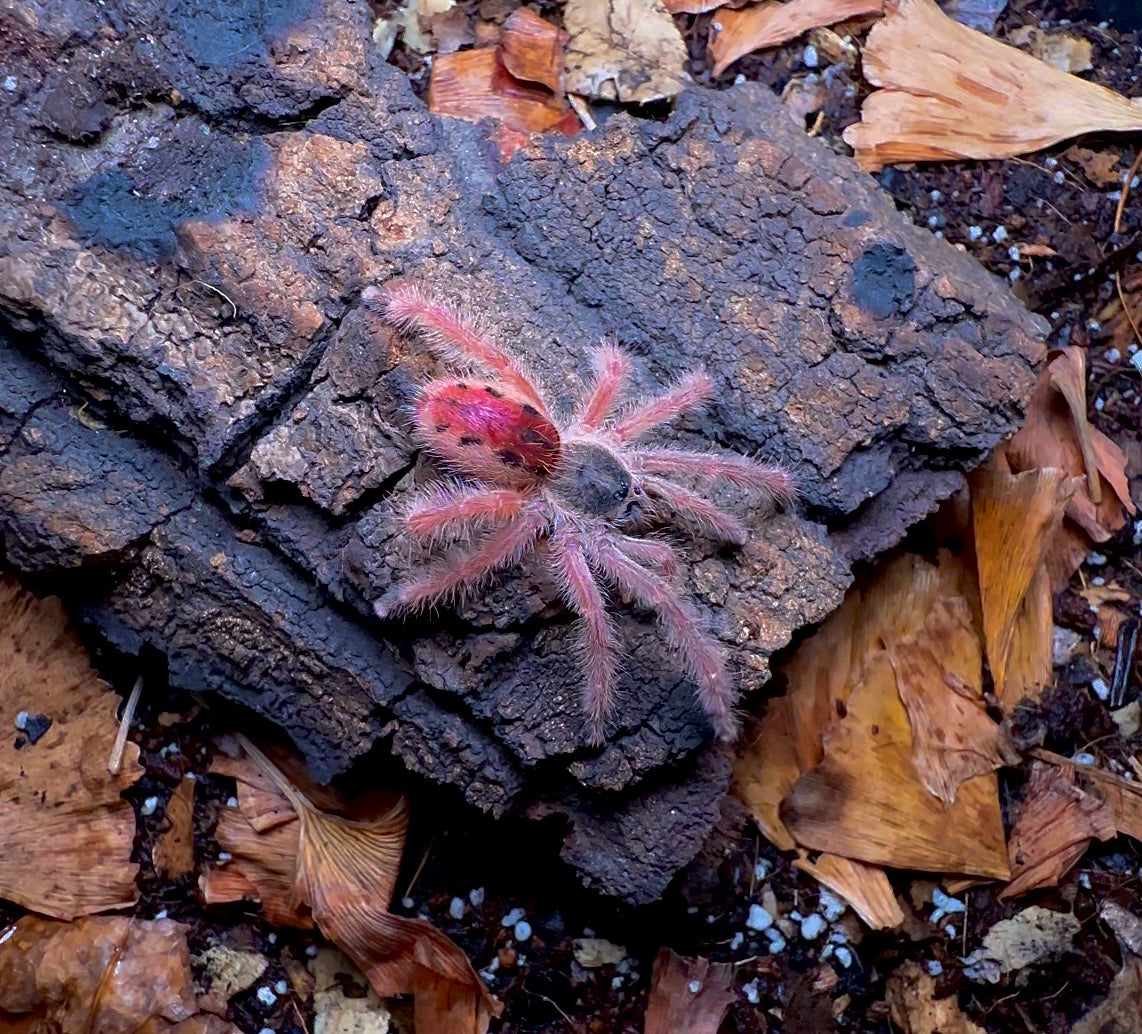
The Ruby Bloom Pink Toe (Iridopelma sp. Rosa)

A Dazzling Jewel From the Canopy

Introducing the Ruby Bloom Pink Toe, (Iridopelma sp. Rosa) a jaw-dropping new world arboreal species that’s unlike anything currently available in the U.S. This species is one of the rarest spiders in the country today. Native to the lush treetops of Brazil, this Iridopelma species is a game-changer for collectors of colorful, display-worthy arboreals.

Unmatched Beauty and Drastic Color Change

One of the most visually dynamic species on the market, the Ruby Bloom Pink Toe starts life with a neon orange body and an iridescent pink pattern splashed across its abdomen. But once your spider hits 3.5 inches in DLS, it undergoes a complete transformation—trading in its bright neon tones for a mature look that has to be seen to be believed. Adults are clothed in a luxurious purplish-pink body, topped off with a vibrant, gem-like red abdomen that shines like a polished ruby under light.

Perfect Size, Perfect Personality

Reaching a very manageable 5 to 6 inches in diagonal leg span, this species brings just the right amount of wow factor without being overwhelming in size. Even better—unlike other arboreals that are fast, defensive, or skittish—the Ruby Bloom Tree Spider is remarkably calm and mild-mannered. Their relaxed temperament makes them suitable for handling and an excellent choice for both intermediate keepers and adventurous beginners.

Don’t Miss the Ruby Bloom

Only a handful of these spiders currently exist in the U.S., making them one of the most exclusive additions you could possibly make to your collection. Their fast growth rate, ease of care, and docile nature create the perfect blend of rarity, beauty, and personality. A semi-arboreal setup with vertical cork bark and moderate humidity will keep this species thriving, while you get to enjoy their radiant colors from day one.With their visual allure, limited availability, and gentle demeanor, the Ruby Bloom Tree Spider is destined to become one of the most sought-after pink toe’s in the hobby. But with so few in the country and even fewer available for sale, this is your chance to own a species no one else has! 

View full details
WESTSIDE TARANTULAS

Species Profile

Everything You Need To Know At A Glance.
Experience Level
Beginner
Temperament
Docile, Curious & Tolerant of Handling
Type
Arboreal / New World / Pinktoe
DLS
Adult Size
4-5” DLS
Country of Origin
Brazil
Life Span
♀15+ Years

Care & Husbandry Guide

🏠 Enclosure & Substrate

Use a vertical arboreal enclosure with cork bark, branches, foliage, and plenty of anchor points near the upper portion of the enclosure. Ruby Blooms will build webbed retreats around these structures and spend most of their time above the substrate. Prioritize usable height and cross ventilation rather than deep substrate.

🌡️ Temperature & Humidity

Keep Ruby Blooms around 70–78°F with moderate humidity and excellent ventilation. Rather than keeping the entire enclosure damp, I prefer mostly dry substrate with occasional light misting of the webbing and enclosure walls. This gives them easy access to water without creating the stagnant conditions that arboreal tarantulas don’t do well in.

 🍽️ Feeding & Water 

Ruby Blooms are reliable eaters and growing specimens can be offered an appropriately sized cricket or roach about once a week. Larger specimens can be fed every 7–14 days depending on body condition. Provide a clean water dish once they’re large enough, and I also recommend lightly misting part of their webbing 1–2 times a week so they can drink droplets directly without having to leave their retreat.

🕷️ Species-Specific Care 

Ruby Bloom Pink Toes are hardy, docile arboreals that are surprisingly easy to care for. Give them a tall, well-ventilated enclosure with vertical cork bark, climbing surfaces, and plenty of anchor points for webbing. Like most pinktoe-type species, good airflow is extremely important. Avoid stuffy, constantly wet setups and this species is very straightforward to maintain.