
Westside Tarantulas
Melopoeus albostriatus – Thai Purple Zebra Tarantula - For Sale!
Couldn't load pickup availability
Melopoeus albostriatus – Thai Purple Zebra
The Crown Jewel of Southeast Asian Tarantulas
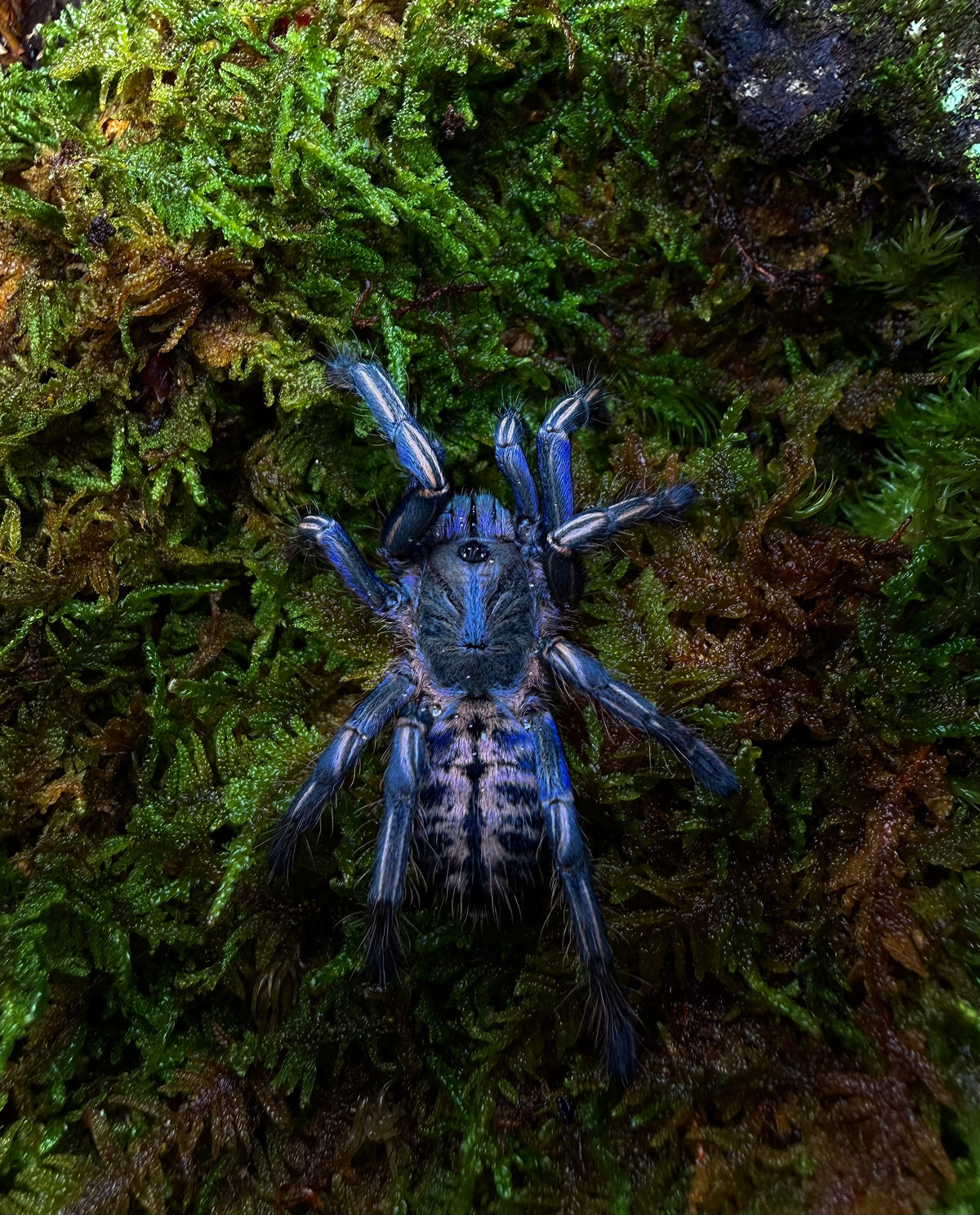
Few Old World tarantulas stop experienced collectors in their tracks quite like the Thai Purple Zebra (Melopoeus albostriatus). Native to Thailand, this exceptionally rare species has become one of the most coveted arboreal tarantulas in the hobby thanks to its brilliant electric-blue sheen, striking zebra-striped legs, and impossibly clean silver-and-black abdominal patterning. This isn’t a species you’ll commonly see offered for sale, and when captive-bred specimens become available, they disappear quickly into the collections of serious enthusiasts. If your goal is to own something that virtually nobody else has, Melopoeus albostriatus belongs at the very top of your wish list.
Electric Blue Metallic Coloration Unlike Anything Else
The first thing you’ll notice about the Thai Purple Zebra is its unreal metallic appearance. Every leg is coated in a shimmering electric blue to violet iridescence that seems to glow under natural light, while crisp cream and silver bands wrap around each segment to create the iconic “zebra” or “skeleton leg” pattern this species is famous for. The abdomen is equally breathtaking, displaying bold black striping over a pale silver background that perfectly complements the metallic blue legs. Freshly molted specimens are absolutely mesmerizing, with colors so vibrant they almost appear artificial. It is one of those rare tarantulas that genuinely looks even better in person than it does in photographs.
Built for the Serious Collector
This is not another colorful Old World—it’s one of the hobby’s true hidden gems. Captive-bred Melopoeus albostriatus remain exceptionally scarce, and very few breeders work with the species successfully. Their rarity, breathtaking appearance, and relatively limited availability have made them one of the most desirable arboreal tarantulas for advanced collectors. If you enjoy owning species that stand out from the crowd instead of following it, this is exactly the kind of tarantula that deserves a place in your collection.
Fast, Fearless & Full of Personality
The Thai Purple Zebra possesses everything experienced Old World keepers love. Lightning-fast reflexes, incredible agility, excellent web-building behavior, and an alert, intelligent personality make this one of the most engaging arboreal species to observe. While generally preferring retreat over confrontation, Melopoeus albostriatus is absolutely not a beginner tarantula. They are extremely quick, highly defensive when cornered, and should always be respected during maintenance. For experienced keepers, however, that energetic personality is part of what makes this species so rewarding to own.
A Must-Have for Every Old World Collection
There are colorful Old Worlds… and then there’s Melopoeus albostriatus. Between its metallic electric-blue legs, flawless zebra striping, silver patterned abdomen, rarity in captivity, and unmistakable appearance, this species checks every box serious collectors look for. It is one of those tarantulas that instantly becomes the centerpiece of an Old World collection and never fails to impress anyone fortunate enough to see it in person. If you’re building the ultimate arboreal collection, the Thai Purple Zebra isn’t optional—it’s essential.
Share

Species Profile
Care & Husbandry Guide
🏠 Enclosure & Substrate
Give this species a deep fossorial enclosure with several inches of compactable substrate—the deeper, the better. Start a burrow along one side using cork bark or a pre-dug tunnel and let the tarantula take over from there. They don’t need climbing space, so prioritize substrate depth and enough floor space to create a substantial underground retreat.
🌡️ Temperature & Humidity
Keep this species around 72–80°F with moderate moisture and good ventilation. I prefer allowing the surface to dry somewhat while keeping the deeper layers of substrate slightly moist, which gives the spider access to the conditions it wants deeper inside its burrow. Avoid both bone-dry substrate throughout the enclosure and soaking-wet, stagnant conditions.
🍽️ Feeding & Water
M. albostriatus have a powerful feeding response and will often explode from their burrow the second prey gets close. Growing specimens can be offered an appropriately sized cricket or roach about once a week, while larger females can be fed every 7–14 days depending on body condition. Keep a clean water dish available for larger specimens and never dig open a sealed burrow simply because the tarantula refuses food—it may be preparing to molt.
🕷️ Species-Specific Care
Thai Purple Zebras are hardy fossorial Old World tarantulas that are fairly straightforward to maintain once they’re given the right setup. The key is deep, compactable substrate that allows them to construct a proper burrow. Once established, they’ll spend much of their time underground and usually emerge around the entrance when hungry, making the burrow itself a big part of the experience of keeping this species.