
Skip to product information
1 of 4

Westside Tarantulas

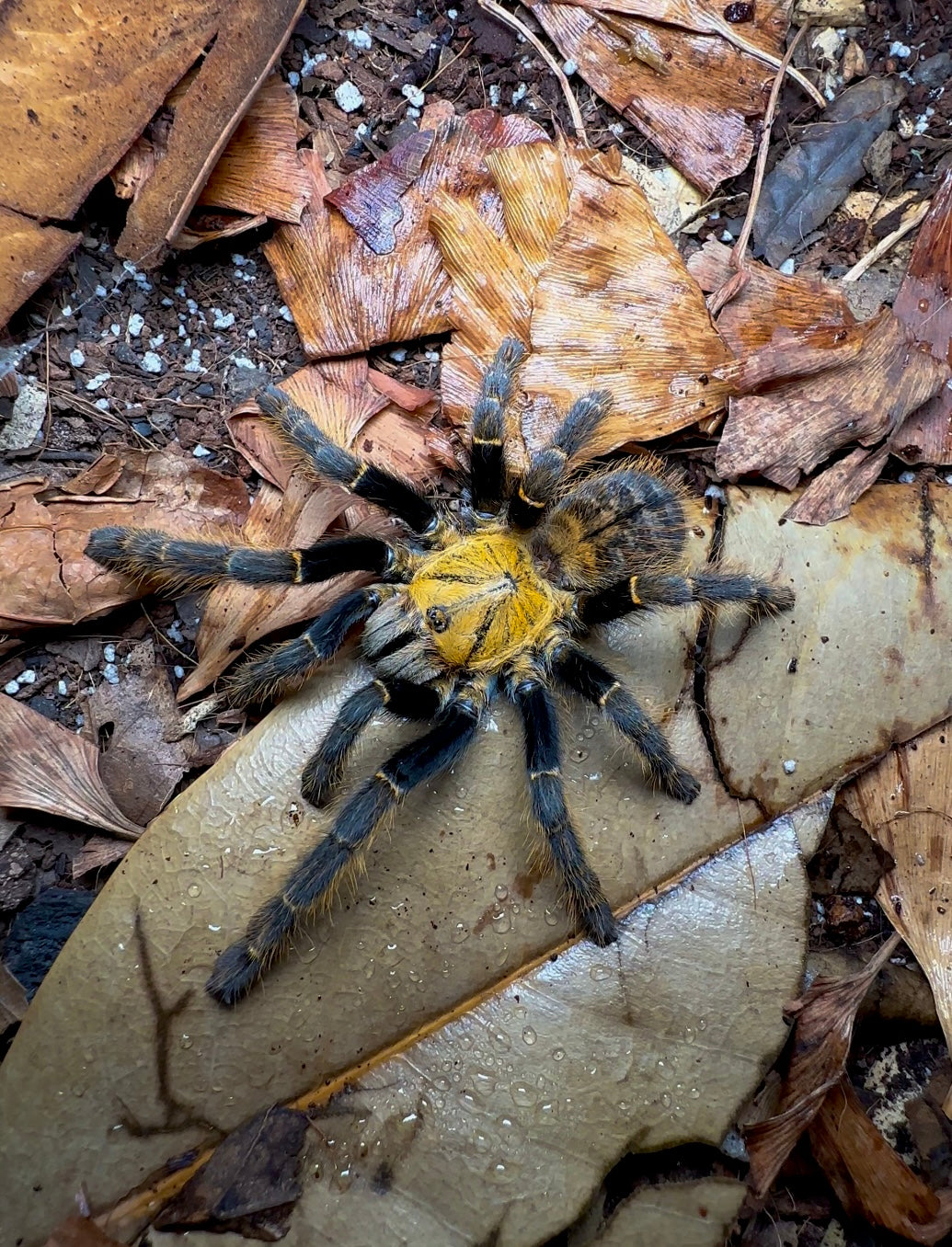
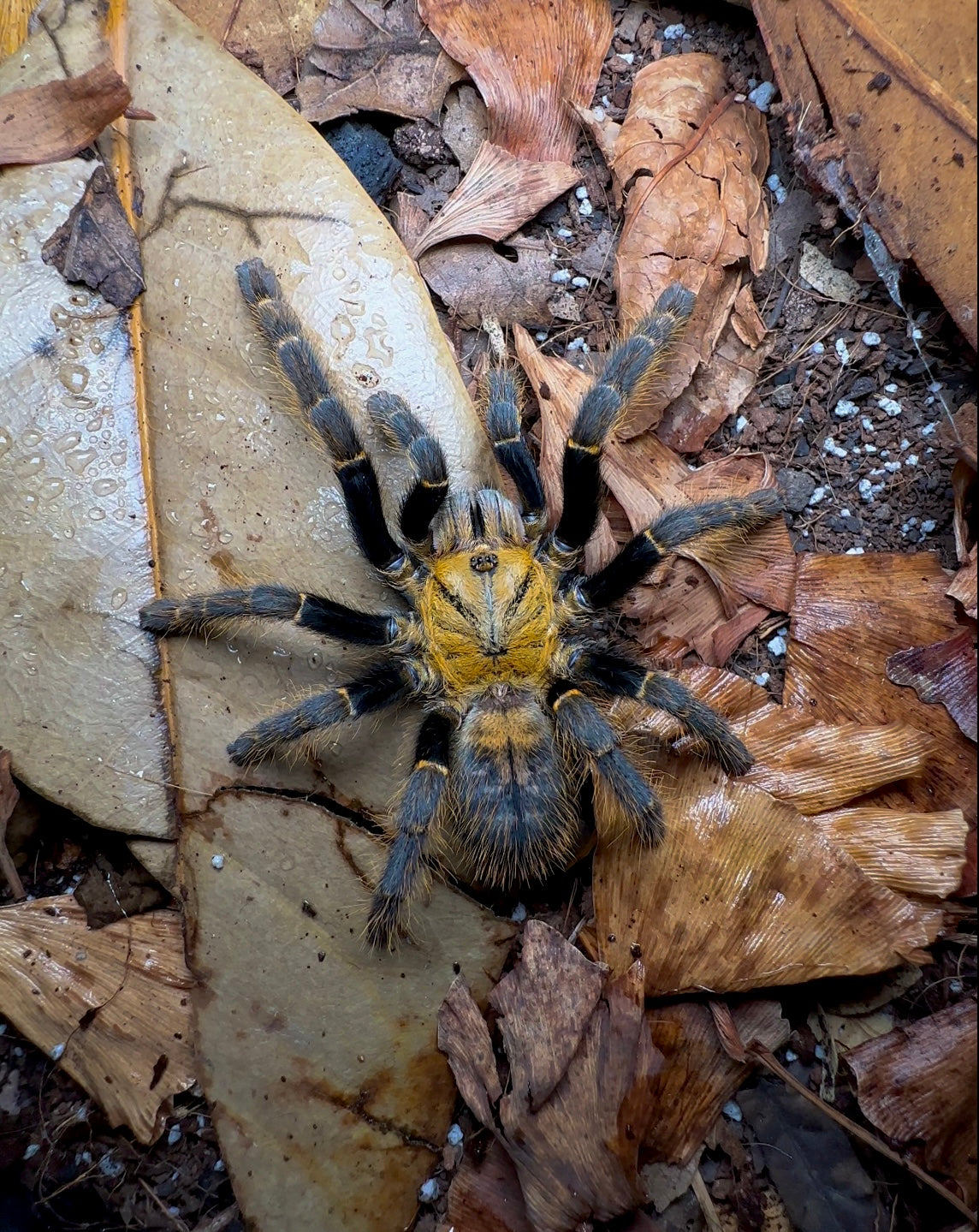
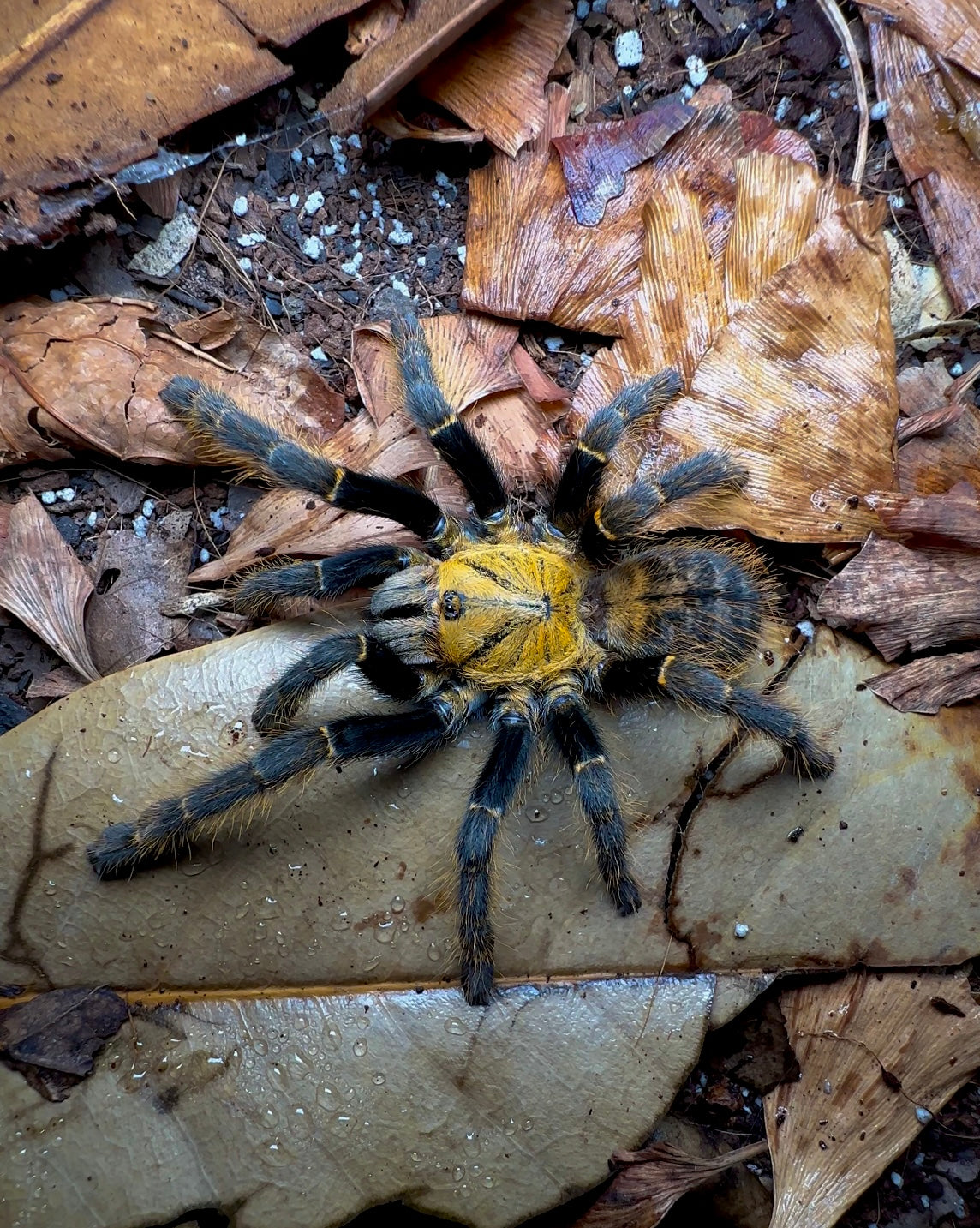
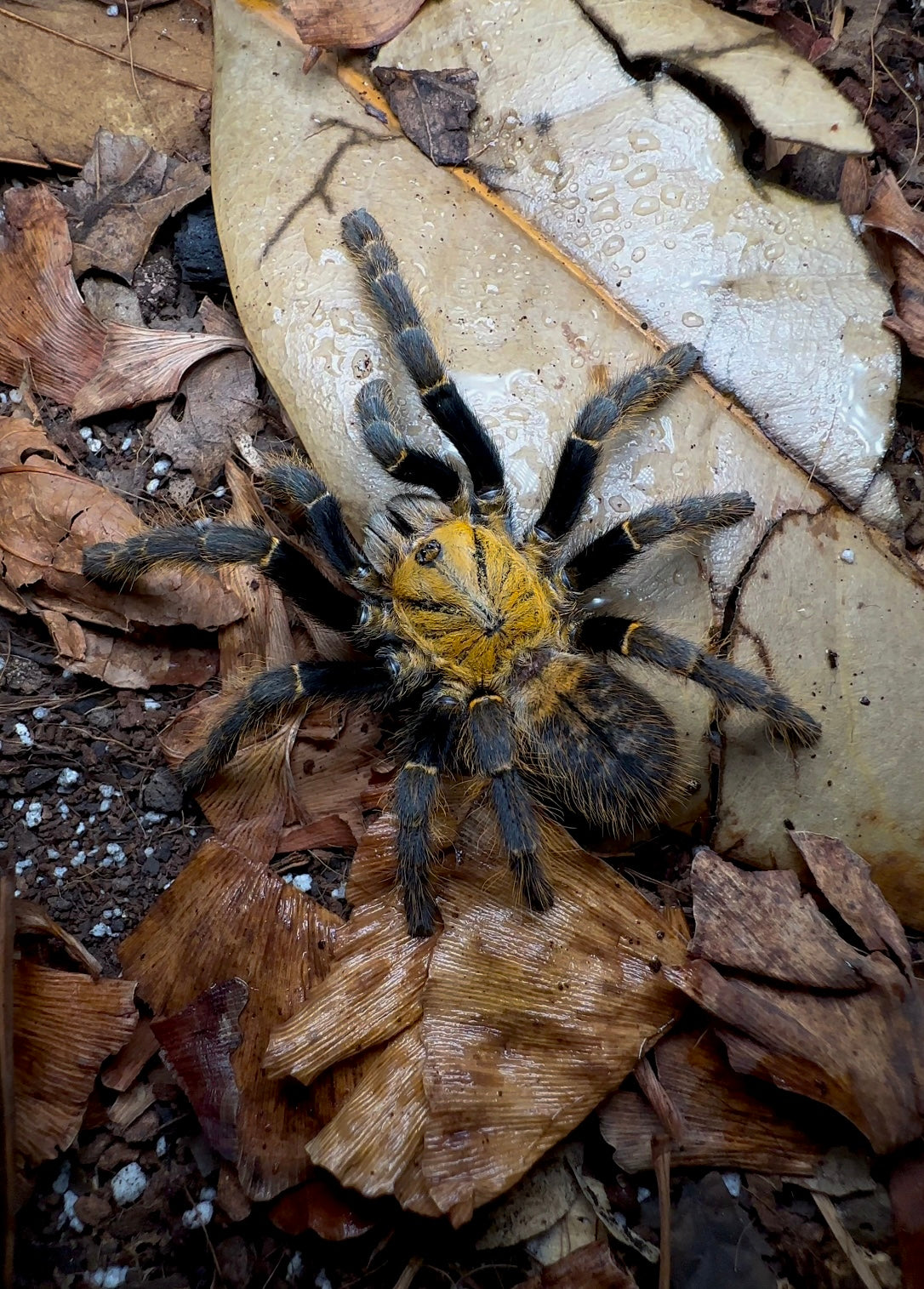
Orithoctinae sp. Ho Chi Minh - Golden Beauty Tarantula - For Sale

Orithoctinae sp. Ho Chi Minh - Golden Beauty Tarantula - For Sale

Regular price $500.00
Regular price Sale price $500.00
Sale Sold out
Shipping calculated at checkout.
Size and Sex

Orithoctinae sp. Ho Chi Minh - The Golden Beauty

The Orithoctinae sp. Ho Chi Minh is a stunning and extremely rare Old World tarantula, native to the vibrant city of Ho Chi Minh in Vietnam. Known for its black legs with golden bands, black-and-gold tiger-striped rump, and brilliant shiny gold carapace, this species is truly one of a kind. Still undescribed by science, this elusive species is a rare opportunity for enthusiasts to work with one of the most exclusive tarantulas in the hobby. Its striking coloration and rarity make it a must-have for serious collectors seeking something unique.

View full details
WESTSIDE TARANTULAS

Species Profile

Everything You Need To Know At A Glance.
Experience Level
Advanced
Temperament
Fast, Defensive & Retreat-Oriented
Type
Fossorial / Old World
DLS
Adult Size
5–6” DLS
Country of Origin
Vietnam
Life Span
♀12–15+ Years

Care & Husbandry Guide

🏠 Enclosure & Substrate

Give the Golden Beauty a deep fossorial enclosure with several inches of compactable substrate. I recommend starting a burrow against the side of the enclosure using cork bark or a pre-dug tunnel so you have a better chance of seeing the animal underground. They don’t need climbing space, so prioritize substrate depth and a secure, escape-proof enclosure over height.

🌡️ Temperature & Humidity

Keep this species around 72–80°F with moderate moisture and good ventilation. I like allowing the surface of the substrate to dry somewhat while keeping the deeper layers slightly moist. This gives the tarantula a moisture gradient inside its burrow without creating a soaking-wet enclosure. Avoid letting the entire setup become either bone dry or constantly saturated.

 🍽️ Feeding & Water 

These guys have an insane feeding response and can explode from their burrow the second prey gets close. Growing specimens can be offered an appropriately sized cricket or roach about once a week, while larger animals can be fed every 7–14 days depending on body condition. Provide a clean water dish for larger specimens, and never dig open a sealed burrow simply because the tarantula stops eating—it may be preparing to molt.

🕷️ Species-Specific Care 

Golden Beauties are hardy fossorial Old World tarantulas that are fairly straightforward to maintain once they’re given a proper burrow. They spend most of their time underground, so the key is deep, compactable substrate with a little moisture retained below the surface. Once established, they’ll create an impressive tunnel system and usually wait near the entrance when they’re ready to eat.