
Skip to product information
1 of 4

Westside Tarantulas

Pamphobeteus ultramarinus - Andean Purple Cloud Bird Eater - For Sale

Pamphobeteus ultramarinus - Andean Purple Cloud Bird Eater - For Sale

Regular price $1,750.00
Regular price Sale price $1,750.00
Sale Sold out
Shipping calculated at checkout.
Size and Sex

Andean Purple Cloud Bird Eater - (Pamphobeteus ultramarinus)

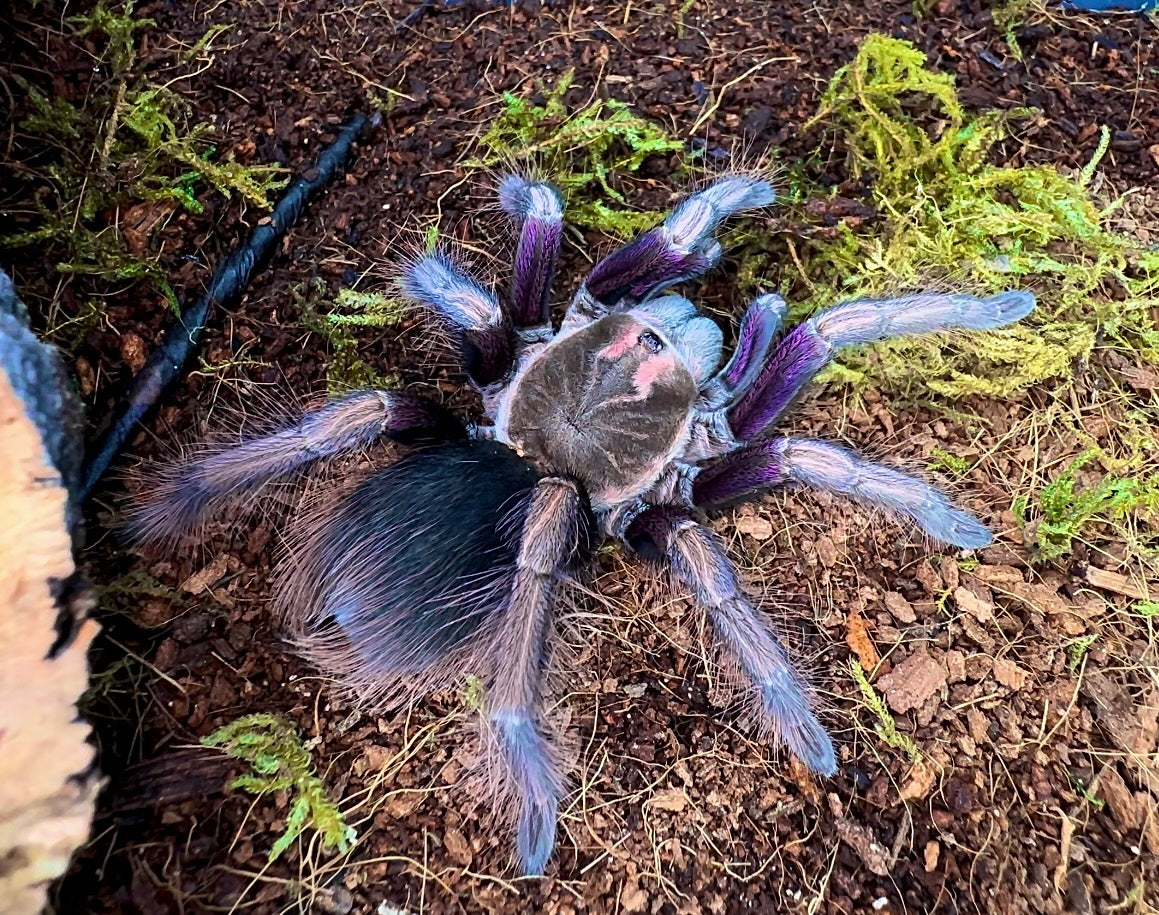
The Andean Purple Cloud Bird Eater (Pamphobeteus ultramarinus) is one of the most breathtaking and underrated species in the entire Pamphobeteus genus. Hailing from the Andean region, specifically in the inter-Andean valley of Chota in the provinces of Imbabura and Carchi , this medium sized New World beauty is unlike most members of her genus—and in the best way possible. Unlike its larger, more defensive cousins, the Andean Purple Cloud grows to a respectable 6 inches in diagonal leg span, making it one of the smallest members of its genus. But don’t let size fool you—this species carries the majestic look and regal presence of a tarantula twice its size. Adult females are living works of art, boasting deep violet femurs that shimmer like gemstones, legs frosted in soft silver-blue, and a striking pink carapace that looks like it was painted with fire. The abdomen is cloaked in long, auburn hairs that complete this tarantula’s majestic-like appearance.

A Hardy and Docile Species! 

What truly sets Pamphobeteus ultramarinus apart is it’s personality. The Andean Purple Cloud is exceptionally docile, never kicks hairs, and is one of the only Pamphobeteus species that tolerates and even seems to enjoy gentle handling. These spiders move with slow confidence, calmly strolling onto your hand without the skittish/nervous energy typical of most Pamphobeteus species. This very behavior has stunned keepers over the years making it a rare and iconic favorite among seasoned collectors. Not to mention Its unmatched hardiness. Adapted to extreme shifts in temperature and humidity in its native mountainous habitat, P. ultramarinus can thrive across a wide range of captive conditions. From bone-dry substrate to higher humidity environments, this tarantula stays healthy and vibrant, making it one of the easiest Pamphobeteus species to care for—perfect for intermediate hobbyists wanting to dip their toes into high-end species. That said this does result in one unfortunate downside, Pamphobeteus ultramarinus is extremely hard to breed as fair, extremely harsh, high elevation conditions are nearly impossible to replicate in captivity. Additionally, importing wild caught specimens is extremely illegal, as a result the availability of this species has dwindle to practically none which has led to high price increases over the last 10 years. With that being said, whether you’re a seasoned collector looking for a rare and gorgeous display tarantula or a passionate hobbyist ready to take on the challenge of breeding the Andean Purple Cloud Bird Eater delivers it all: beauty, temperament, rarity, and resilience. Don’t miss your chance to own one of the most elegant and easygoing Pamphobeteus species ever discovered.

View full details
WESTSIDE TARANTULAS

Species Profile

Everything You Need To Know At A Glance.
Experience Level
Beginner
Temperament
Extremely Docile, Slow-Moving, Non-Defensive & Frequently Out on Display
Type
Terrestrial / New World
DLS
Adult Size
6+” DLS
Country of Origin
Ecuador
Life Span
♀ 30+ Years

Care & Husbandry Guide

🏠 Enclosure & Substrate

Provide a wide terrestrial enclosure approximately 3–5× the tarantula’s leg span with plenty of usable floor space. Based on my experience with this species, only around 2–3 inches of substrate is necessary because my established specimens rarely burrow. Keep one half of the enclosure moist and the other half bone dry, with a water dish available at all times. This creates two distinct microclimates and allows the tarantula to regulate its own moisture exposure. 

🌡️ Temperature & Humidity

One of the more temperature-tolerant Pamphobeteus in captivity due to its montane origin. Its documented natural range reaches roughly 1,900–2,600 m elevation, and husbandry sources report tolerance of cooler temperatures than many tropical species. Normal room temperatures are appropriate; avoid attempting to maintain one uniformly hot, saturated environment. Prioritize a wet-to-dry substrate gradient and ventilation over chasing a specific humidity percentage. 

 🍽️ Feeding & Water 

Offer appropriately sized crickets, roaches, or similar prey approximately once weekly, adjusting frequency to body condition and feeding response. Adults can be fed less frequently. Keep a clean water dish available at all times, preferably positioned toward the moist side of the enclosure.

🕷️ Species-Specific Care 

This is an unusually adaptable Pamphobeteus originating from high-elevation Andean habitat in Ecuador, where conditions are cooler and more variable than those experienced by many tropical members of the genus. Rather than keeping the entire enclosure uniformly damp, provide a strong moisture gradient: keep approximately half of the substrate noticeably moist and the opposite half substantially drier. This allows the tarantula to choose its preferred microclimate. Always provide a clean water dish and good ventilation.