
Skip to product information
1 of 1

Westside Tarantulas

Pelinobius muticus - King Baboon Tarantula - For Sale

Pelinobius muticus - King Baboon Tarantula - For Sale

Regular price $350.00
Regular price Sale price $350.00
Sale Sold out
Shipping calculated at checkout.
Size and Sex

The King Baboon (Pelinobius muticus)

A Colossal Old World Tarantula 

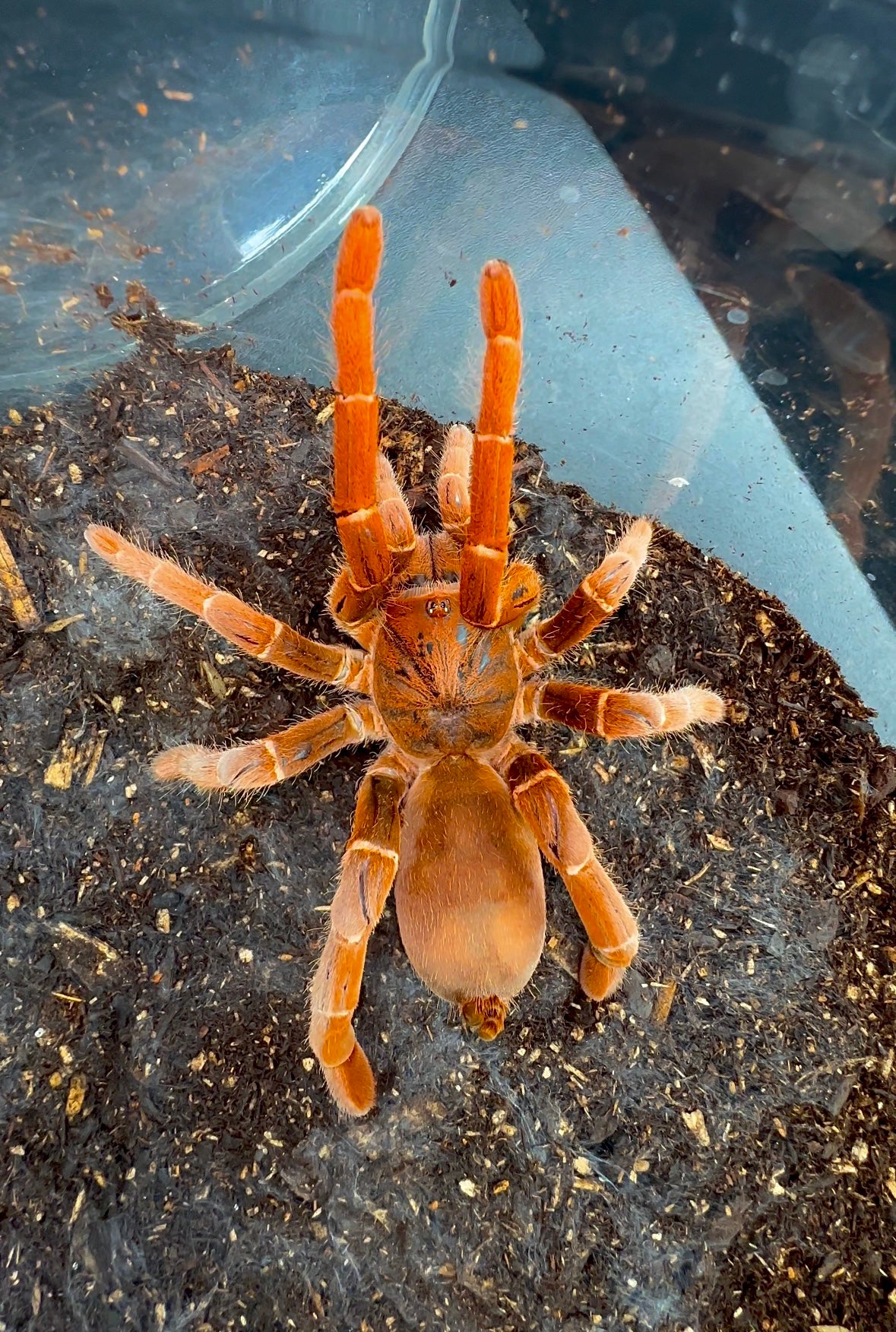
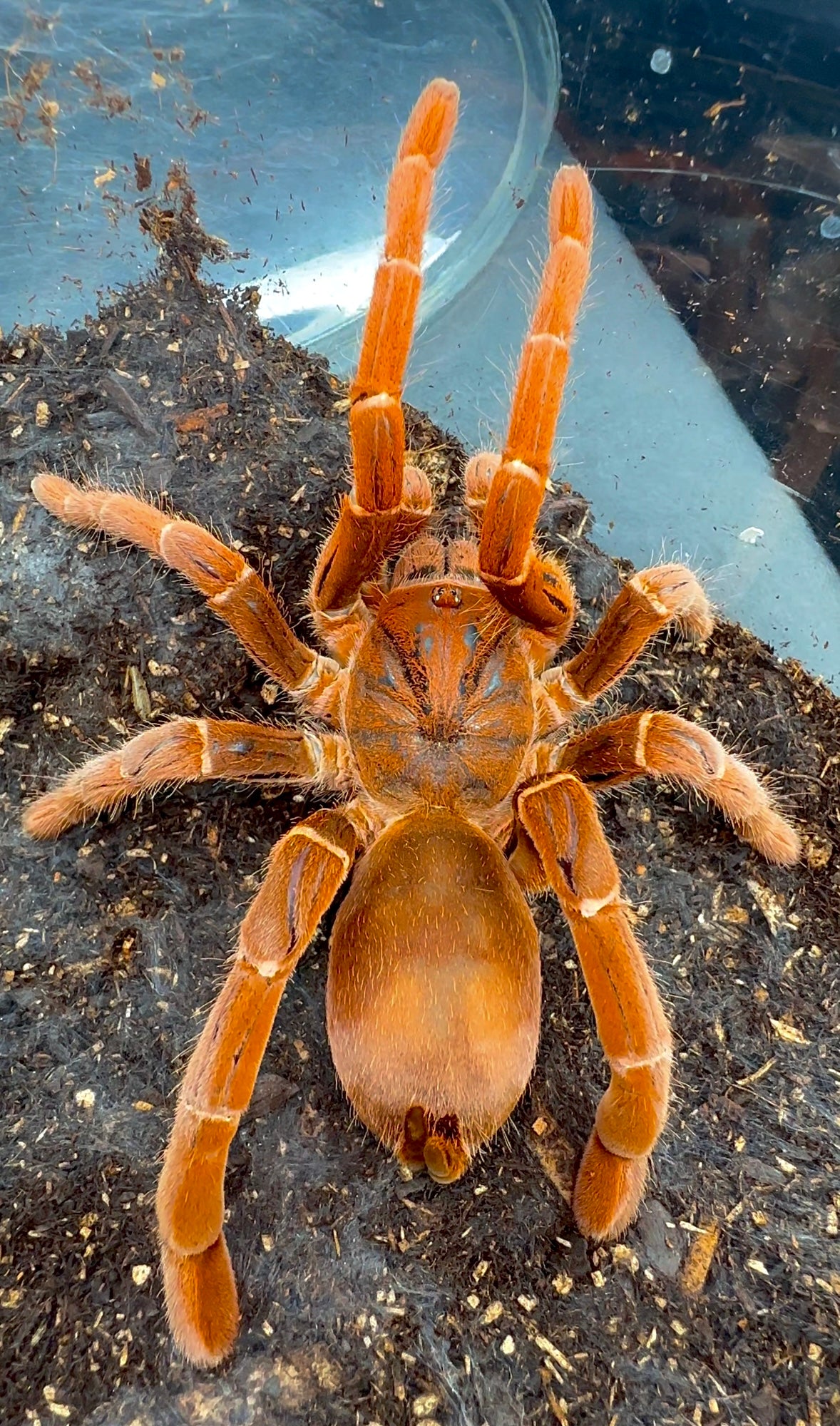
True royalty, The King Baboon Tarantula, scientifically known as Pelinobius muticus, is the undisputed heavyweight champion of the tarantula world! Native to the arid scrublands and savanna’s of East Africa, this species holds the title as the largest Old World tarantula on Earth, with adults reaching an impressive 8–9 inches in leg span and packing unmatched weight, size, bulk and power. That being said, the King Baboon flaunts a mesmerizing rusty-copper to burnt-orange coloration that deepens as it matures, paired with thick, muscular legs and massive, armored chelicerae that command attention. When the King Baboon feels threatened it will it will rub a specialized organ on its body produce the sound known as stridulation! Furthermore, their velvety exoskeleton catches light beautifully, and those thick legs are made for one thing: digging. When this beast rears up in a defensive posture, you’ll see exactly why it’s nicknamed “King.”

King Baboon behavior 

Pelinobius muticus is not for the faint of heart or beginner hobbyist. This is a pure Old World powerhouse while not guaranteed to be defensive, this species is reclusive, and a master burrower. While they prefer to retreat into their deep, fortified burrows rather than confront threats, when cornered, some specimens will not hesitate to stridulate (produce a loud hissing sound by rubbing their legs) or deliver a powerful defensive strike. However I’ve also had some specimens in the past that are extremely tolerant and docile to the point where I've been able to hold them like a new world… However these sort of specimens are far and infrequent. Their sheer presence makes them a dream for advanced keepers and display enthusiasts.

Why Keep This Species 

While not a species i would recommend for handling, the King Baboon is a true collector’s trophy — a display tarantula that offers unmatched power, presence, and primitive allure. Watching one bulldoze out of its burrow to pounce on its prey is an unforgettable experience. Even among Old World giants, Pelinobius muticus stands in a league of its own. And without a doubt this species will be a legendary centerpiece in any serious collection and you can expect the King Baboon to be a part of your family for well over 25 years! If you’re ready to own one of the most iconic and commanding tarantulas in the hobby, the King Baboon awaits. Don’t miss your chance to claim this living giant for your collection!

View full details
WESTSIDE TARANTULAS

Species Profile

Everything You Need To Know At A Glance.
Experience Level
Intermediate to Experienced
Temperament
Shy & Reclusive as Slings; Bold, Confident as Adults
Type
Fossorial / Old World / Giant Baboon
DLS
Adult Size
Approximately 8–9” DLS
Country of Origin
East Africa — (Kenya & Tanzania)
Life Span
♀25+ Years

Care & Husbandry Guide

🏠 Enclosure & Substrate

This enclosure should be built for digging first and display second. Your Westside recommendation of an enclosure roughly 3–5× the spider’s leg span with at least 5–6” of substrate is appropriate; deeper substrate can be provided when practical. Use firmly packed coco fiber/soil or another substrate capable of holding a tunnel, establish a starter burrow, and leave enough depth for the spider to construct its characteristic retreat. Slings should also receive proportionally deep substrate rather than being maintained like surface-dwelling terrestrials. 

🌡️ Temperature & Humidity

Approximately 72–82°F works well in captivity. Rather than chasing a specific ambient humidity percentage, maintain a drier surface with moisture retained deeper in the substrate and/or on one side. This better reflects a species from seasonally dry East African savanna and scrub habitat that retreats into deep burrows where conditions remain more stable and humid than at the surface. Avoid keeping the substrate uniformly saturated. 

 🍽️ Feeding & Water 

Feed at the entrance of the burrow rather than trying to coax the tarantula into the open. Juveniles can generally receive appropriately sized prey weekly, while a large adult female can be fed less frequently according to abdomen condition. Your established Westside care notes mention that adults frequently bury water dishes; if a dish remains accessible, keep one available, but the enclosure’s moisture gradient is particularly important for specimens that repeatedly bury it. 

🕷️ Species-Specific Care 

The King Baboon is a massive East African fossorial species that spends much of its life inside an extensive burrow. Deep, compactable substrate is the priority. Give adults at least 5–6” of substrate, preferably deeper when enclosure dimensions allow, and start a burrow beneath cork bark or along one side. Create a moisture gradient rather than keeping the entire enclosure wet: hydrate one side/lower substrate while allowing the surface and opposite side to remain considerably drier. Once established, avoid unnecessarily disturbing or excavating its burrow.