Thrixopelma lagunas – Peruvian Blue Zebra
One of the Bluest Tarantulas You’ll Ever See!
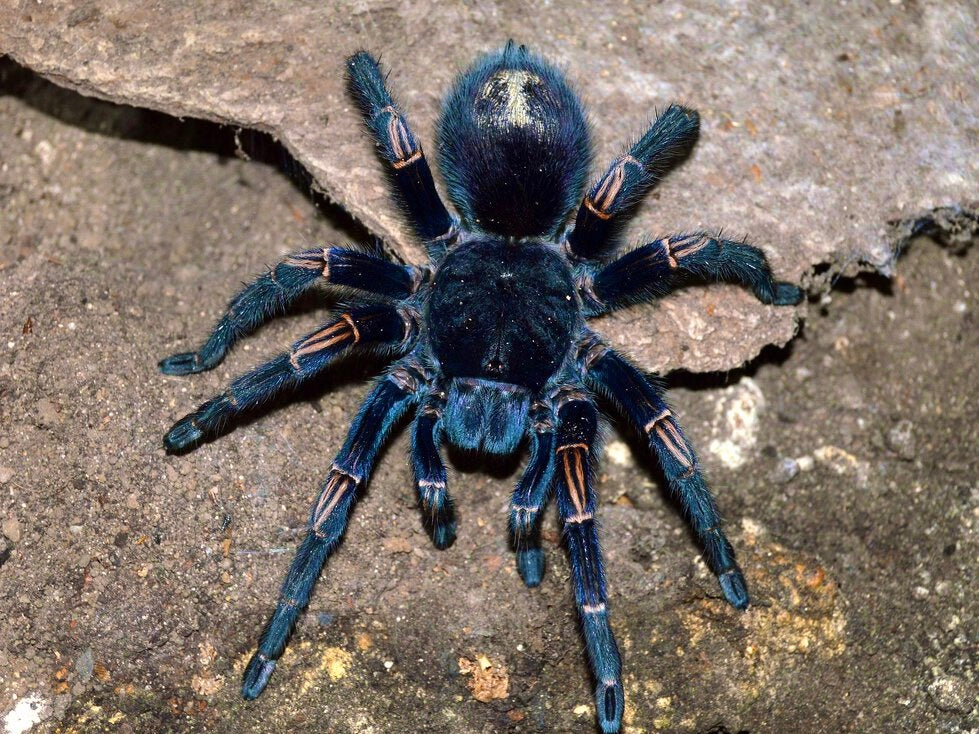
The Peruvian Blue Zebra is easily one of the most beautiful blue terrestrial tarantulas I’ve ever worked with. Adults develop an incredible combination of deep metallic royal-blue legs contrasted by fiery red and copper-colored knees. And after a fresh molt? The blues become so intense that pictures honestly don’t do this species justice!
Unlike most smaller Thrixopelma, Blue Zebras can reach an impressive 6.5+” DLS, giving you all that incredible coloration on a seriously large terrestrial tarantula.
A Rainbow That Turns Blue!
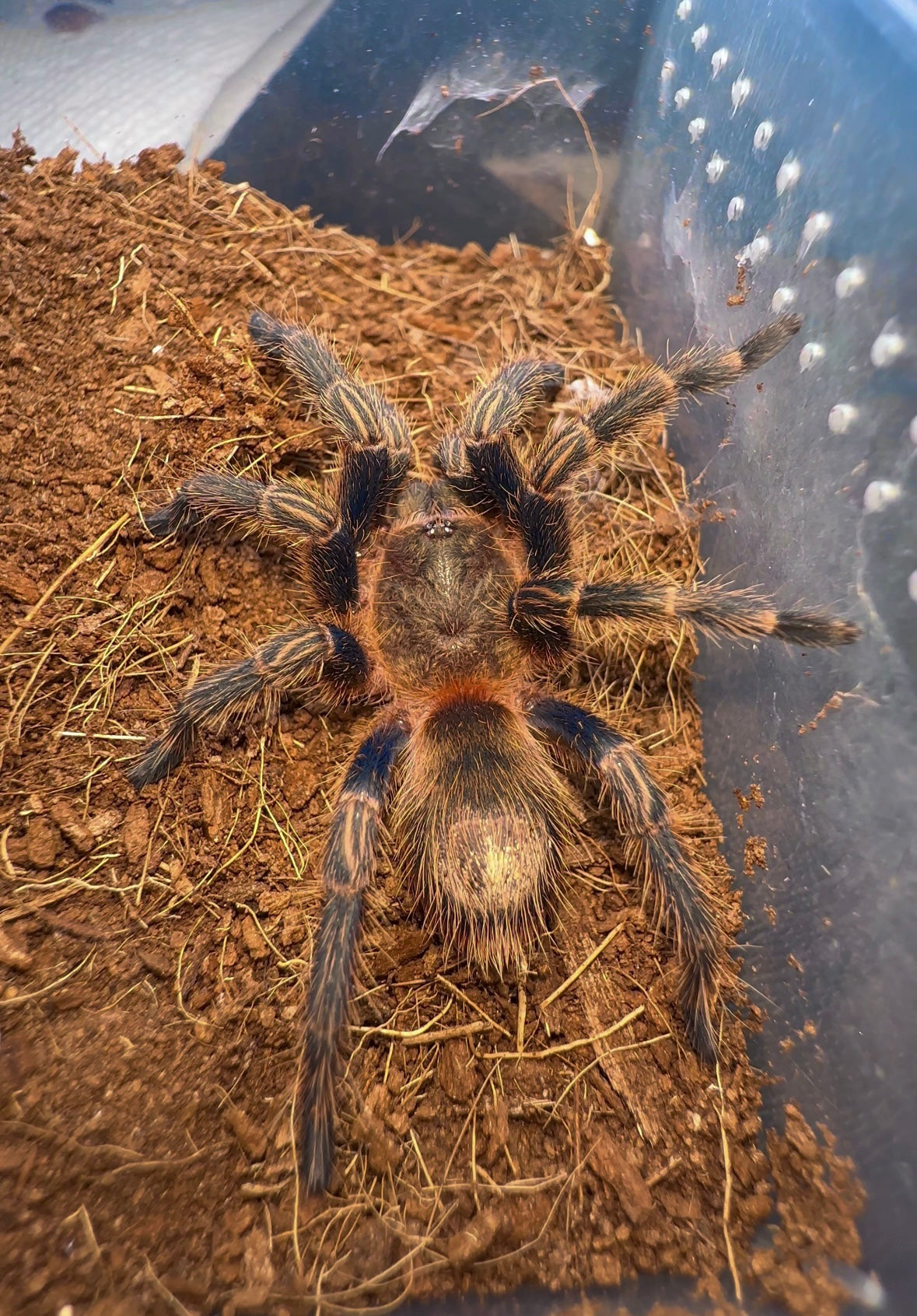
One of the coolest things about this species is how dramatically its appearance changes as it grows. As slings and juveniles, T. lagunas display an incredible mixture of blues, yellows, oranges, and copper tones, giving them an almost rainbow-like appearance.
As they mature, those colors gradually transform into the rich metallic blues and fiery red knee markings that make adults so impressive. It’s almost like raising two completely different tarantulas!
Extremely Rare & Often Misidentified!
Finding a true Thrixopelma lagunas is surprisingly difficult. Not only are these guys painfully slow growers, but they’re also frequently confused with other Thrixopelma species in the hobby, especially Thrixopelma longicolli.
One of the best ways to recognize a true Blue Zebra is by looking at its coloration as a sling or juvenile. That distinctive rainbow appearance is an important characteristic I look for when identifying and raising this species, although coloration alone shouldn’t be treated as definitive identification. With how slowly these animals develop, finding a well-established specimen from a reliable bloodline is a completely different story from purchasing an unidentified blue Thrixopelma.
Think of a Blue Chaco Golden Knee!
This is probably the easiest way I can describe their personality.
Extremely docile, slow-moving, calm, curious, and very tolerant of gentle handling.
If you’ve ever kept a Chaco Golden Knee, you already have a pretty good idea of what to expect. Blue Zebras have that same incredibly relaxed personality, but with some of the most ridiculous blue coloration you’ll ever see on a terrestrial tarantula.
They also spend plenty of time sitting completely out in the open, making them fantastic display animals.
Hardy Enough for Beginners!
Despite their rarity, these guys are unbelievably easy to care for. I keep mine practically identical to a Chaco Golden Knee. Mostly dry substrate, a clean water dish, good ventilation, and normal room temperatures are really all they need. They don’t require tropical humidity, complicated setups, or constant attention. Just simple, stable husbandry and a little patience.
Worth Every Year of Growing!
The only real downside to T. lagunas is how long they take to grow.
But once you’ve seen a large female freshly molted, with those insanely rich metallic-blue legs and fiery red knees, you’ll understand exactly why this species is worth waiting for.
A massive, incredibly docile, beginner-friendly blue tarantula that’s genuinely difficult to find. What’s not to love?