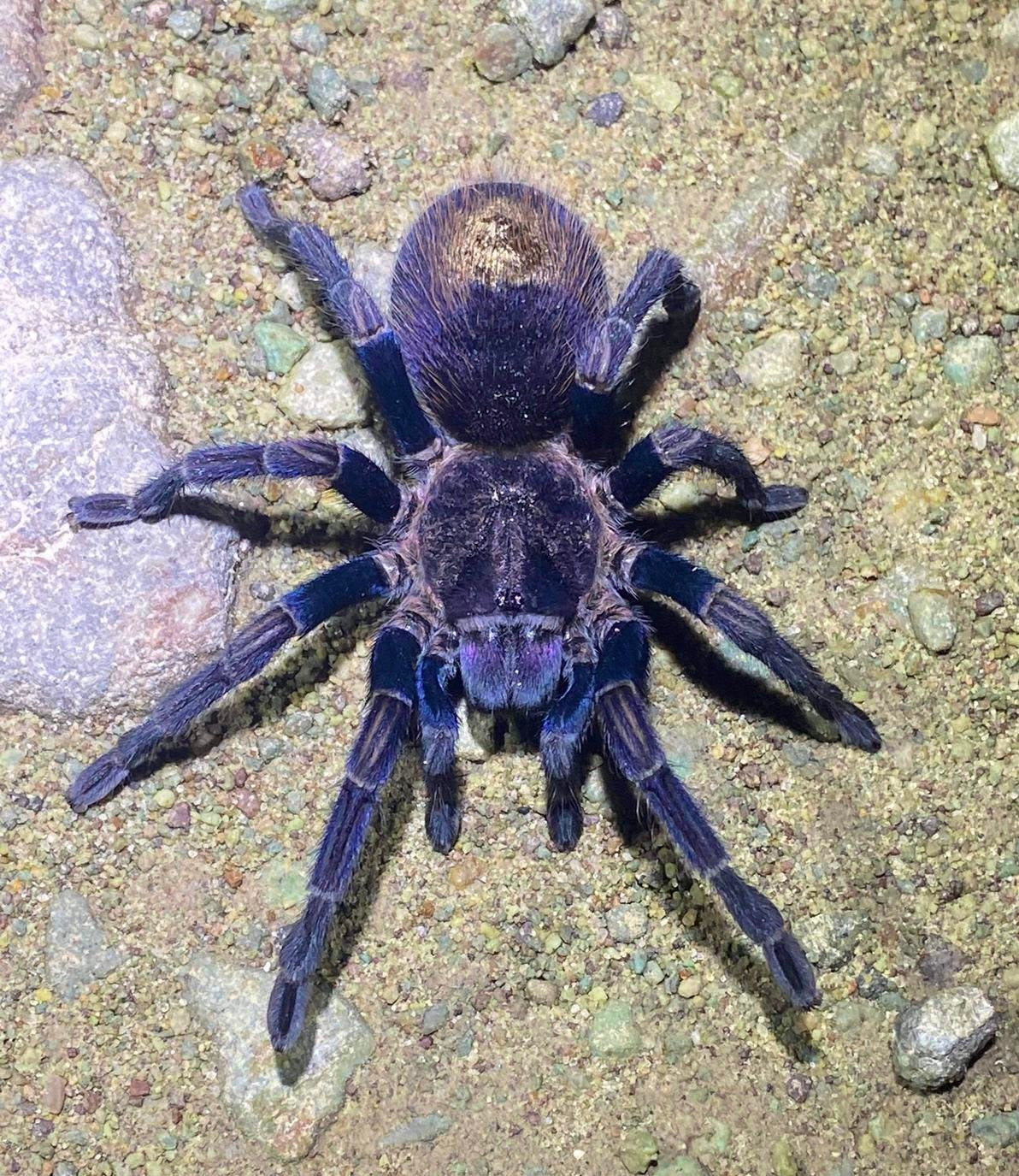
Thrixopelma sp. similis – Peruvian Golden Amethyst
An Exotic Treasure From the Heart of the Andes
The Peruvian Golden Amethyst, Thrixopelma sp. similis, is one of the most stunning and mysterious New World tarantulas to emerge in the hobby in recent years. Native to the high-altitude regions of Peru, this species is still extremely uncommon within U.S. collections and remains virtually unknown to many hobbyists. With very limited availability and only a small number of established specimens circulating in the hobby, Thrixopelma sp. similis is an incredible choice for collectors looking to add something genuinely unusual to their collection.
Glittering Coloration That Evolves With Age
As slings, Thrixopelma sp. similis can appear fairly understated—but don’t let that fool you. With every molt, their coloration becomes increasingly impressive, gradually developing a beautiful mixture of deep purple, warm gold, and subtle steel-blue tones. Adult females are especially spectacular, displaying rich velvet-purple legs contrasted against a golden carapace and an almost glitter-like iridescent sheen.
This is one of those species that truly rewards you for raising it. Watching the coloration intensify molt after molt is a huge part of what makes the Peruvian Golden Amethyst so enjoyable to keep.
Perfect Personality for Handling & Display
Despite their exotic appearance, the Peruvian Golden Amethyst is remarkably calm and slow-moving. In the years I have personally raised this species from tiny 0.25-inch slings, I have yet to see one show the type of extreme defensiveness or unpredictable temperament associated with many rarer tarantulas.
Their calm demeanor reminds me much more of species from genera such as Grammostola and Aphonopelma, making them an excellent option for someone who wants a rare collector species without sacrificing a manageable personality.
They also make fantastic display tarantulas. Rather than spending all of their time hidden away, established specimens are frequently visible and will often wander throughout their enclosure.
Hardy, Forgiving, and Low-Maintenance
Another reason I have fallen in love with this species is just how forgiving they are to keep. Thrixopelma sp. similis thrives in a terrestrial setup with moderate moisture but has proven extremely tolerant of normal fluctuations in humidity and environmental conditions.
Coming from the variable climate of the Peruvian Andes, they appear comfortable in both relatively dry ambient conditions and periods of increased humidity. I recommend keeping the majority of the enclosure relatively dry while maintaining a slightly moist area toward one side and always providing access to fresh water.
They are hardy, straightforward feeders, and overall surprisingly easy to maintain considering how rare and exotic they are.
A Rare Species With Incredible Potential
Thrixopelma sp. similis combines nearly everything I look for in a collector species: rarity, unusual coloration, a calm temperament, hardy care requirements, and a dramatic transformation as it matures.
The Peruvian Golden Amethyst is still very uncommon within the hobby, and established specimens—especially larger juveniles and females—remain difficult to come across. For collectors looking for something outside of the typical species seen for sale every day, this is easily one of the most exciting Thrixopelma currently available.