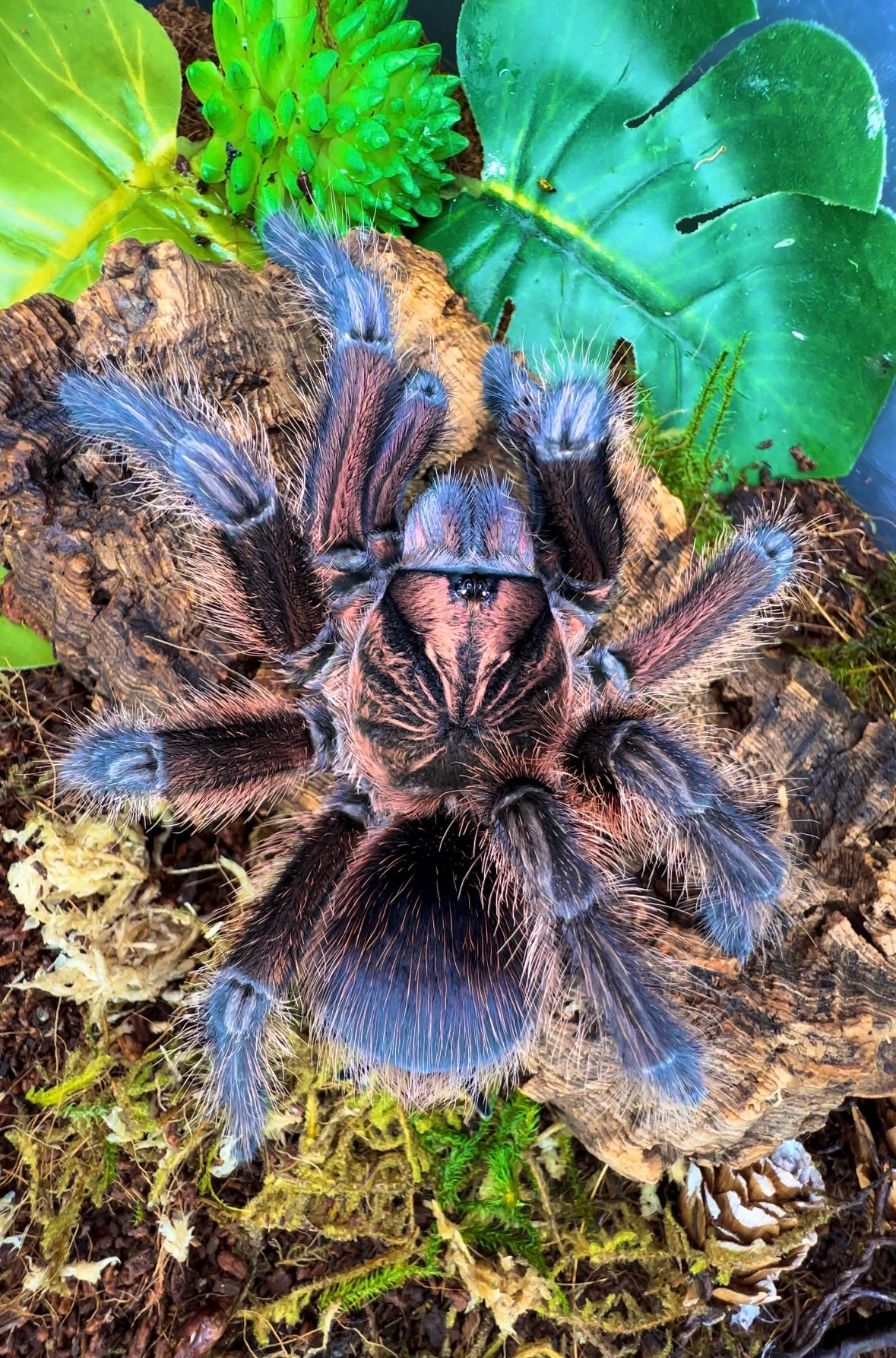
Phormictopus atrichomatus – Goliath Pink Bird Eater
One of the World’s Only TRUE Pink Giant Bird Eaters
If you’re looking for a tarantula that immediately separates itself from everything else in the hobby, the Goliath Pink Bird Eater (Phormictopus atrichomatus) is in a league of its own. Native to Cuba, this incredible species combines massive 8–9+ inch size, explosive feeding response, rapid growth, and some of the most unique coloration found on any bird-eating tarantula. While most giant tarantulas are dominated by shades of brown, gray, or black, P. atrichomatus is one of the only giant bird-eating tarantulas in the world to display genuine pink coloration. It’s an unforgettable species that looks every bit as impressive in person as it does in photographs, making it one of the ultimate centerpiece animals for any serious collection.
Pink, Blue & Copper… A Color Combination That Shouldn’t Exist
The Goliath Pink Bird Eater is unlike anything else in the genus. Freshly molted specimens develop soft rose-pink legs, a blush-pink carapace, shimmering electric-blue femurs, and a glowing copper-orange abdomen that creates one of the most striking color combinations found anywhere in the tarantula hobby. Under natural lighting, subtle lavender and metallic blue hues shimmer throughout the legs while the abdomen glows like polished copper. Every molt intensifies these colors, creating a tarantula that genuinely looks hand-painted by nature. It is one of the few species capable of stopping even experienced collectors in their tracks.
The Giant Bird Eater That Never Loses Its Beauty
One of the biggest disappointments with many giant bird-eating tarantulas is watching females become darker and more muted as they mature. Not Phormictopus atrichomatus. This is one of the very few giant bird-eating tarantulas where mature females remain every bit as colorful as the males. In fact, adult females often display the richest pinks, deepest blues, and strongest contrast of the entire species. That means you don’t have to choose between longevity and beauty—you get both. A massive 8–9 inch female displaying brilliant pink, blue, and copper coloration is truly one of the most breathtaking tarantulas a collector can own.
One of the Fastest Growing Giants You Can Own
Unlike many giant tarantulas that require years upon years to become impressive, Phormictopus atrichomatus grows at an incredible pace. With proper temperatures and regular feeding, these spiders quickly transform from tiny slings into enormous display animals. Nearly every molt brings noticeable increases in both size and coloration, making them one of the most rewarding species to raise from a baby. If your goal is owning a truly gigantic tarantula without waiting forever, few species can compete with the Goliath Pink Bird Eater.
A Feeding Response That Never Gets Old
If there’s one thing Phormictopus species are famous for, it’s their unbelievable appetite… and P. atrichomatus may be one of the best of them all. This species attacks prey with incredible speed and confidence, eagerly taking crickets, roaches, worms, and virtually any appropriately sized feeder insect. Feeding time is exciting, interactive, and one of the biggest reasons hobbyists become addicted to keeping this genus. Their powerful feeding response also contributes to their rapid growth and impressive adult size.
Massive, Hardy & Surprisingly Easy to Keep
Despite its enormous size and exotic appearance, the Goliath Pink Bird Eater is an exceptionally forgiving species in captivity. It adapts well to a variety of conditions, grows rapidly, eats enthusiastically, and tolerates minor husbandry mistakes far better than many tropical species. Combined with its spectacular coloration, gigantic adult size, and relatively straightforward care requirements, Phormictopus atrichomatus is easily one of the best giant display tarantulas available for both newer keepers looking to own their first “monster” species and experienced collectors wanting something truly unforgettable.