
Skip to product information
1 of 5

Westside Tarantulas

Phormictopus sp. Blue Azul - Goliath Blue Bird Eater - For Sale - BALLS RARE!

Phormictopus sp. Blue Azul - Goliath Blue Bird Eater - For Sale - BALLS RARE!

Regular price $175.00
Regular price Sale price $175.00
Sale Sold out
Shipping calculated at checkout.
Size and Sex

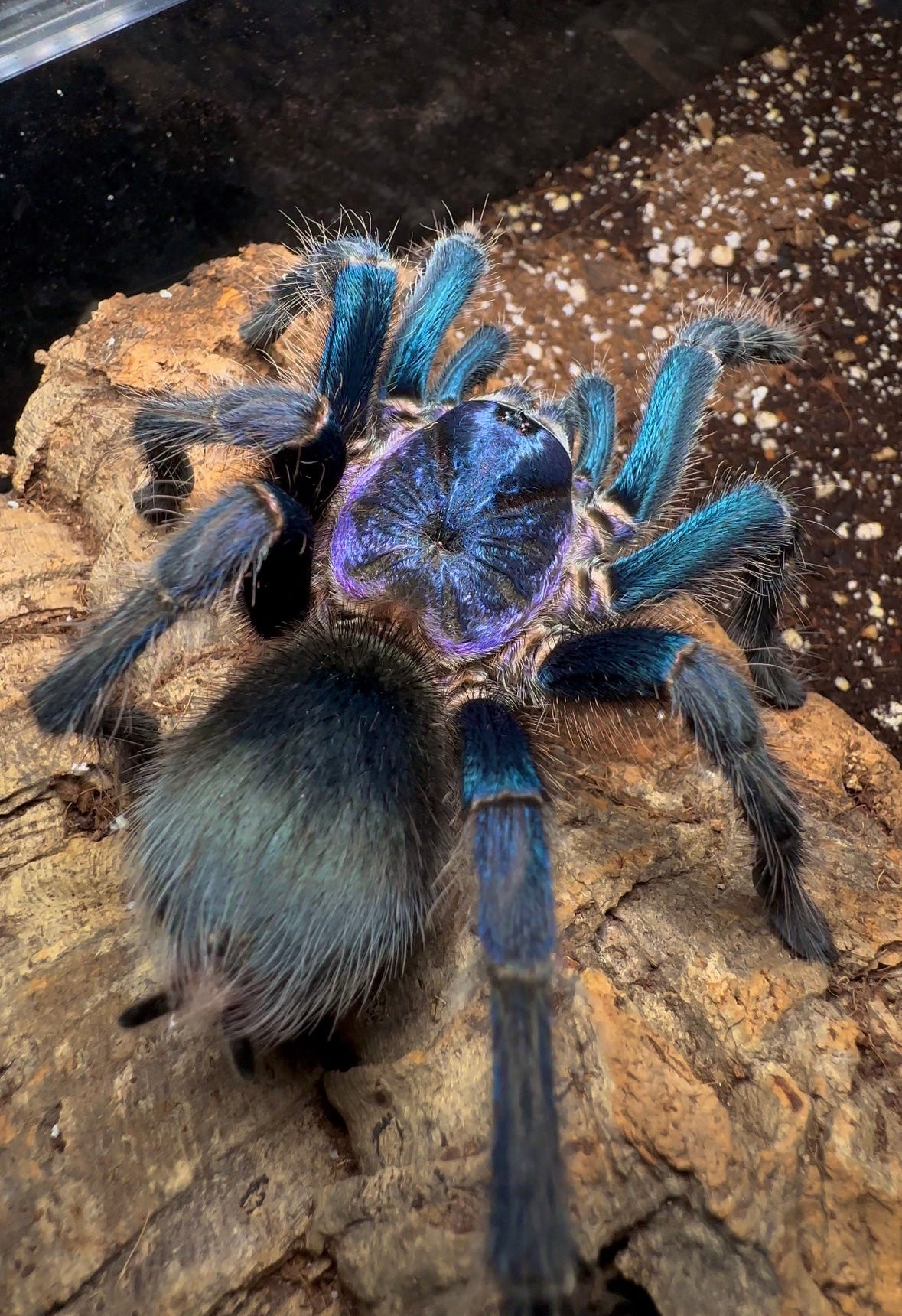
The Goliath Blue Bird Eater (Phormictopus sp. Blue Azul) 

A Gigantic Blue Rarity From The Caribbean!

Introducing the Goliath Blue Bird Eater, a stunning and extremely rare species of Phormictopus that hails from the heart of the Caribbean. This majestic terrestrial tarantula is draped in glimmering hues of sapphire blue, electric teal, and violet-purple undertones—especially vivid after a fresh molt. While its cousin (Phormictopus sp. “Dominican Purple”) is already considered a showstopper, the Blue Azul variant is significantly rarer, making it one of the most coveted large terrestrial tarantulas available in the U.S. hobby.

Docile Temperament, Impressive Size

Despite its monstrous size potential of 8–9 inches in DLS, the Phormictopus sp. Blue Azul is remarkably docile. This species rarely flicks hairs or displays defensive behavior, making it a standout gentle giant within the New World heavyweights. Though not recommended as a handling species due to sheer mass and occasional food aggression, their calm demeanor and impressive size make them one of the most rewarding display tarantulas you can own.

Fast Growth, Voracious Appetite

Like others in the Phormictopus genus, this species grows quickly and feeds like a tank! Slings and juveniles will aggressively take down prey multiple times their size and show incredible feeding responses. This rapid growth makes it a fantastic choice for hobbyists who don’t want to wait a decade to see their spider hit full glory!

Easy to Care For

This is a terrestrial species with simple care needs. A deep layer of substrate, a hide, and a water dish are more than enough to keep your Caribbean Sapphire Giant thriving. They tolerate a range of humidity and temperatures but prefer a warm setup with moderate humidity. Adults are often visible out in the open, especially at night, making them excellent for both day and nighttime observation.

View full details
WESTSIDE TARANTULAS

Species Profile

Everything You Need To Know At A Glance.
Experience Level
Beginner
Temperament
Bold, Confident, Extremely Food-Responsive & Docile
Type
Terrestrial / New World / Giant Species
DLS
Adult Size
8”+ DLS
Country of Origin
Dominican Republic
Life Span
♀25-30+ Years

Care & Husbandry Guide

🏠 Enclosure & Substrate

Use a wide terrestrial enclosure with 3–4+ inches of compactable substrate, a cork-bark hide, and plenty of usable floor space. Younger animals may dig more, while established adults often become considerably more visible. Because mature specimens are large and heavy-bodied, keep unnecessary climbing height low.

🌡️ Temperature & Humidity

Blue Azul do well around 72–80°F, with warmer temperatures generally encouraging growth and feeding. Don’t worry about chasing an exact humidity percentage. Instead, provide good ventilation, a water dish, and a moisture gradient by occasionally wetting one portion of the substrate while allowing another area to remain substantially drier. This gives the animal the ability to choose what it wants rather than forcing the entire enclosure into one condition.

 🍽️ Feeding & Water 

These guys are serious eaters. Slings and juveniles can be offered an appropriately sized cricket or roach around once a week, while larger specimens can be fed every 7–14 days depending on body condition. Keep a clean water dish available at all times. Their strong appetite and relatively quick growth are repeatedly reported by keepers of Blue Azul specifically. 

🕷️ Species-Specific Care 

Blue Azul are surprisingly hardy for such a rare collector species. Give them a terrestrial enclosure with several inches of substrate, a cork-bark retreat, and plenty of open floor space. I recommend keeping one area of the substrate slightly moist while allowing the rest to become fairly dry. They don’t need constantly wet substrate—as long as fresh water is always available, established specimens tolerate the enclosure drying considerably between waterings. Larger animals also tend to become much more confident and spend plenty of time sitting completely out in the open.