
Skip to product information
1 of 6

Westside Tarantulas

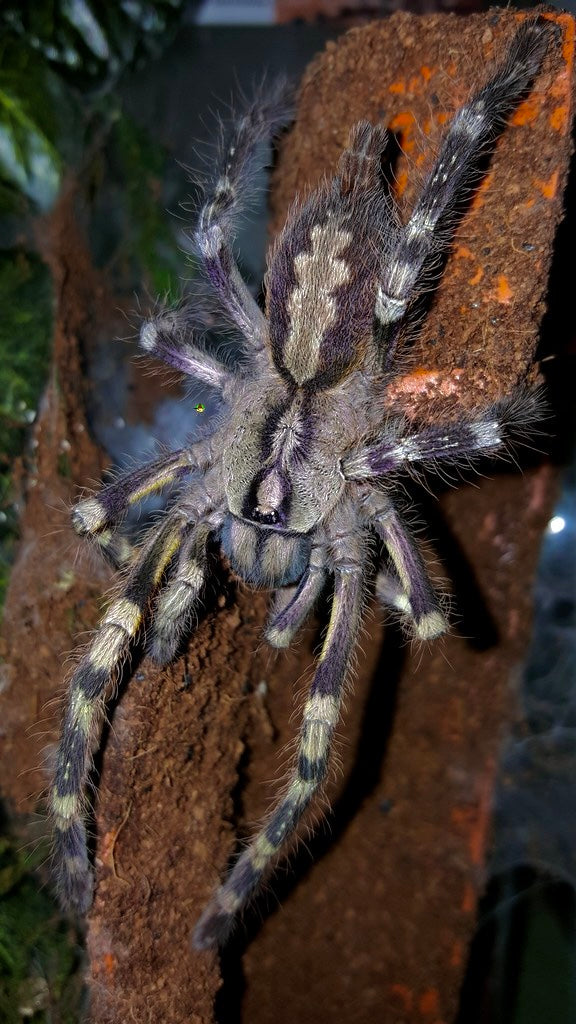
Poecilotheria fasciata - Sri Lankan Ornamental - EXTREMELY RARE!

Poecilotheria fasciata - Sri Lankan Ornamental - EXTREMELY RARE!

Regular price $925.00
Regular price Sale price $925.00
Sale Sold out
Shipping calculated at checkout.
Size and Sex

Poecilotheria fasciata – Sri Lankan Ornamental

One of the Rarest Poecilotheria in the Hobby

If you’re trying to build a serious Poecilotheria collection, P. fasciata is one of those species you simply don’t see offered anymore. Native exclusively to Sri Lanka, this species has become exceptionally difficult to find in the U.S. hobby, making established captive-bred specimens a real collector piece. P. fasciata is also federally protected as an endangered species in the United States, reflecting the pressure its wild populations face from habitat loss and its restricted, fragmented native range. 

The Red-Bellied Poecilotheria

At first glance, P. fasciata has that classic ornamental look—silver, black and cream camouflage with flashes of purple across the legs and carapace. Flip the perspective and this spider completely changes. The underside carries rich reddish-burgundy hairs contrasted against bright yellow leg markings and a jet-black underside. It is easily one of the coolest ventral displays in the genus and gives fasciata a look that immediately separates it from the more commonly encountered ornamentals.

Those underside markings aren’t just for looks, either. Ventral leg patterns are actually important diagnostic characters used to distinguish Poecilotheria species. P. fasciata has distinctive yellow-and-black markings underneath the first two pairs of legs. 

A Piece of Poecilotheria History

There’s another reason this species belongs in a serious collection: this is the type species of the entire genus Poecilotheria. P. fasciata was originally described all the way back in 1804, decades before the genus Poecilotheria itself was established. In other words, you’re looking at one of the species at the very foundation of the genus collectors obsess over today. 

Big, Fast & Built for Display

These aren’t tiny collector spiders. Adult P. fasciata can develop into large, impressive ornamentals with long legs and the flattened arboreal build Poecilotheria are famous for. In nature they’re associated with tree hollows and bark in Sri Lanka’s dry and intermediate zones—the exact kind of vertical retreat they readily establish around in captivity. 

The Poecilotheria You Don’t Buy Twice

Metallica, regalis and ornata will come around again. P. fasciata is a different story. If you’ve been waiting to add one of the genuinely difficult-to-find Sri Lankan ornamentals to your collection, this is exactly the kind of species worth grabbing when it’s actually available.

View full details
WESTSIDE TARANTULAS

Species Profile

Everything You Need To Know At A Glance.
Experience Level
Intermediate
Temperament
Fast, Alert, Confident & Food-Responsive
Type
Arboreal / Old World
DLS
Adult Size
7–8” DLS
Country of Origin
Sri Lanka
Life Span
♀15–20+ Years

Care & Husbandry Guide

🏠 Enclosure & Substrate

Use a tall arboreal enclosure with excellent ventilation, several inches of moisture-retentive substrate, and a large vertical piece of cork bark. Position the cork so there is a narrow, dark space behind it where the spider can establish its retreat. Additional vertical cork and branches give juveniles multiple secure places to hide and molt. Adults can reach around 7”+ DLS, so give mature females plenty of vertical room while still keeping the enclosure secure.

🌡️ Temperature & Humidity

74–80°F is an excellent target range. Rather than chasing a specific humidity percentage, maintain a moisture gradient: lightly moist lower substrate with a partially dry surface and strong cross ventilation. P. fasciata occurs in Sri Lanka’s comparatively drier regions, so it should not be maintained in a constantly soaked, stagnant enclosure.

 🍽️ Feeding & Water 

Juveniles can be fed 1–2 appropriately sized crickets or roaches per week, increasing prey size as they grow. Large juveniles and adults can be fed a substantial meal every 7–10 days depending on body condition. Keep a clean water dish available at all times. Their strong feeding response makes them easy to keep well-fed, but there’s no need to power-feed adults.

🕷️ Species-Specific Care 

P. fasciata is a large Sri Lankan arboreal that appreciates a warm setup with access to moisture, but plenty of airflow. Give it a secure vertical cork-bark retreat where it can disappear completely when it wants to. Keep the lower layers of substrate slightly moist while allowing the surface to partially dry between waterings. Avoid stagnant, constantly saturated conditions. This species grows quickly, feeds aggressively, and needs more usable vertical space as it matures.