
Skip to product information
1 of 4

Westside Tarantulas

Poecilotheria metallica – Gooty Sapphire Communal – Established Groups For Sale

Poecilotheria metallica – Gooty Sapphire Communal – Established Groups For Sale

Regular price $550.00
Regular price Sale price $550.00
Sale Sold out
Shipping calculated at checkout.
Size - Sex - Communal count

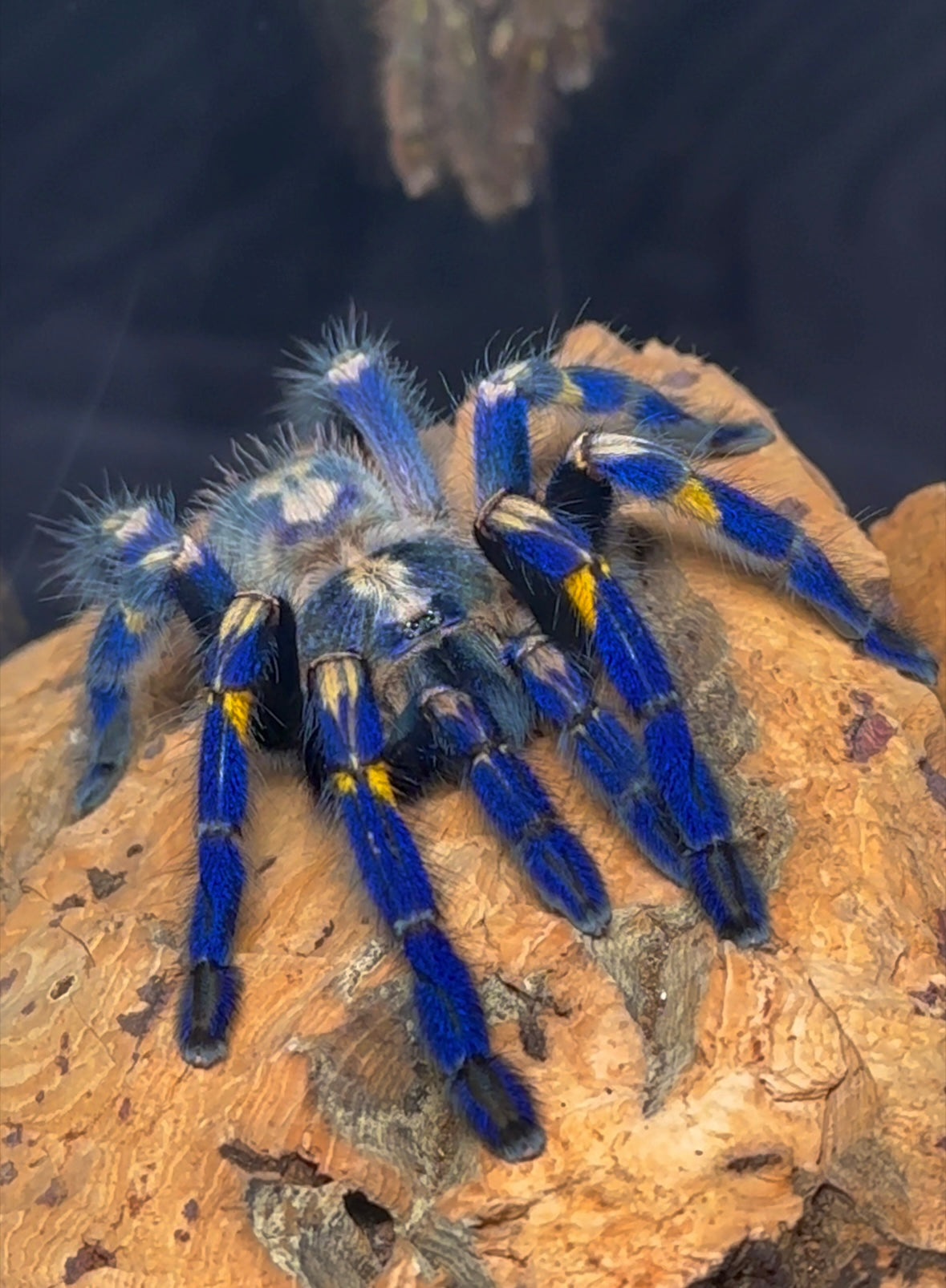
Gooty Sapphire Ornamental Communals?

Why Keep One When You Can Keep a Group?

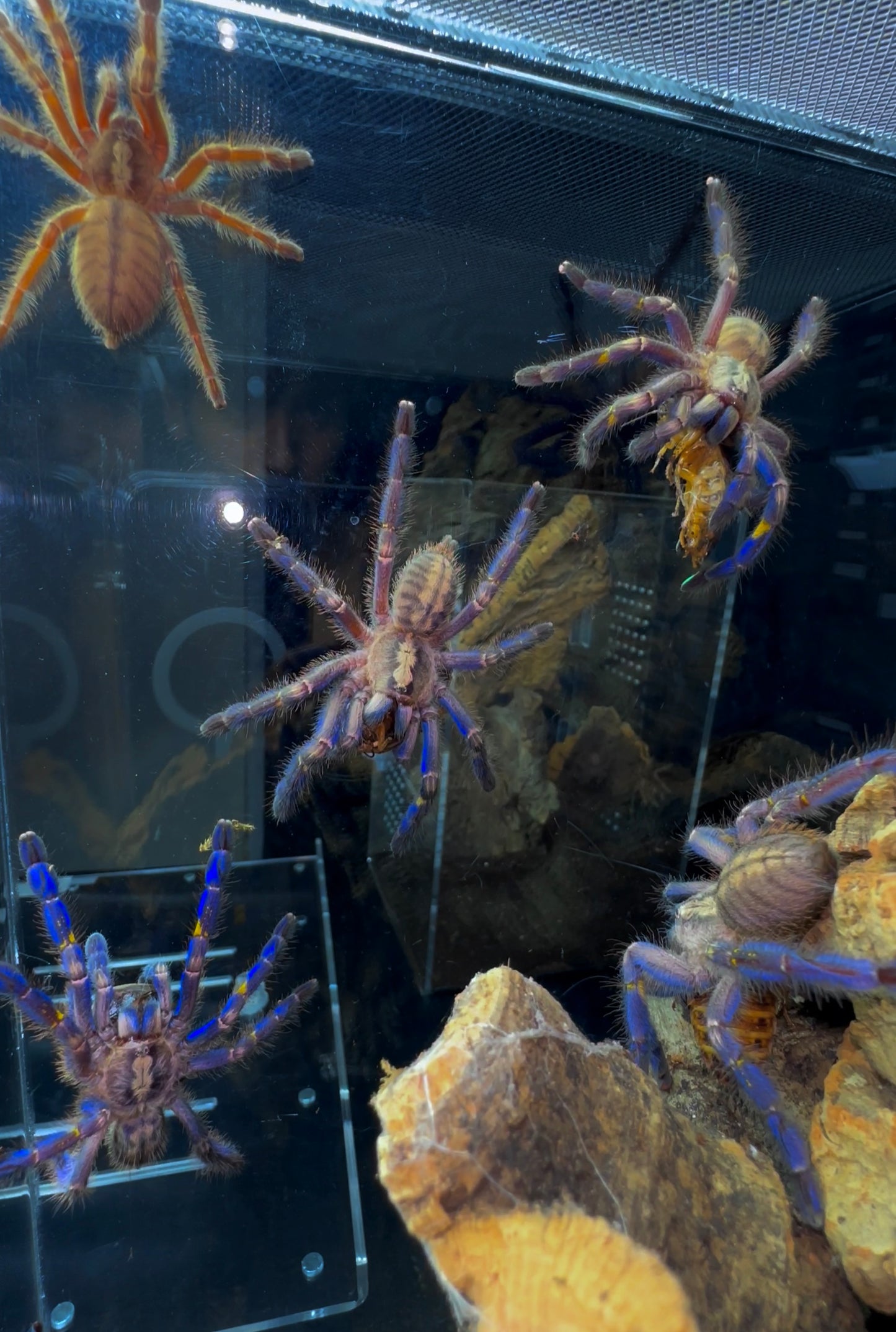
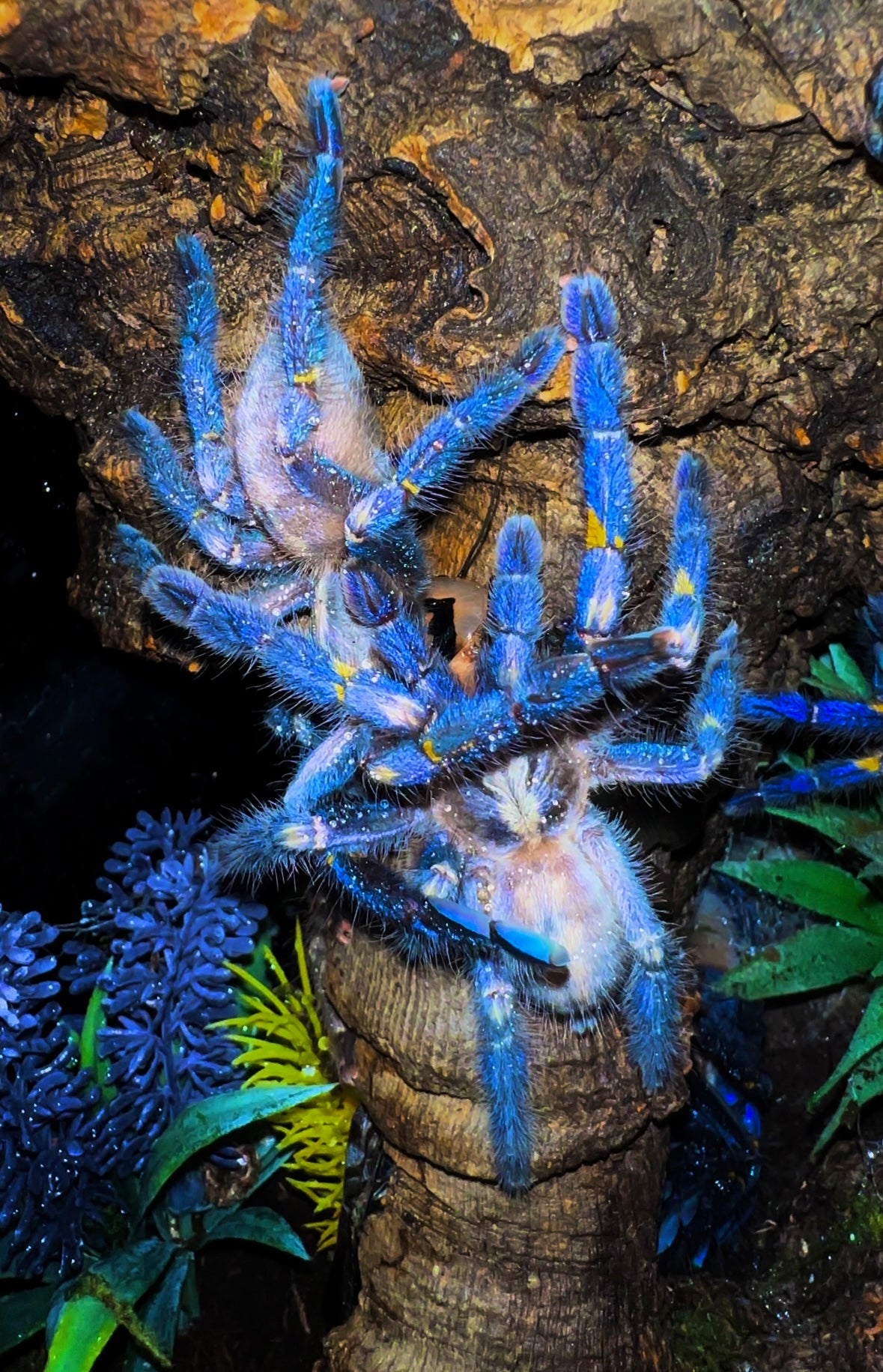
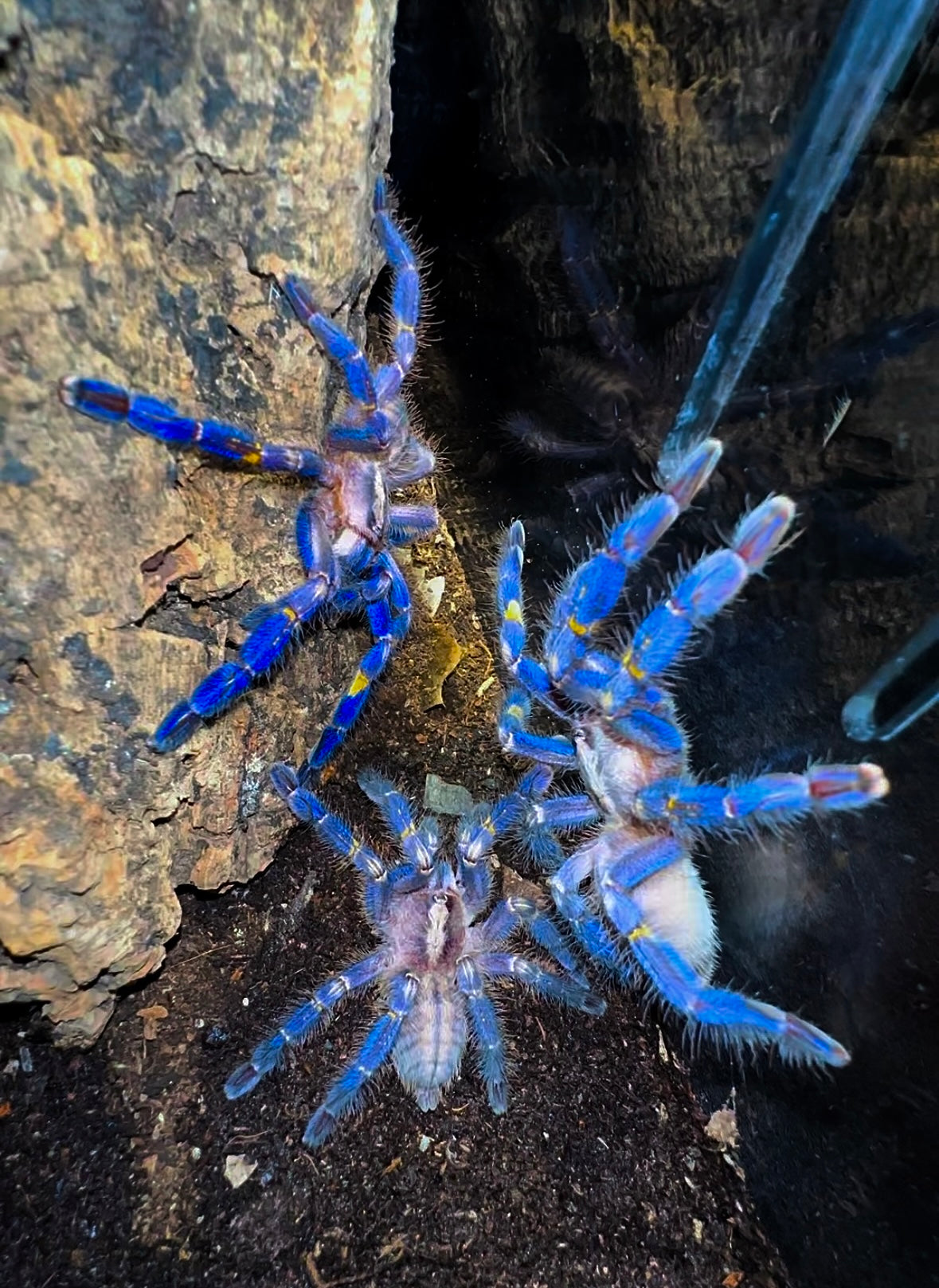
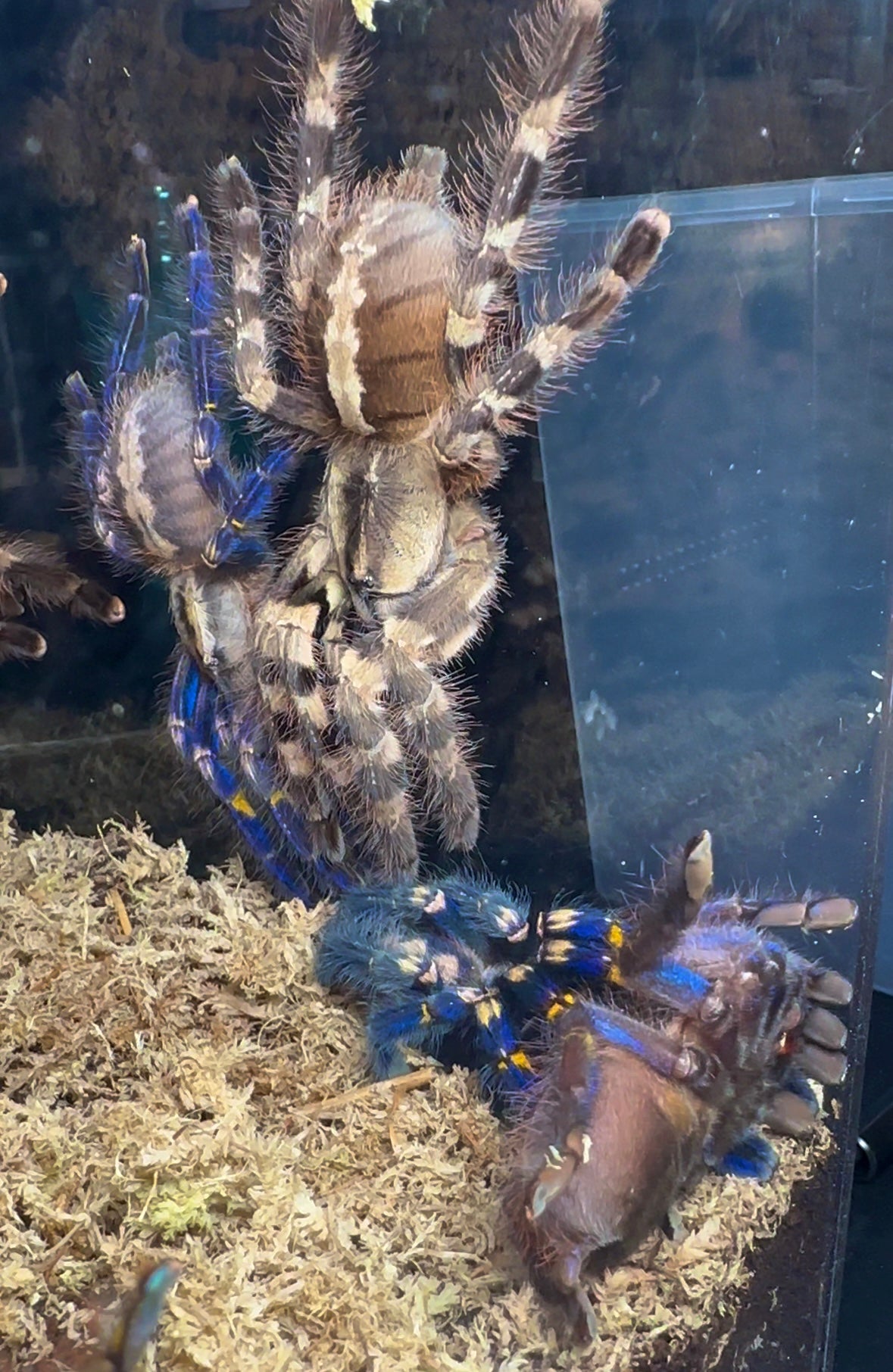
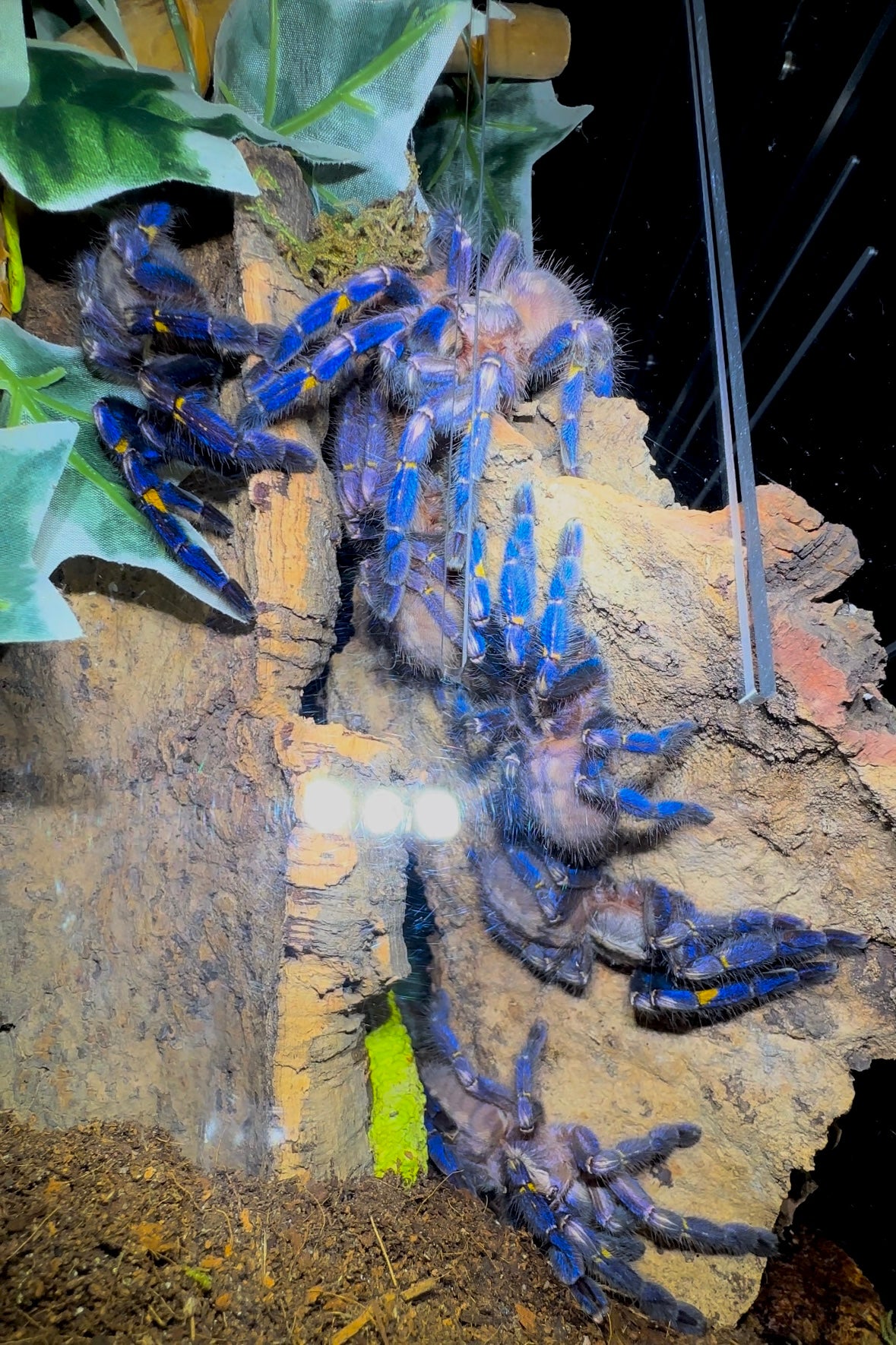
Poecilotheria are some of the few tarantulas where keeping multiple specimens together can completely change the experience. Sacmates raised together can remain communal, sharing the same enclosure, retreats, and even the same meals.

And P. metallica might be the ultimate species to do it with.

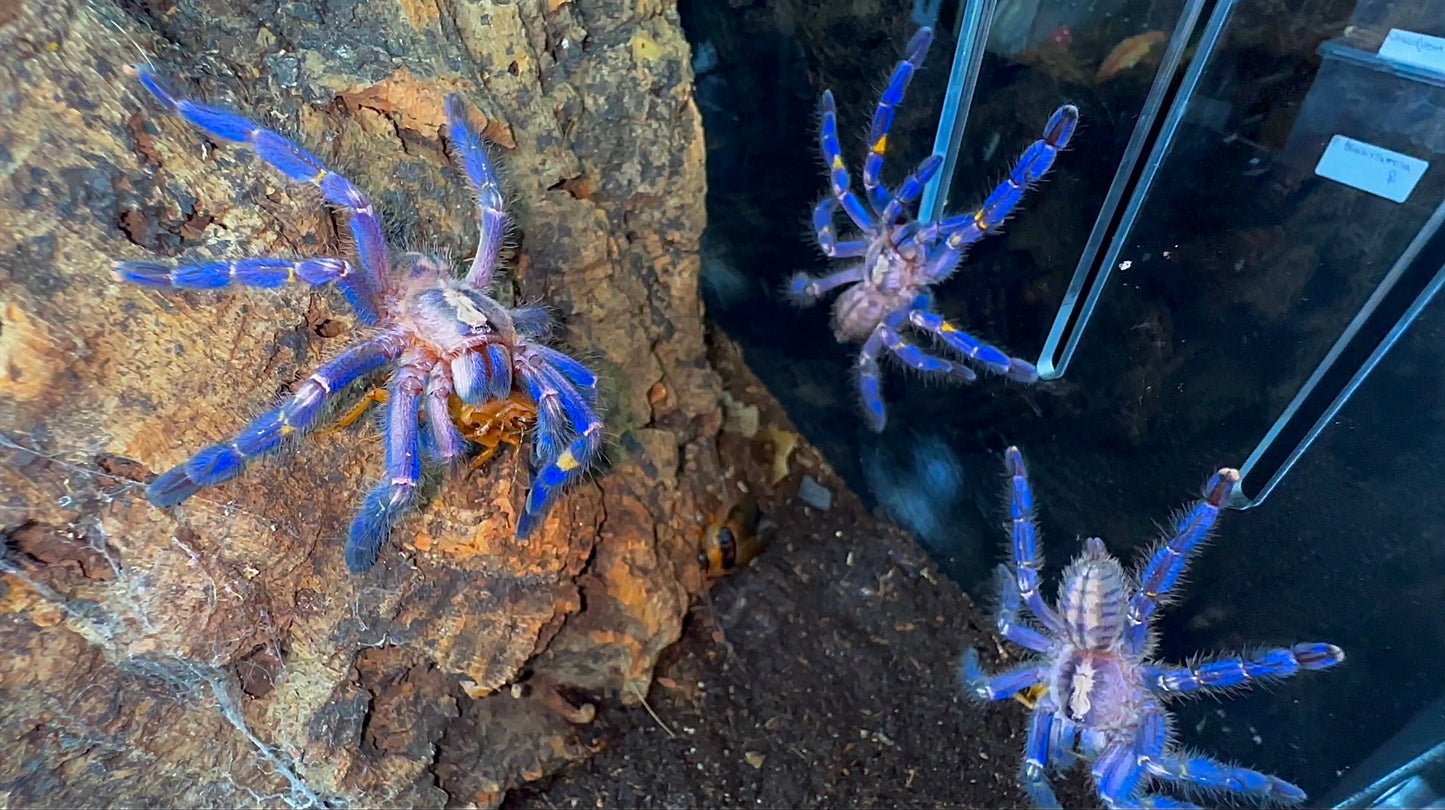
Communal Feeding Is Insane

The photo says it better than I ever could… Those are two P. metallica sharing the same meal. When food hits the enclosure, multiple spiders can come out to investigate, feed alongside each other, and sometimes pile onto the same prey. If you already enjoy feeding a single Poecilotheria, feeding an entire communal is on another level.

They Become Much More Confident

This is one of my favorite things about raising Poecilotheria together.

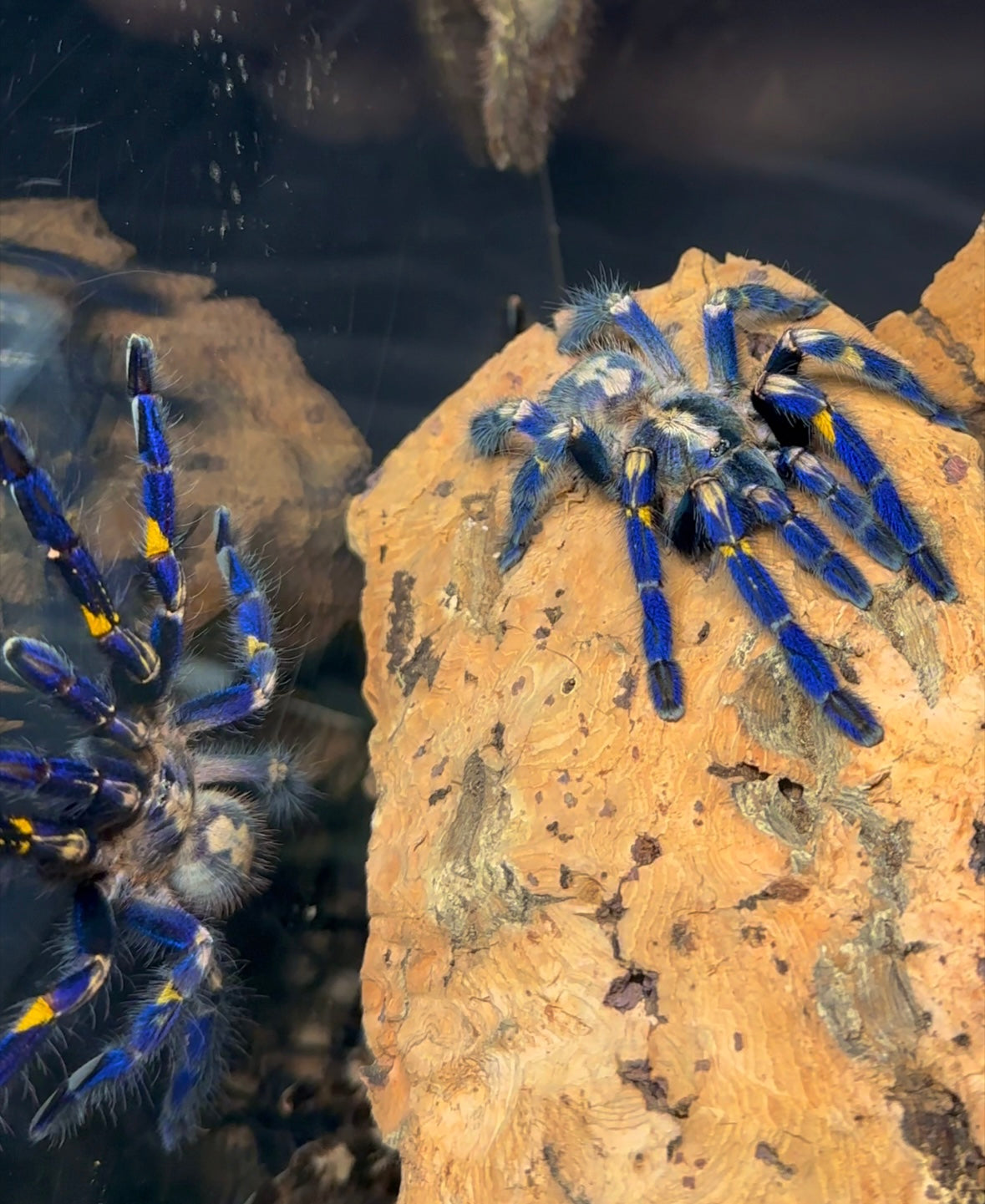
In my experience, communally raised specimens become noticeably more confident and less secretive. Instead of having several individual enclosures with spiders hiding behind cork bark, you have multiple animals using different areas of the same display. There is simply more to watch.

They Grow Like Weeds

I’ve also noticed faster, more consistent growth from my communally raised Poecilotheria.

Once one spider detects food, the others quickly know something is happening. That competition creates an incredible feeding response, and watching an entire group put on size together is extremely rewarding.

Less Space. Less Maintenance. Better Display.

Five Poecilotheria don’t need to mean five enclosures.

A properly established communal puts multiple spiders into one larger display enclosure, which means fewer individual setups, fewer water dishes, and less shelf space.

And instead of looking at five separate plastic enclosures, you can build one badass display filled with Gooty Sapphires.

Already Raised Together

This is important…

I’m not selling random P. metallica and telling you to put them together. These are sacmates that have already been raised communally. Whether you want to start with a small group or build a larger display, this is one of the coolest ways to experience Poecilotheria. One Gooty Sapphire is beautiful. A whole enclosure full of them is something else.

View full details
WESTSIDE TARANTULAS

Species Profile

Everything You Need To Know At A Glance.
Experience Level
Intermediate
Temperament
Calm, Confident, Extremely Food-Responsive & Communal
Type
Arboreal / Old World / Communal
DLS
Adult Size
6–7+” DLS
Country of Origin
India
Life Span
♀15–20+ Years

Care & Husbandry Guide

🏠 Enclosure & Substrate

Give them plenty of vertical cork bark. Don’t rely on one flat slab—multiple pieces create climbing surfaces, retreats, visual barriers, and most importantly, plenty of safe places for individual spiders to separate themselves when preparing to molt. For roughly every three similarly sized communal P. metallica, you can use approximately the enclosure space normally given to one individually housed specimen. For larger groups of 5+ spiders, I strongly recommend a bioactive setup to help manage waste, leftover prey material, and the increased biological load. Use a moisture-retentive substrate, strong cross ventilation, multiple vertical retreats, and enough structure that every spider can easily find its own resting and molting area.

🌡️ Temperature & Humidity

I recommend keeping P. metallica communals cooler than individually housed specimens—around 68–75°F is ideal. Cooler conditions combined with strong cross ventilation help keep a larger group comfortable and prevent a warm, stagnant enclosure. Maintain some moisture in the lower substrate while allowing the surface to partially dry between waterings. Don’t chase a humidity percentage and don’t keep the enclosure soaking wet. Think cool, hydrated, and well ventilated.

 🍽️ Feeding & Water 

Food is one place you don’t want to be conservative with a communal. I recommend feeding roughly 2–3X the normal ration and spreading prey throughout the enclosure so everybody gets an opportunity to eat. For example, if you’re keeping three P. metallica, offering around nine appropriately sized crickets gives the entire group plenty of feeding opportunities. Seeing several spiders on one prey item doesn’t necessarily mean everybody has eaten, so watch individual body condition and adjust accordingly. Always keep fresh water available.

🕷️ Species-Specific Care 

These P. metallica are sacmates that have been raised communally from birth—they are not unrelated spiders being introduced later. The biggest keys to keeping the group successful are plenty of food, lots of usable vertical structure, cooler temperatures, and watching the body condition of each individual. Communals are surprisingly space-efficient: the enclosure you would normally use for one P. metallica can comfortably house around three similarly sized communal specimens. As the group grows, upgrade the enclosure with them rather than starting juveniles in an unnecessarily huge setup.