
Skip to product information
1 of 5

Westside Tarantulas

Poecilotheria miranda - Bengal Spotted Ornamental - For Sale

Poecilotheria miranda - Bengal Spotted Ornamental - For Sale

Regular price $105.00
Regular price Sale price $105.00
Sale Sold out
Shipping calculated at checkout.
Sex and Size

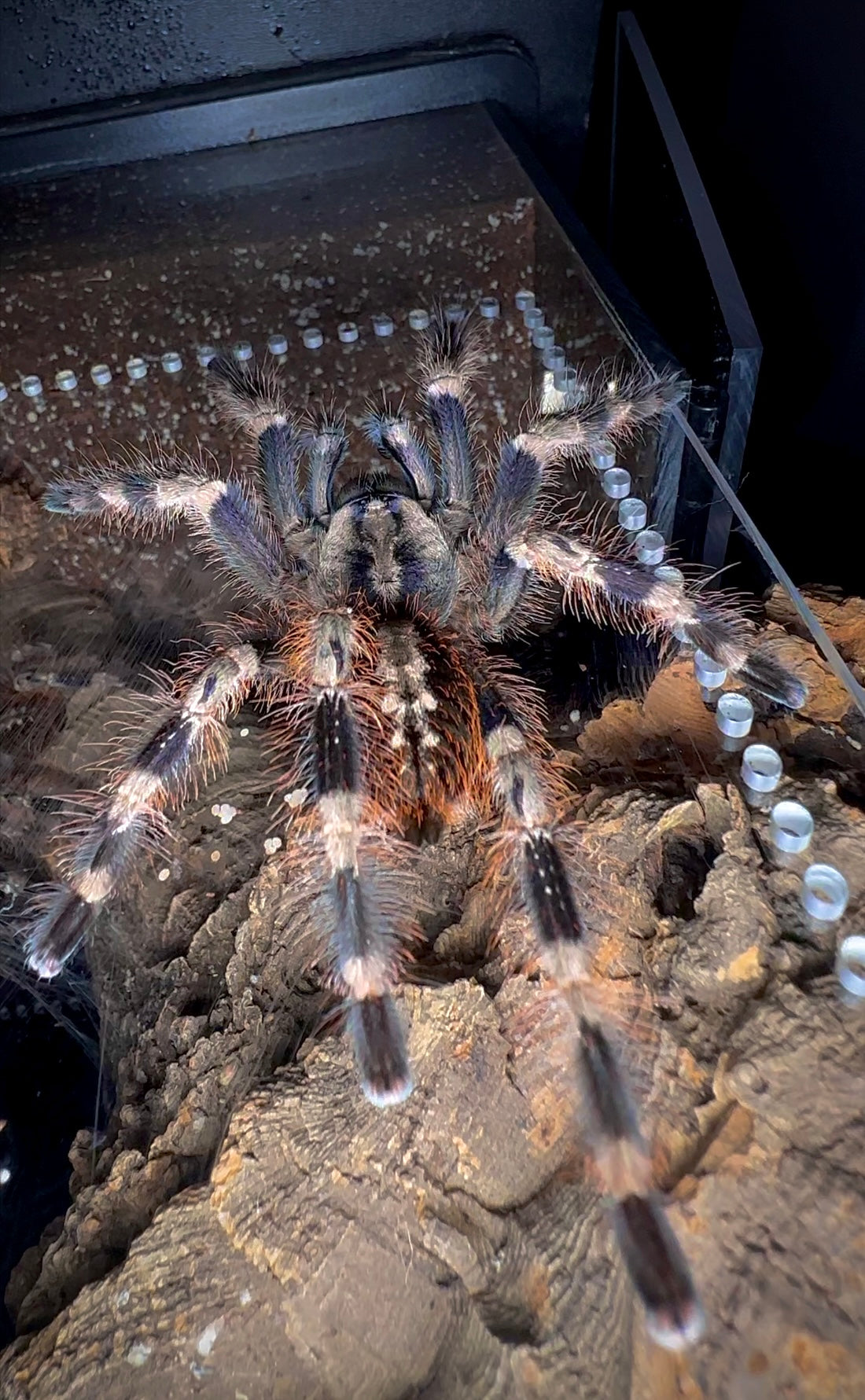
Poecilotheria miranda – Bengal Spotted Ornamental

A Color Pattern Unlike Any Other Ornamental

Among the many breathtaking species within the Poecilotheria genus, Poecilotheria miranda stands apart as one of the most visually unique. Known as the Bengal Spotted Ornamental, this incredible arboreal tarantula combines rich gold, cream, charcoal black’s, deep purples and silver hues into one of the most dramatic appearances found in the hobby. While many Poecilotheria rely primarily on striping, Miranda displays bold spotting and intricate geometric markings that make it instantly recognizable. Large females can exceed 8 inches DLS, creating an absolutely massive display animal that commands attention from the moment it emerges from its retreat.

One of the Best Communal Poecilotheria

One of the most exciting aspects of Poecilotheria miranda is its reputation for doing exceptionally well in communal setups. While communal keeping should always be approached carefully, Miranda has proven itself time and time again as one of the most reliable communal candidates within the Poecilotheria genus when raised together from 2nd instar spiderlings. In spacious enclosures with multiple cork bark retreats, strong ventilation, and consistent feeding, groups can often coexist peacefully for the entirety of their lifespan. Watching multiple Bengal Ornamentals occupy the same enclosure, share vertical retreats, and emerge simultaneously for feeding is easily one of the most impressive displays in the entire tarantula hobby.

Fast Growing, Highly Visible & Always Entertaining

Unlike many tarantulas that spend most of their lives hidden underground, P. miranda is an active arboreal species that frequently sits out in the open. Their intelligence, curiosity, and incredible feeding response make them fascinating to observe. These tarantulas grow surprisingly quickly, allowing keepers to enjoy the transition from tiny spiderlings to enormous adults in a relatively short amount of time. As they mature, the gold and cream markings become increasingly vibrant, transforming into the stunning adult coloration that has made this species a favorite among ornamental collectors.

A Must-Have for Serious Poecilotheria Enthusiasts

While Poecilotheria metallica often receives the spotlight, many veteran keepers consider Miranda to be one of the most underrated species in the entire genus. Their combination of massive adult size, bold coloration, visible behavior, communal potential, and impressive growth rate creates a package that few tarantulas can rival. Whether you’re building your first ornamental collection or expanding an established Poecilotheria lineup, the Bengal Spotted Ornamental is a species that consistently exceeds expectations.

View full details
WESTSIDE TARANTULAS

Species Profile

Everything You Need To Know At A Glance.
Experience Level
Intermediate
Temperament
Fast, Confident, Extremely Food-Responsive & Communal
Type
Arboreal / Old World / Communal
DLS
Adult Size
7+” DLS
Country of Origin
India
Life Span
♀15–20+ Years

Care & Husbandry Guide

🏠 Enclosure & Substrate

 Build upward. Use multiple vertical pieces of cork bark, branches, and additional anchor points rather than one large retreat. This creates separate resting and molting areas while still allowing the spiders to move freely throughout the enclosure. Use several inches of moisture-retentive substrate and strong cross ventilation. For groups larger than five specimens, I recommend going bioactive to help manage waste, leftover prey, and the increased biological load.

🌡️ Temperature & Humidity

For an established P. miranda communal, I recommend keeping temperatures around 68–75°F with excellent cross ventilation. Maintain some moisture in the lower substrate while allowing the surface to partially dry between waterings. Avoid turning the enclosure hot and stagnant simply because multiple spiders are living together—cooler temperatures, available moisture, and fresh airflow work extremely well for communal groups.

 🍽️ Feeding & Water 

Communals should be fed much heavier than solitary specimens—roughly 2–3X the normal feeding ration. If you have three P. miranda, offering around nine appropriately sized crickets distributed throughout the enclosure gives every spider multiple opportunities to feed. Don’t judge feeding success by the group as a whole; watch each female’s abdomen and make sure nobody is falling behind. Keep fresh water available at all times.

🕷️ Species-Specific Care 

These females have been raised communally together, so keep the group together rather than treating them like newly introduced adults. P. miranda appreciates a heavily structured arboreal setup with multiple vertical cork-bark retreats. The enclosure you would normally dedicate to one similarly sized Poecilotheria can house roughly three established communal specimens. Give them plenty of vertical cork so every female can choose her own resting area and, especially, find a secure place to molt undisturbed.These females have been raised communally together, so keep the group together rather than treating them like newly introduced adults. P. miranda appreciates a heavily structured arboreal setup with multiple vertical cork-bark retreats. The enclosure you would normally dedicate to one similarly sized Poecilotheria can house roughly three established communal specimens. Give them plenty of vertical cork so every female can choose her own resting area and, especially, find a secure place to molt undisturbed.