Skip to product information
1 of 2

Westside Tarantulas

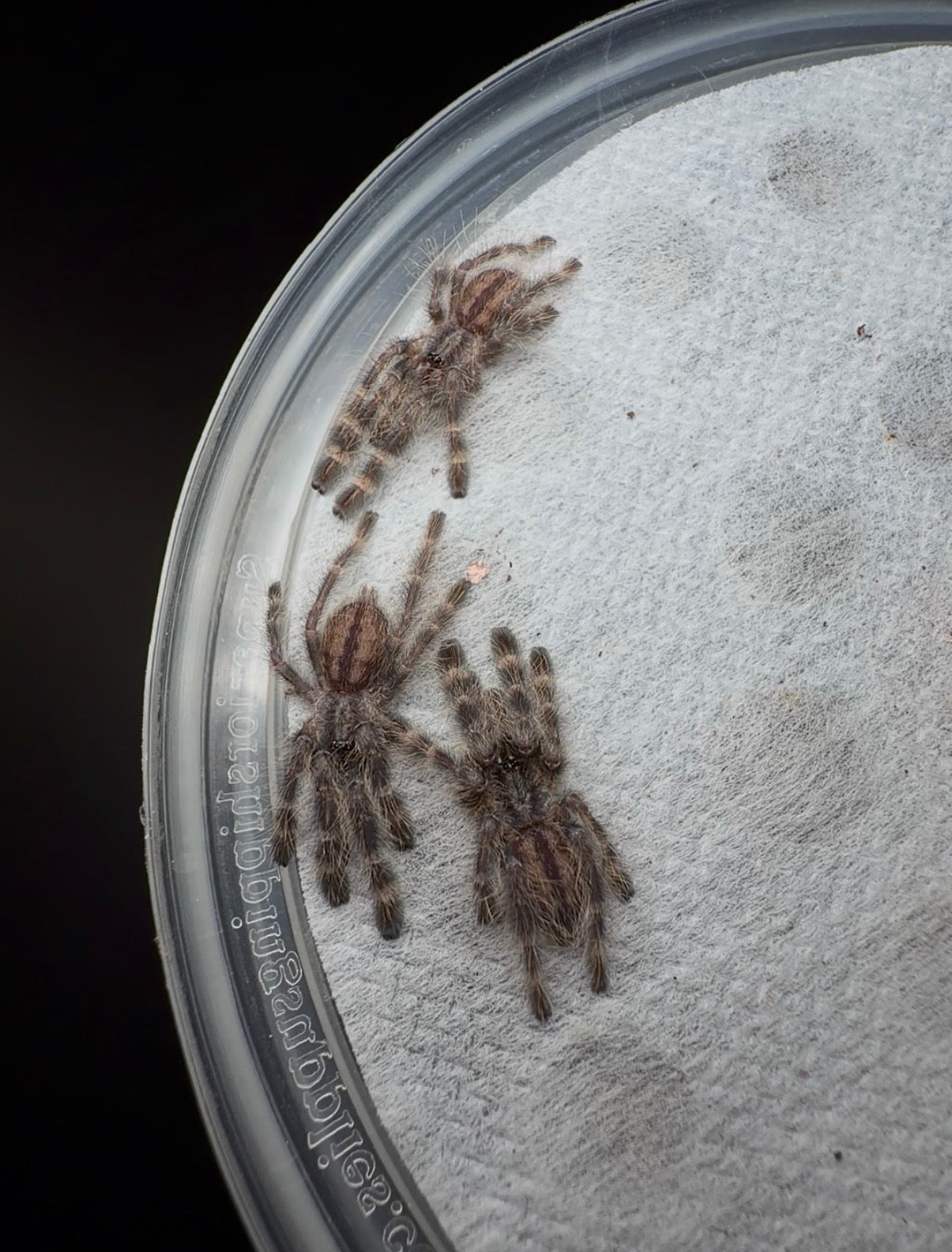
Poecilotheria regalis - Indian Ornamental - Communal For Sale!

Poecilotheria regalis - Indian Ornamental - Communal For Sale!

Regular price $99.00
Regular price Sale price $99.00
Sale Sold out
Shipping calculated at checkout.
Size and Sex

Poecilotheria regalis – Indian Ornamental

The Crown Jewel of Communal Arboreals

The Indian Ornamental Tarantula is one of the most iconic Old World arboreals in the hobby, and for good reason. Poecilotheria regalis displays an unbelievable pattern of silver, cream, charcoal black, and white striping that looks almost hand-painted across the body. Hidden beneath the legs are bright yellow warning flashes that make this species even more impressive when it moves or displays. Reaching 7–8+ inches DLS, this is a large, fast-growing, visually stunning tree-dwelling species that instantly becomes a centerpiece in any serious collection.

Communal Counts Available

I am offering communal counts of captive-bred Poecilotheria regalis, giving keepers the opportunity to raise one of the most successful communal tarantula species in the hobby. You see, P. regalis is one of the best candidates for a pokie communal, especially when siblings are raised/kept together from a young age. For best success, keep them in a spacious vertical enclosure with multiple cork bark slabs, several retreat options, strong cross ventilation, constant access to water, and consistent feeding. The goal is to keep them well-fed, give them enough space to spread out, and avoid separating/reintroducing them once they are established.

Fast, Bold & Extremely Rewarding

This species is not only beautiful—it is active, intelligent, and incredibly rewarding to raise. P. regalis are known for explosive feeding responses, fast growth, and impressive display behavior. They often sit out on cork bark or enclosure walls, making them far more visible than many other arboreal species. Because they are an Old World tarantula, they should be respected for their speed and potency, but for experienced keepers, few species offer this much beauty, size, and behavior in one package.

Experience Level - Intermediate to Advanced

Personality - Fast, alert, display-oriented, bold feeding response

Life span - Females 12–15+ years

Native Country of Origin - India

Adult size - 7–8+ inches DLS

Poecilotheria regalis Care - The Indian Ornamental thrives in a tall arboreal enclosure with strong ventilation, cork bark, climbing space, and a water dish available at all times. Keep the substrate lightly moist in one area but never stagnant or swampy. For communal groups, provide multiple hides, multiple vertical retreats, plenty of space, and feed consistently to reduce competition. Temperatures around 72–80°F work well, and once established, this species grows quickly, feeds aggressively, and becomes one of the most impressive arboreal tarantulas you can own.

View full details
WESTSIDE TARANTULAS

Species Profile

Everything You Need To Know At A Glance.
Experience Level
Intermediate
Temperament
Fast, Confident, Extremely Food-Responsivel
Type
Arboreal / Old World / Communal
DLS
Adult Size
7–8” DLS
Country of Origin
India
Life Span
♀15–20+ Years

Care & Husbandry Guide

🏠 Enclosure & Substrate

Build the enclosure around vertical cork bark and multiple usable retreats. Give every spider plenty of climbing surfaces and places to separate itself from the group when preparing to molt. Use several inches of moisture-retentive substrate and strong cross ventilation. Grow the enclosure with the communal rather than placing small juveniles into an oversized display immediately. For groups larger than five P. regalis, I recommend a bioactive setup to help manage leftover prey, waste, and the increased biological load.

🌡️ Temperature & Humidity

 For P. regalis communals, I recommend a cooler 68–75°F with excellent cross ventilation. Maintain some moisture in the lower substrate while allowing the upper surface to partially dry between waterings. P. regalis is hardy and doesn’t need a constantly saturated enclosure. With multiple spiders sharing the same space, cool temperatures, fresh airflow, and available moisture are much more important than chasing a humidity percentage.

 🍽️ Feeding & Water 

Feed a communal heavily—roughly 2–3X the normal ration. For example, a group of three can be offered around nine appropriately sized crickets, distributed throughout different areas of the enclosure. The extra food gives everybody multiple chances to eat and helps prevent individuals from falling behind. Don’t assume the entire group ate just because several spiders piled onto one prey item; monitor individual abdomen size. Keep fresh water available at all times.

🕷️ Species-Specific Care 

These P. regalis are sacmates raised communally from birth, not unrelated spiders being introduced later. For an established group, the enclosure you would normally use for one similarly sized Poecilotheria can house roughly three communal specimens. Give them lots of vertical cork bark rather than a single retreat. This creates separate resting areas, visual breaks, and most importantly gives every spider somewhere secure to molt without leaving the communal.These P. regalis are sacmates raised communally from birth, not unrelated spiders being introduced later. For an established group, the enclosure you would normally use for one similarly sized Poecilotheria can house roughly three communal specimens. Give them lots of vertical cork bark rather than a single retreat. This creates separate resting areas, visual breaks, and most importantly gives every spider somewhere secure to molt without leaving the communal.