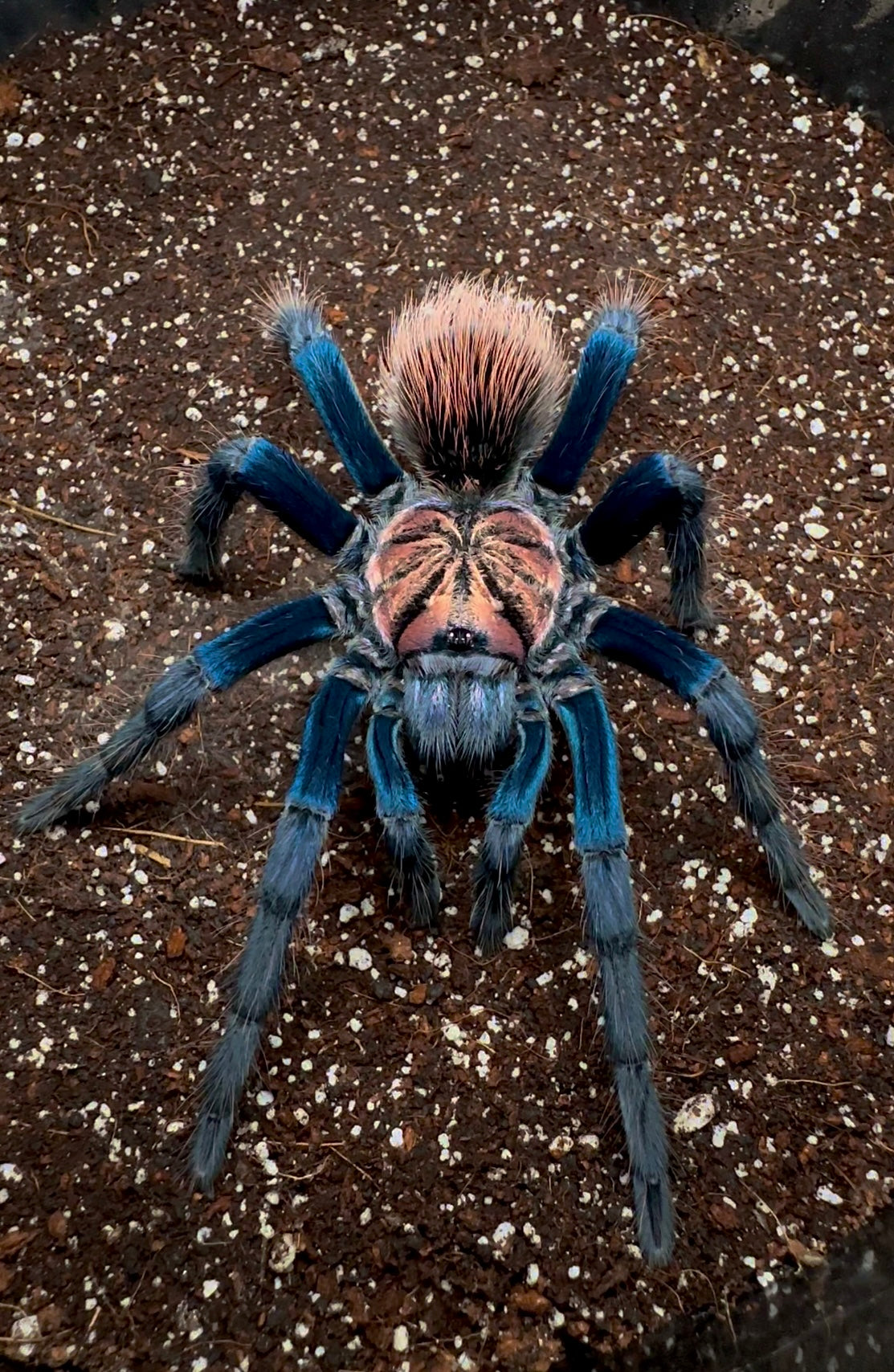
Xenesthis sp. “Blue” – Powder Blue & Orange Bird-Eater
A Giant Tarantula Covered in Electric Blue!
The Powder Blue & Orange Bird-Eater is easily one of the most badass Xenesthis species I’ve ever worked with!
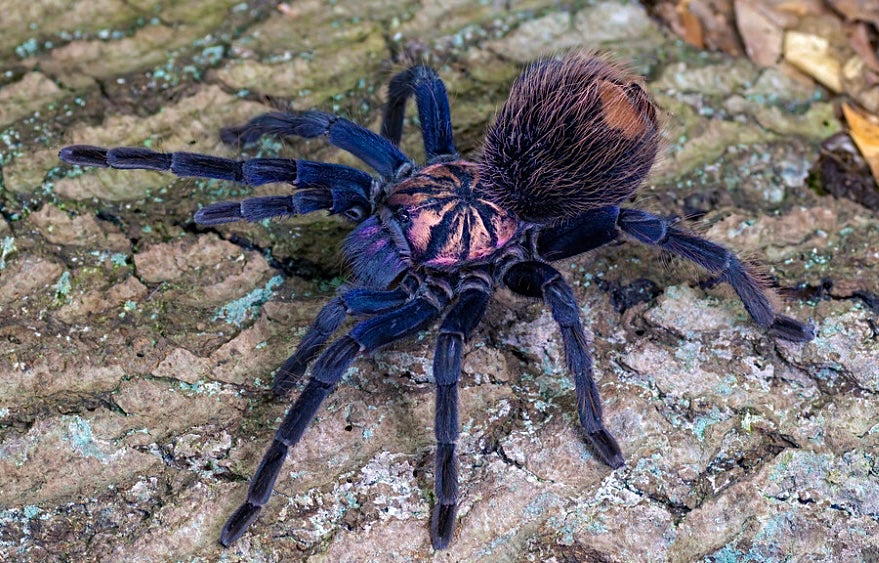
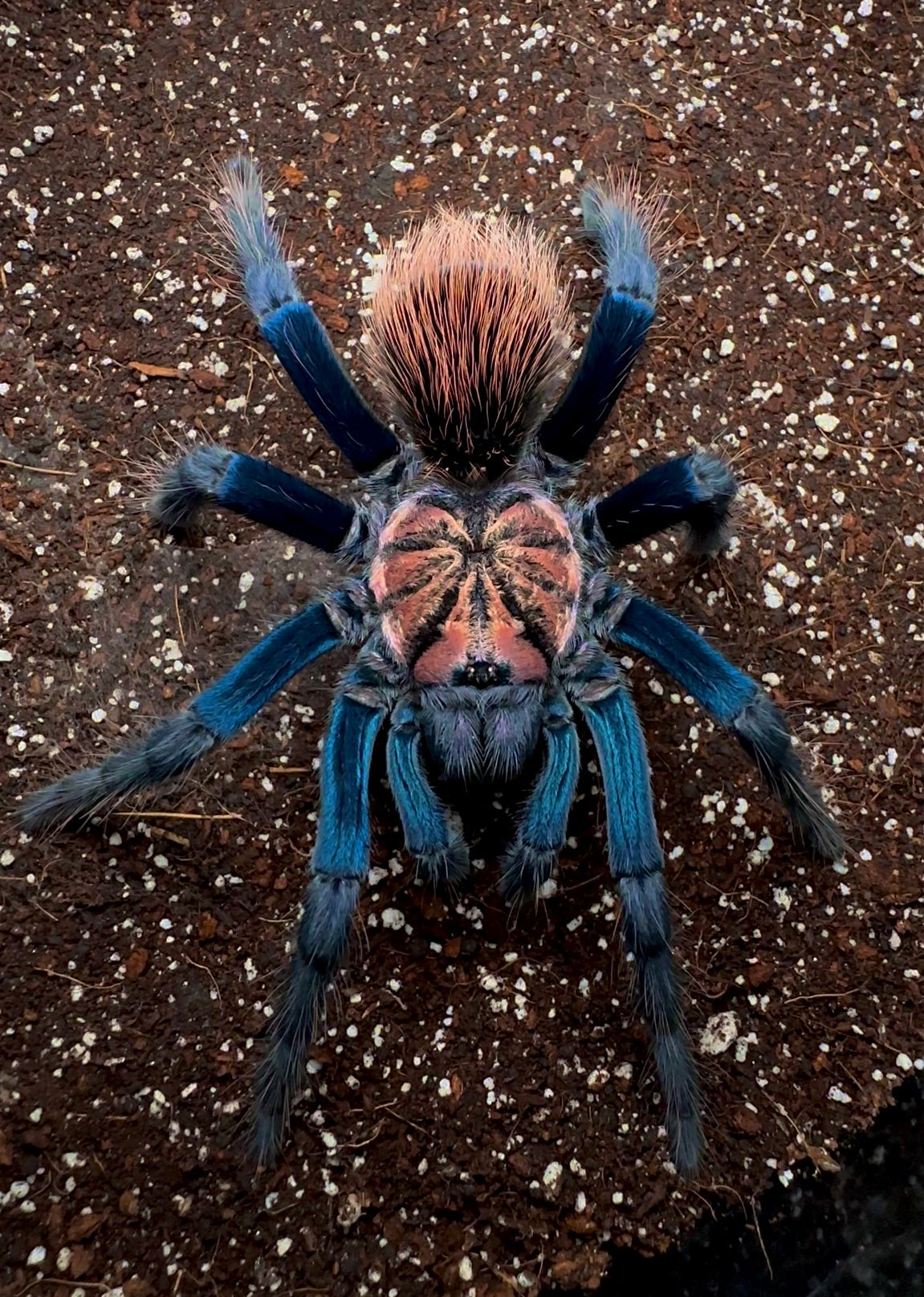
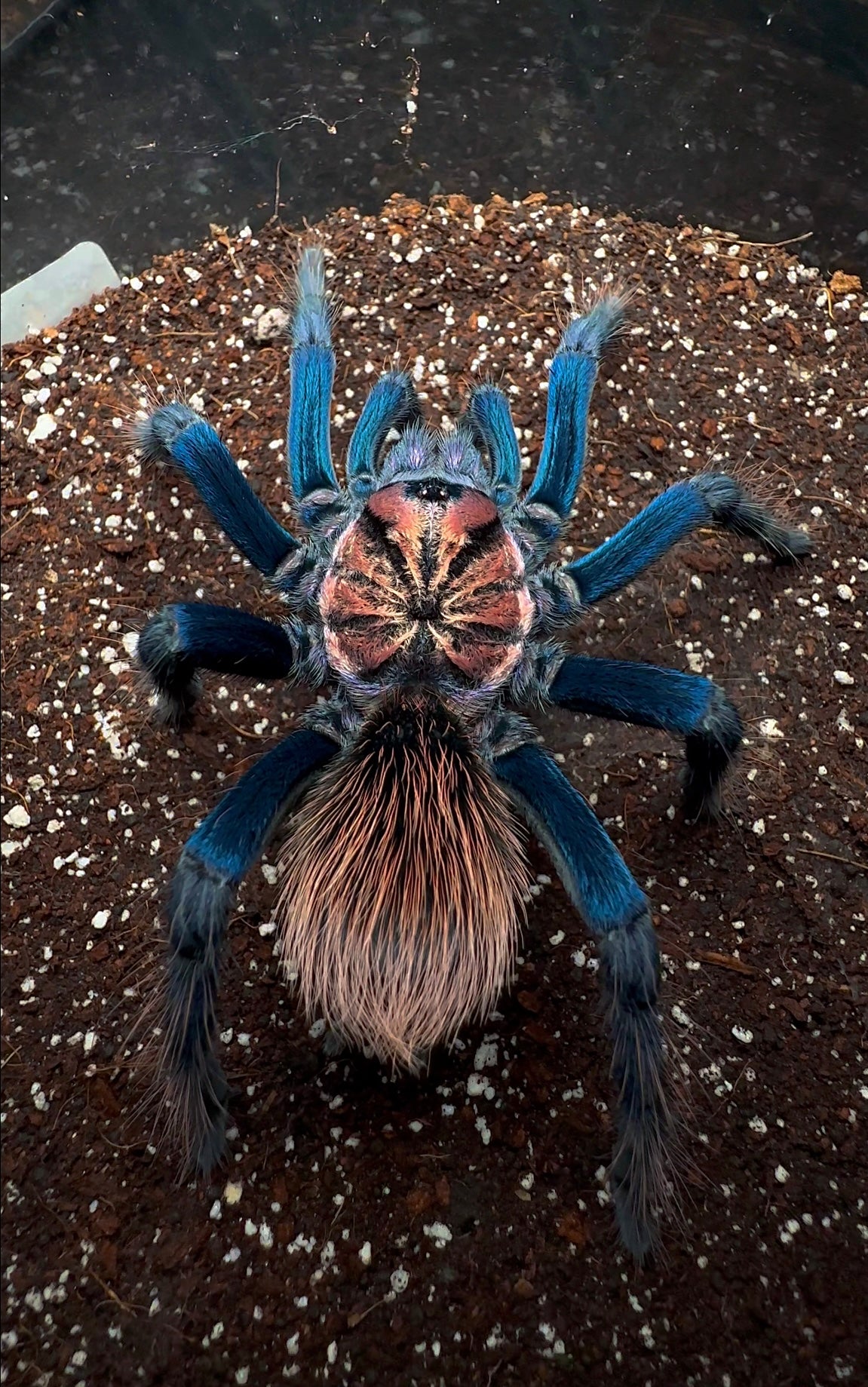
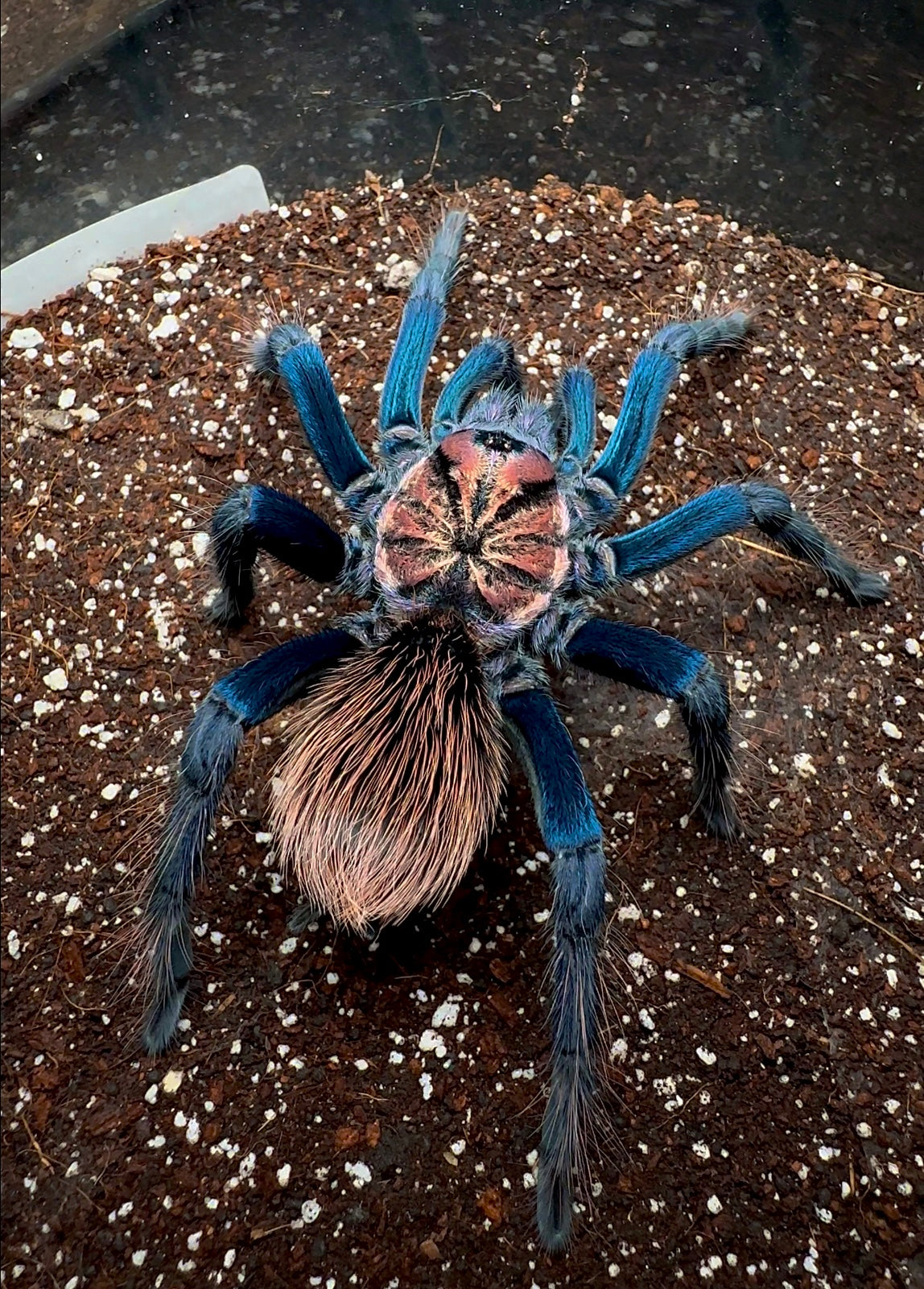
Imagine a massive tarantula with shimmering powder-blue legs, deep black femurs, and a fiery orange-pink starburst across its carapace. The contrast is absolutely insane, especially after a fresh molt when those blues become ridiculously vibrant!
And unlike most blue tarantulas that stay relatively small, this monster can reach 8–9+ inches DLS, making it one of the most impressive giant New World terrestrials you can own.
A Giant That Actually Stays Out!
This is one of my favorite things about Xenesthis sp. “Blue”. Unlike many large bird-eaters that spend their time hidden underground, established Powder Blues are incredibly confident and regularly sit completely out in the open. They’ll explore their enclosure, stretch out across the substrate, and show off those incredible colors without making you wait until the middle of the night.
There’s something pretty awesome about having a massive blue tarantula that you can actually see and enjoy!
Feeding Time Is INSANE!
If you enjoy watching your tarantulas eat, this species is on another level. These guys have one of the most explosive feeding responses I’ve experienced. I’ve literally watched specimens launch themselves at prey with so much force that they flip themselves over!
As they grow, their appetite only gets more impressive. Large specimens can tackle substantial roaches with ease, and their medium-to-fast growth rate makes raising one into a giant incredibly rewarding.
Skittish Babies, Confident Adults!
One interesting thing I’ve noticed about this species is how much its personality changes with age. Younger Powder Blues can be fairly skittish, but as they grow, they tend to become much more confident, relaxed, and tolerant of activity around their enclosure. My larger specimens have been surprisingly calm for such enormous, powerful tarantulas. Individual temperament varies, of course, but their increasing confidence is one of the most enjoyable things about raising them.
Not Your Typical Xenesthis!
Here’s something that makes the Powder Blue even more interesting. Unlike many Xenesthis that appreciate consistently moist substrate, this particular hobby form does exceptionally well in drier conditions. My established specimens are remarkably hardy and don’t require the humid setups normally associated with giant tropical bird-eaters.
That combination of enormous adult size, beautiful coloration, and straightforward husbandry makes this species especially appealing to collectors who want something exotic without complicated care.
One of the Coolest Giant Bird-Eaters You Can Own!
Powder-blue legs. A fiery orange starburst. An 8–9+ inch adult size. An unbelievable feeding response.
And best of all, it’s a giant tarantula that actually enjoys spending time out on display!
For anyone who loves large, colorful New World tarantulas, the Powder Blue & Orange Bird-Eater is something special.