
Skip to product information
1 of 2

Westside Tarantulas

Sericopelma sp. Santa Catalina - The Velvety Orange Bird-Eater - Female For Sale!

Sericopelma sp. Santa Catalina - The Velvety Orange Bird-Eater - Female For Sale!

Regular price $415.00
Regular price Sale price $415.00
Sale Sold out
Shipping calculated at checkout.
Size and Sex

Sericopelma sp. “Santa Catalina” – Velvety Orange Bird Eater

A Giant Wrapped in Black Velvet & Orange

Sericopelma sp. “Santa Catalina” is one of those tarantulas that makes you wonder why more people aren’t talking about it.

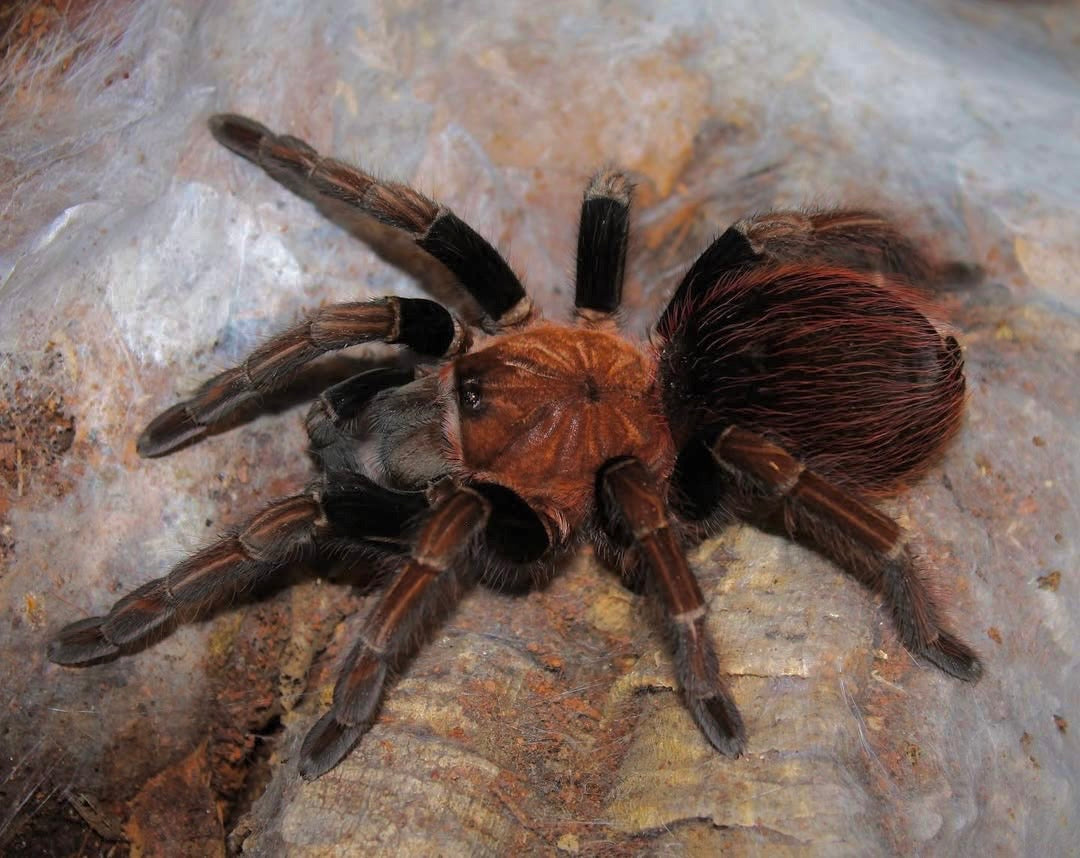
Females can grow to an enormous 8–9” DLS, developing thick legs covered in deep burnt-orange hairs against a velvety black body. And unlike some species that look their best as juveniles, Santa Catalina gets better with size. Once they start pushing 5–6”, that orange really begins taking over the legs.

Hardcore looks… Docile Personality!

Santa Catalina has the massive build and dark coloration you’d expect from an intimidating bird eater, yet the specimens I’ve worked with have been extremely docile, relaxed, and non-defensive.

They aren’t constantly kicking hairs or throwing threat postures. Most of the time they’re perfectly content sitting out in the open looking enormous.

And They Get ENORMOUS

We’re talking about a heavy-bodied terrestrial capable of reaching 8–9 inches across.

These aren’t lanky 9” arboreals either. A mature female has the thick legs and massive body that make a true bird eater look so impressive. Put a full-grown Santa Catalina next to an average terrestrial and the size difference is ridiculous.

Slow Growing — But Worth the Wait

This isn’t a species you buy expecting a giant six months later.

Santa Catalina grows slowly, but every molt adds more size and increasingly rich orange coloration. It’s the kind of tarantula you raise for years and eventually end up with a huge female that could stay in your collection for decades.

Rare, Huge & Seriously Underrated

Everybody knows the giant Theraphosa, Pamphobeteus, and Lasiodora.

Santa Catalina gives you something completely different: massive adult size, gorgeous orange coloration, slow steady growth, and an unusually relaxed personality in a species you rarely see available.

If you want a giant terrestrial without buying the same bird eater everyone else already owns, this is a seriously cool one.

View full details
WESTSIDE TARANTULAS

Species Profile

Everything You Need To Know At A Glance.
Experience Level
Beginner
Temperament
Extremely Docile, Relaxed, Non-Defensive & Visable
Type
Terrestrial / New World / Giant Species
DLS
Adult Size
8–9” DLS
Country of Origin
Panama – (Santa Catalina)
Life Span
♀25+ Years

Care & Husbandry Guide

🏠 Enclosure & Substrate

Use a large terrestrial enclosure that prioritizes floor space over height. Provide several inches of compactable substrate, a large cork-bark retreat, and a substantial water dish. As the spider approaches its massive adult size, keep the distance between the substrate and lid relatively low to reduce fall risk. A mature 8–9” female deserves a genuinely spacious terrestrial setup.

🌡️ Temperature & Humidity

Keep approximately 70–78°F. Maintain part of the substrate slightly moist while allowing other areas and the surface to periodically dry. There’s no need to chase high humidity or keep the enclosure constantly damp. A moisture gradient, fresh water, and good ventilation work extremely well.

 🍽️ Feeding & Water 

This species has a slow growth rate and slower metabolism, so there’s no reason to power-feed it. Growing juveniles can receive appropriately sized crickets or roaches around once weekly, while large adults can be fed every 1–2 weeks depending on body condition. Keep a clean water dish available at all times and remove uneaten prey during premolt.

🕷️ Species-Specific Care 

Santa Catalina is a large, heavy-bodied terrestrial that doesn’t need complicated husbandry. Give it plenty of usable floor space, several inches of substrate, a cork-bark hide, and fresh water. These are generally relaxed animals that spend plenty of time sitting exposed rather than constantly hiding or burrowing. Keep climbing height low as they become larger—their enormous adult weight makes falls much more dangerous.