
Skip to product information
1 of 4

Westside Tarantulas

Theraphosa blondi - True Goliath Bird-Eater - Largest Tarantula in the World - (Captive Bred)

Theraphosa blondi - True Goliath Bird-Eater - Largest Tarantula in the World - (Captive Bred)

Regular price $199.00
Regular price Sale price $199.00
Sale Sold out
Shipping calculated at checkout.
Size anf Sex

Theraphosa blondi – True Goliath Bird-Eater

Largest Tarantula in the World

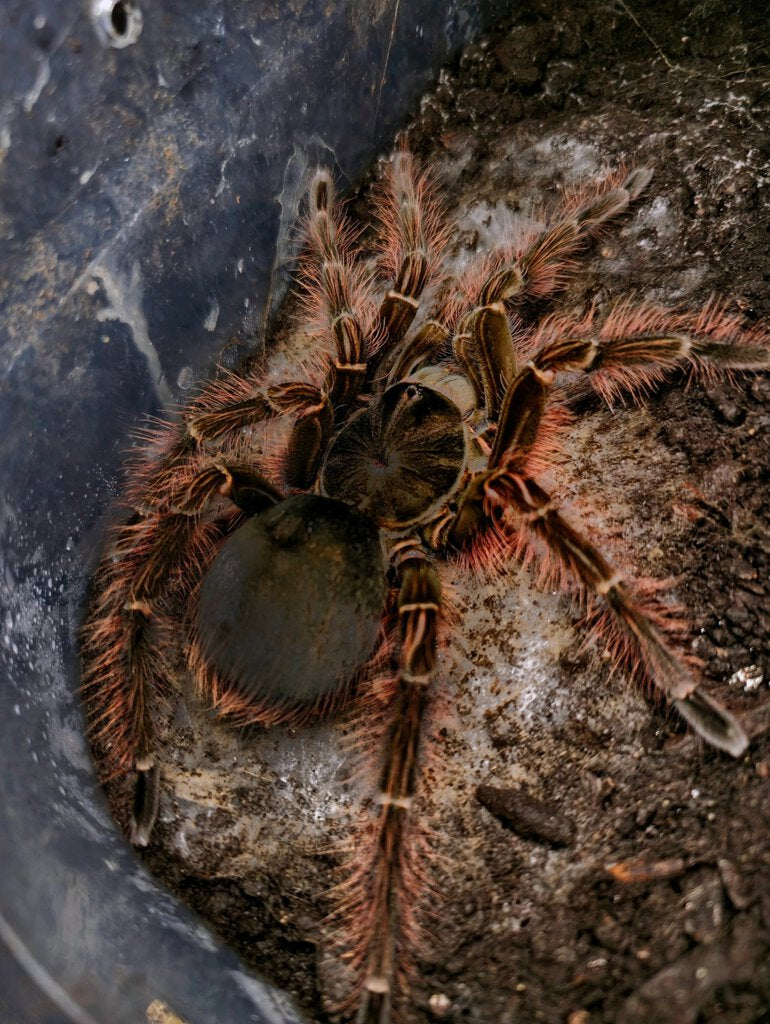
There are giant tarantulas—and then there is Theraphosa blondi. The legendary True Goliath Bird-Eater is widely recognized as the heaviest living spider species in the world, with exceptional females capable of reaching around 11–12 inches DLS and developing a body mass that very few spiders on Earth can rival. This is the species that made the name “Goliath Bird-Eater” famous.

You Don’t Understand the Size Until You See One

Pictures really don’t do a mature T. blondi justice. Their legs are thick, their abdomen becomes enormous, and a fully grown female can practically fill the floor of a large enclosure.

And that’s the appeal. T. blondi isn’t famous because of flashy blue legs or metallic coloration. It’s famous because it’s an absolute monster. Everything about it—from the oversized fangs to the massive body and explosive feeding response—feels prehistoric.

A Tarantula Built Like a Tank

Watching one eat is half the experience.

T. blondi has the appetite you’d expect from a spider this size, confidently overpowering large invertebrate prey and putting that enormous body to work. Raise a juvenile properly and you’re watching one of the world’s most impressive spiders slowly transform into a genuine heavyweight.

Blondi vs. Stirmi — What’s the Difference?

This is where things get interesting. Theraphosa stirmi and T. blondi are NOT the same spider, even though they’re constantly confused in the hobby.

Stirmi is the Goliath you’re more likely to encounter and is an incredible giant in its own right. Blondi is the True Goliath Bird-Eater and is considerably harder to find established in captivity. One of the easiest physical differences can be seen around the knees: T. blondi has longer, denser setae around the patella, creating a noticeably hairier appearance, while T. stirmi tends to look cleaner and less heavily furnished around this area. Mature blondi can also become extraordinarily heavy-bodied, which is where the species earns its reputation as the heavyweight champion of the spider world.

The Ultimate Giant-Tarantula Centerpiece

There are prettier tarantulas. There are rarer tarantulas. But very few have the presence or name recognition of a True Goliath Bird-Eater.

For collectors who eventually reach the point where a normal 6–7” tarantula simply doesn’t feel huge anymore, this is the next level. A mature female T. blondi isn’t just another spider in the collection—it’s the animal people remember seeing.

View full details
WESTSIDE TARANTULAS

Species Profile

Everything You Need To Know At A Glance.
Experience Level
Intermediate / Advanced
Temperament
Visible, Confident & Extremely Food-Responsive
Type
Terrestrial / New World / Giant Bird-Eater
DLS
Adult Size
11–12” DLS
Country of Origin
Guyana, Suriname, French Guiana & northern Brazil
Life Span
♀25-30+ Years

Care & Husbandry Guide

🏠 Enclosure & Substrate

Use an extra-large terrestrial enclosure prioritizing floor space and substrate depth rather than height. Provide approximately 5–8+ inches of moisture-retentive substrate for a large specimen, a substantial cork-bark hide, and a large water dish. Keep the distance between the substrate and enclosure lid low. A mature T. blondi deserves considerably more usable floor space than the average adult terrestrial tarantula.

🌡️ Temperature & Humidity

Keep approximately 70–76°F with consistently available moisture and strong ventilation. Unlike many terrestrial species where the substrate can substantially dry between waterings, T. blondi does best with consistently moist lower substrate. Moist does not mean swampy—avoid standing water, saturated substrate, and stagnant air. A large water dish should always be available.

 🍽️ Feeding & Water 

The True Goliath has an incredible feeding response and appetite to match its enormous size. Growing specimens can receive appropriately sized prey 1–2 times per week, while large adults can be offered several large insects approximately once weekly depending on body condition. Crickets, roaches, and other appropriately sized captive feeder insects work well. Remove uneaten prey during premolt.

🕷️ Species-Specific Care 

T. blondi is an enormous, heavy-bodied terrestrial that requires considerably more moisture than the average New World tarantula. Provide deep, moisture-retentive substrate, a large cork-bark retreat, a substantial water dish, and excellent ventilation. Keep climbing height extremely low. Once mature, these spiders are extraordinarily heavy, and even a relatively short fall can cause serious injury.