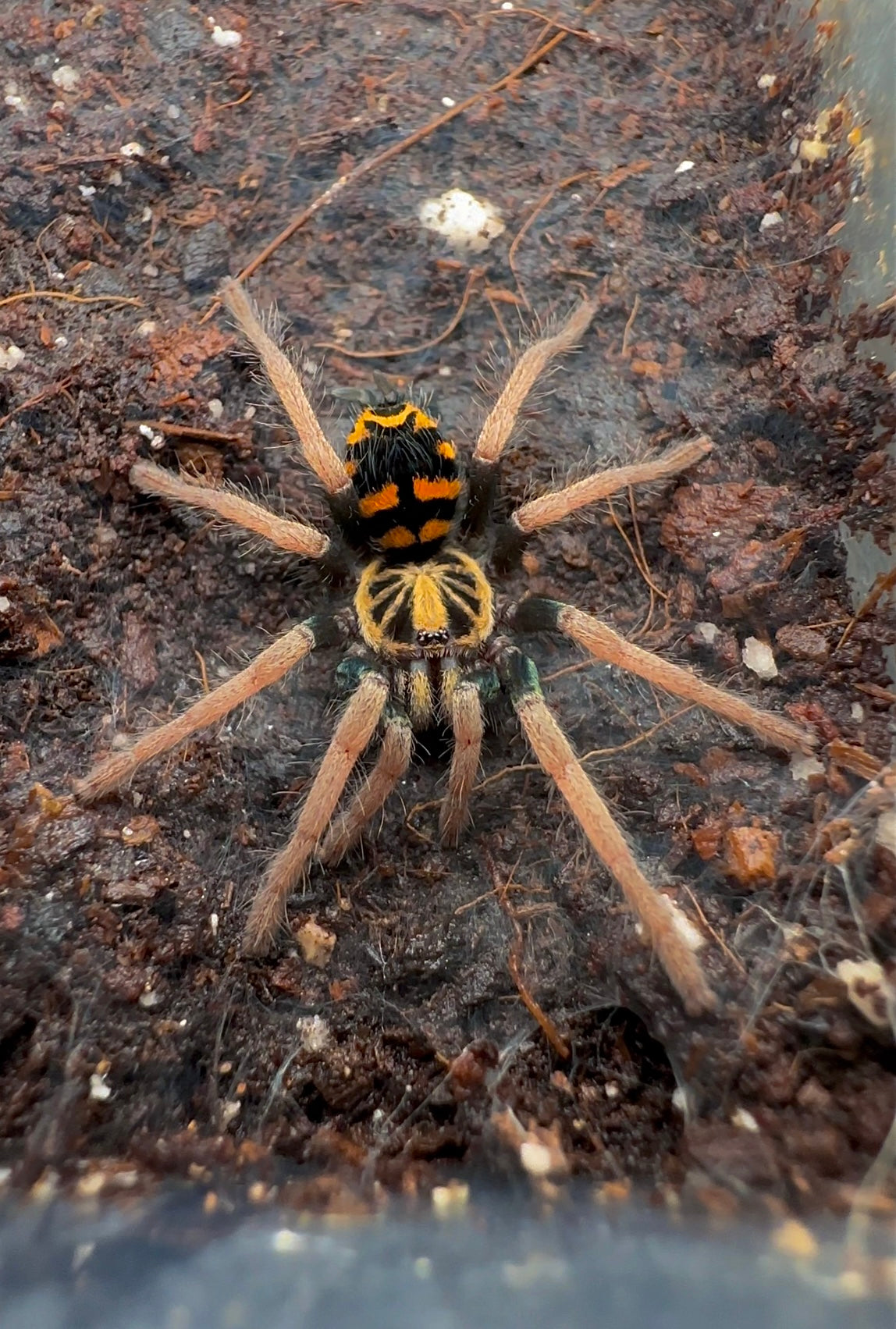
Ecuadorian Crowned Beauty – Hapalopus sp. “Planet Earth”
The Crowned Jewel of the Tarantula Hobby
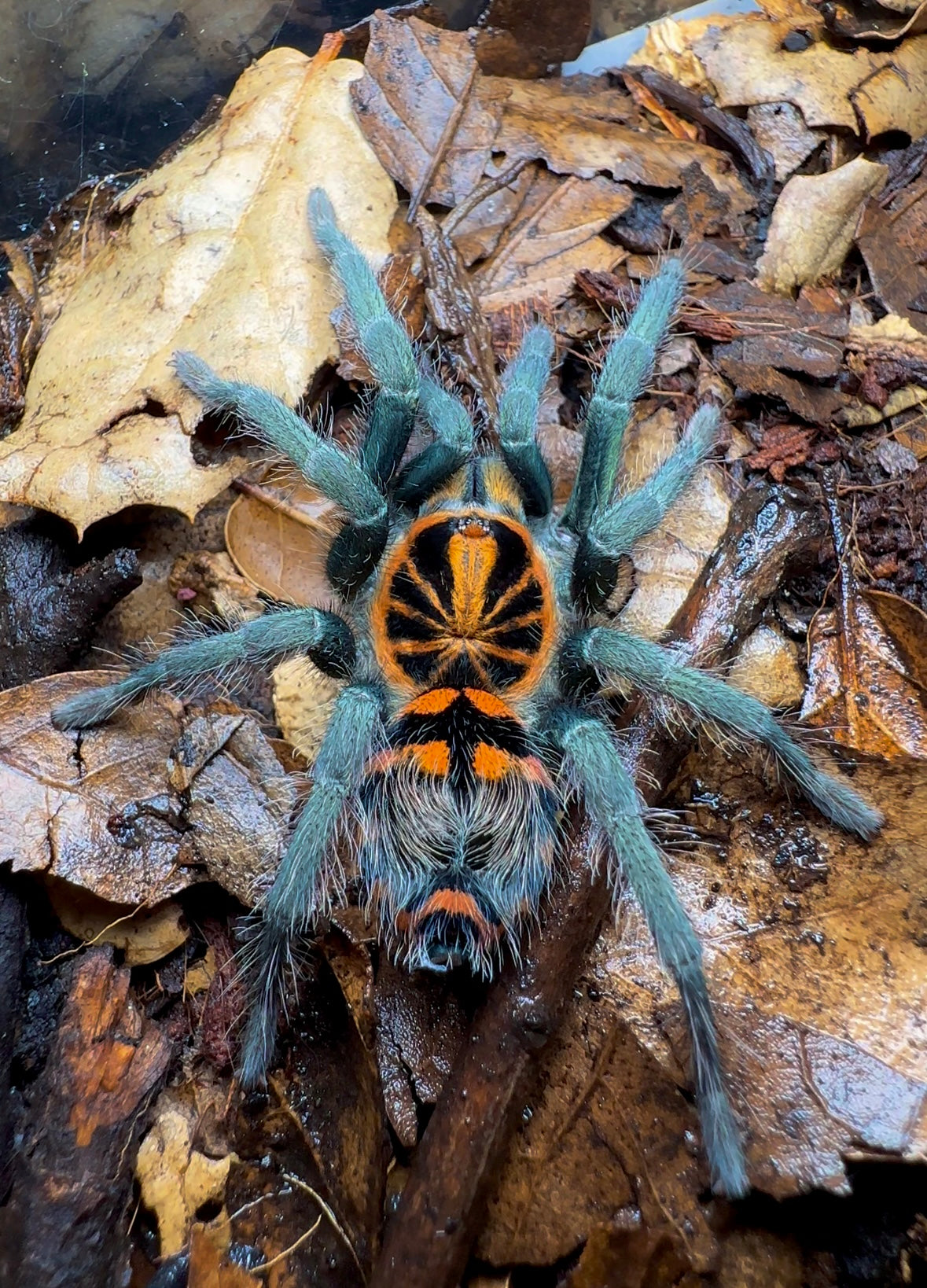
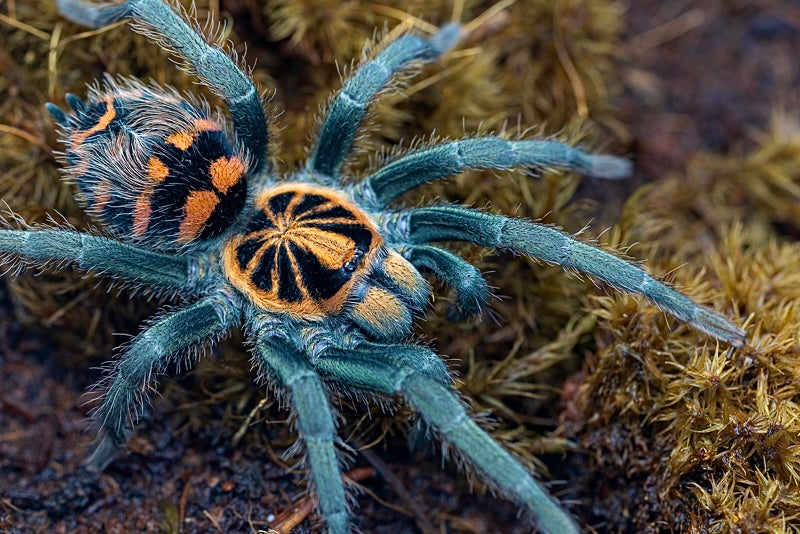
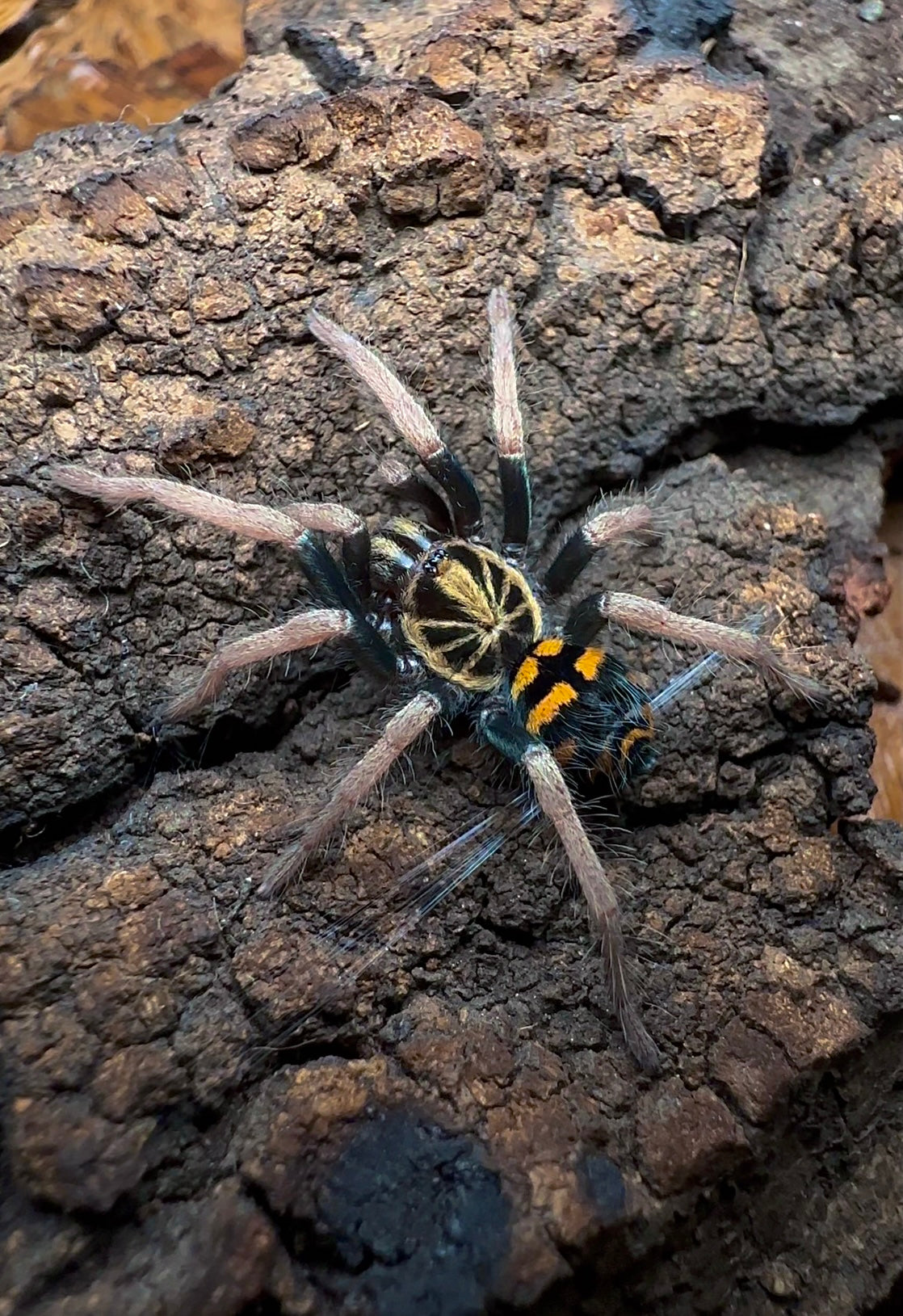
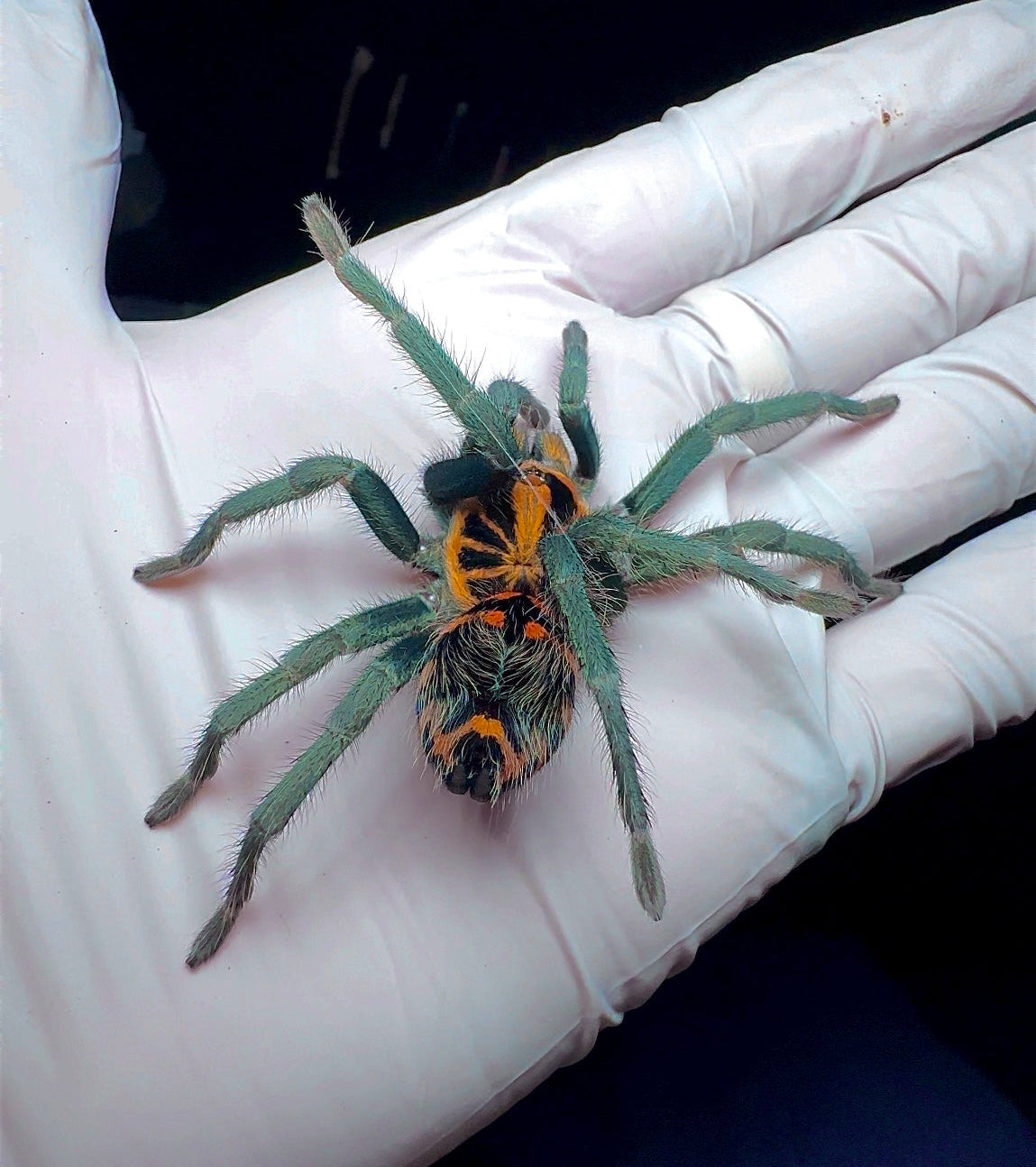
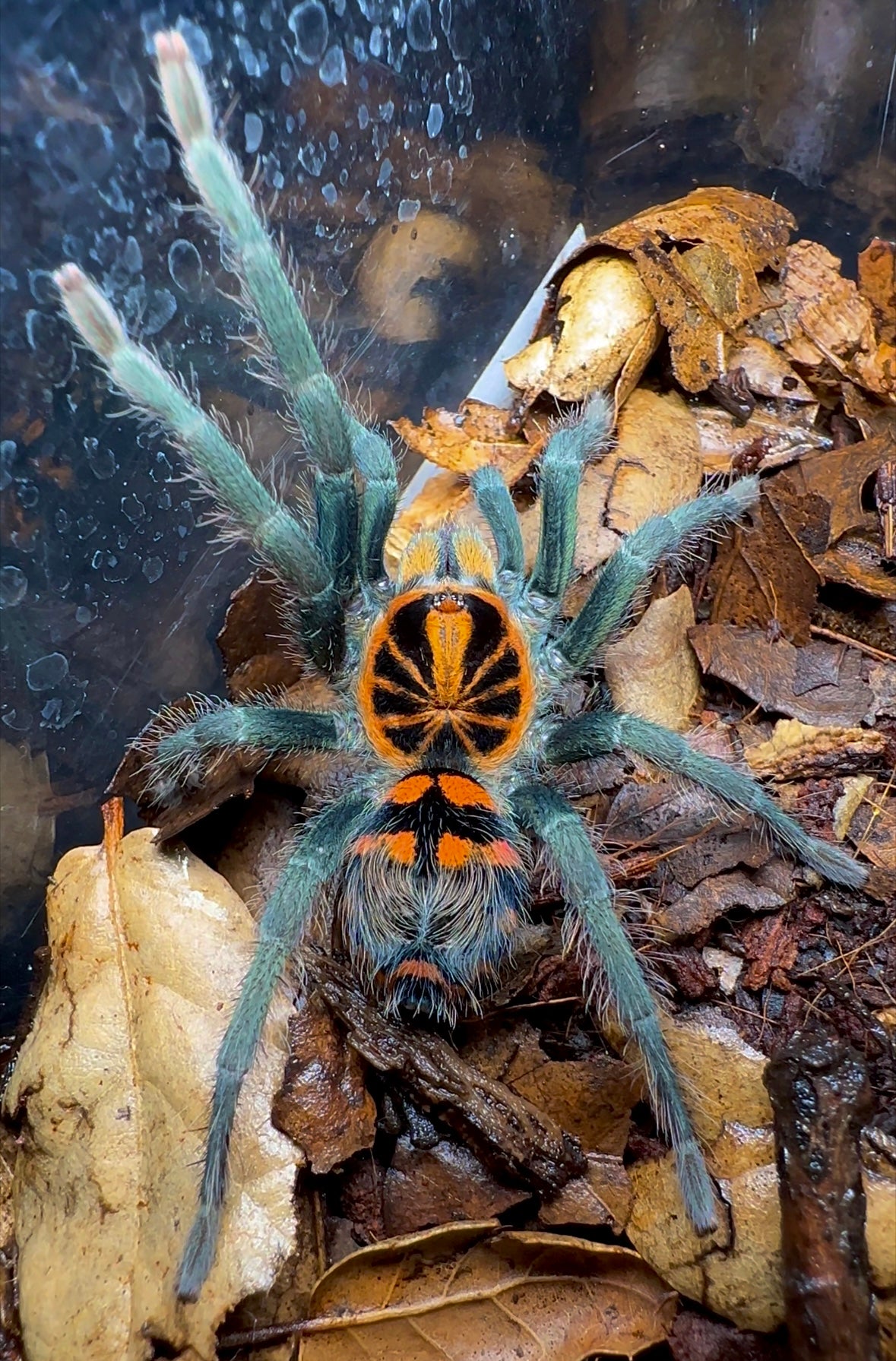
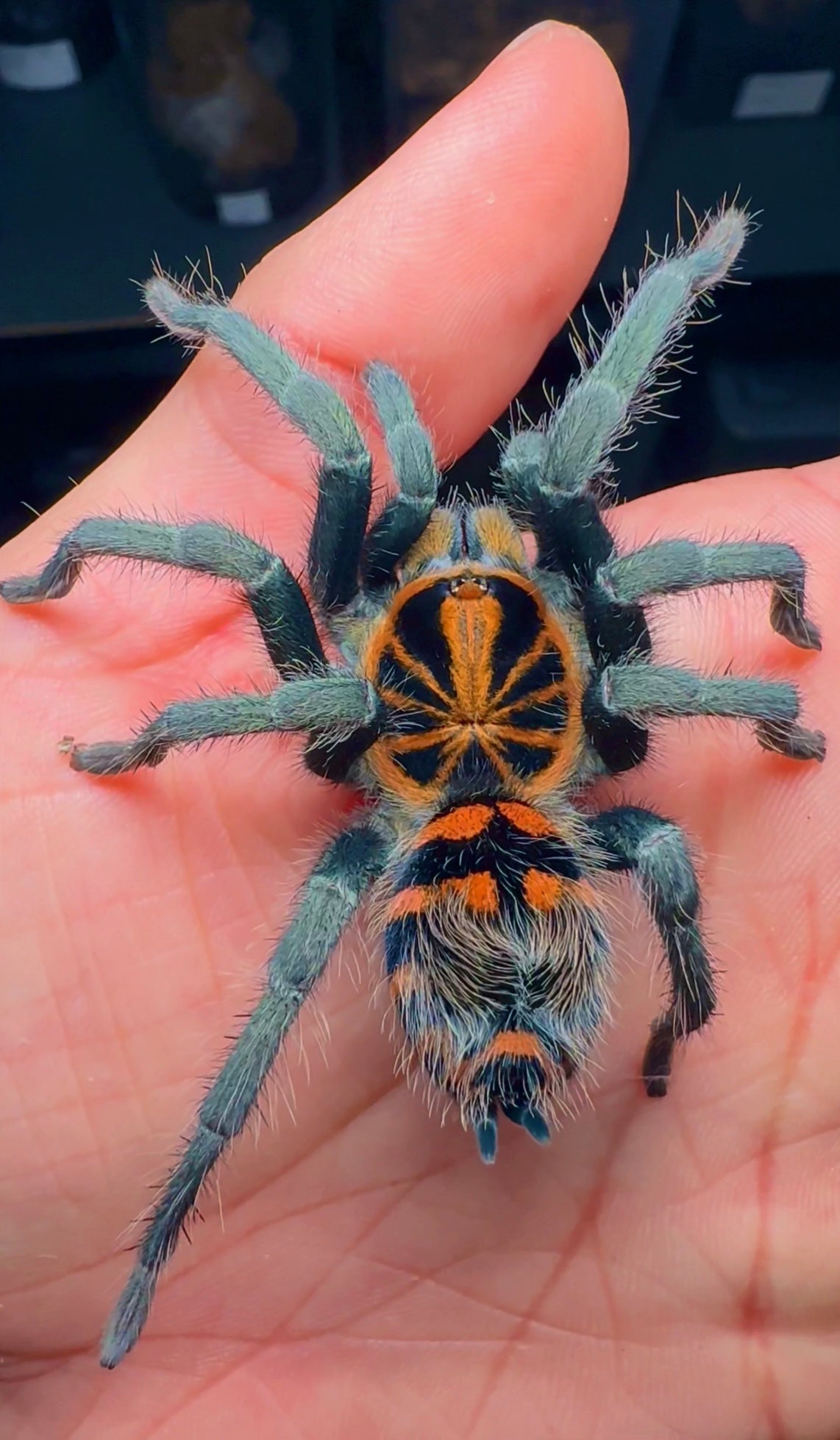
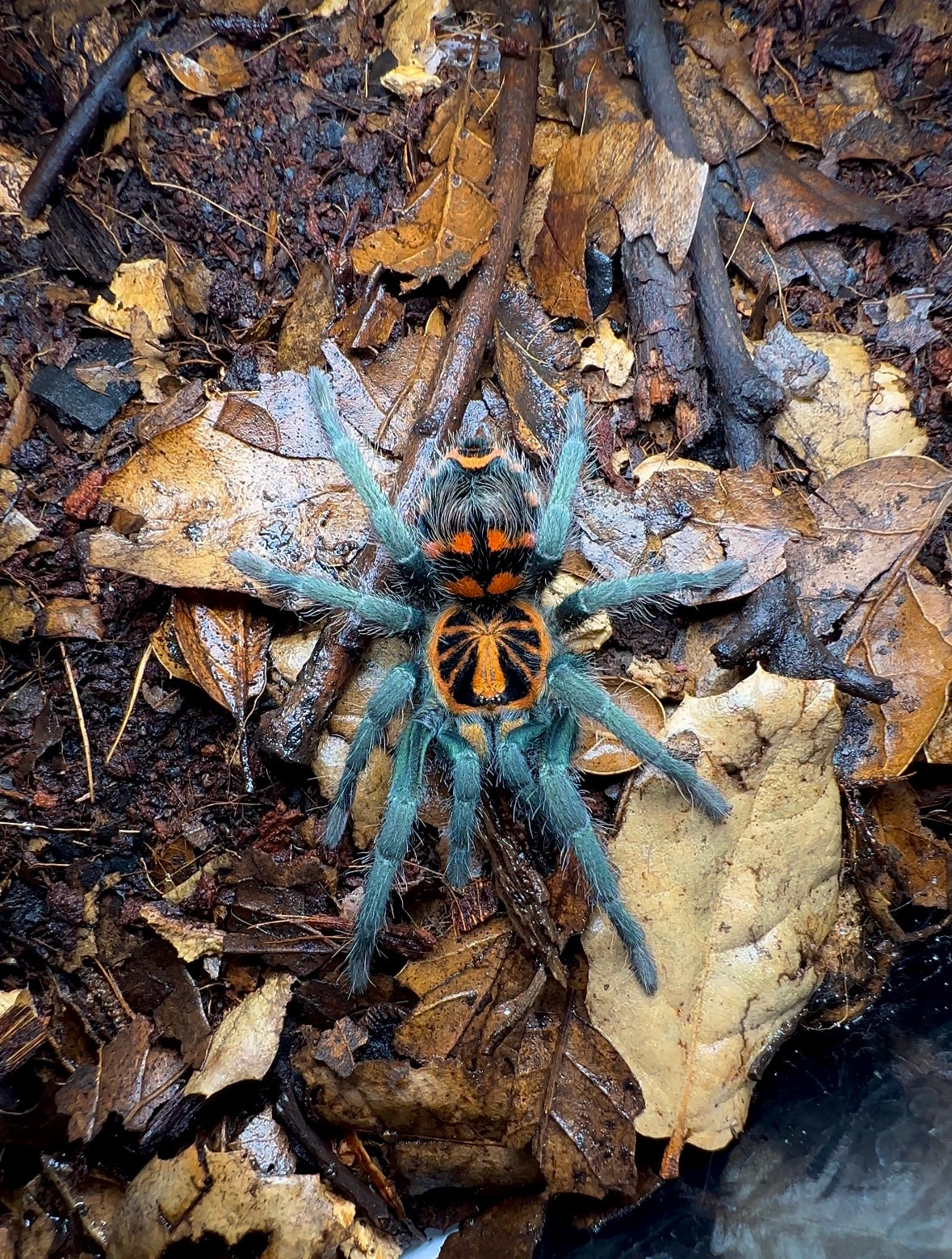
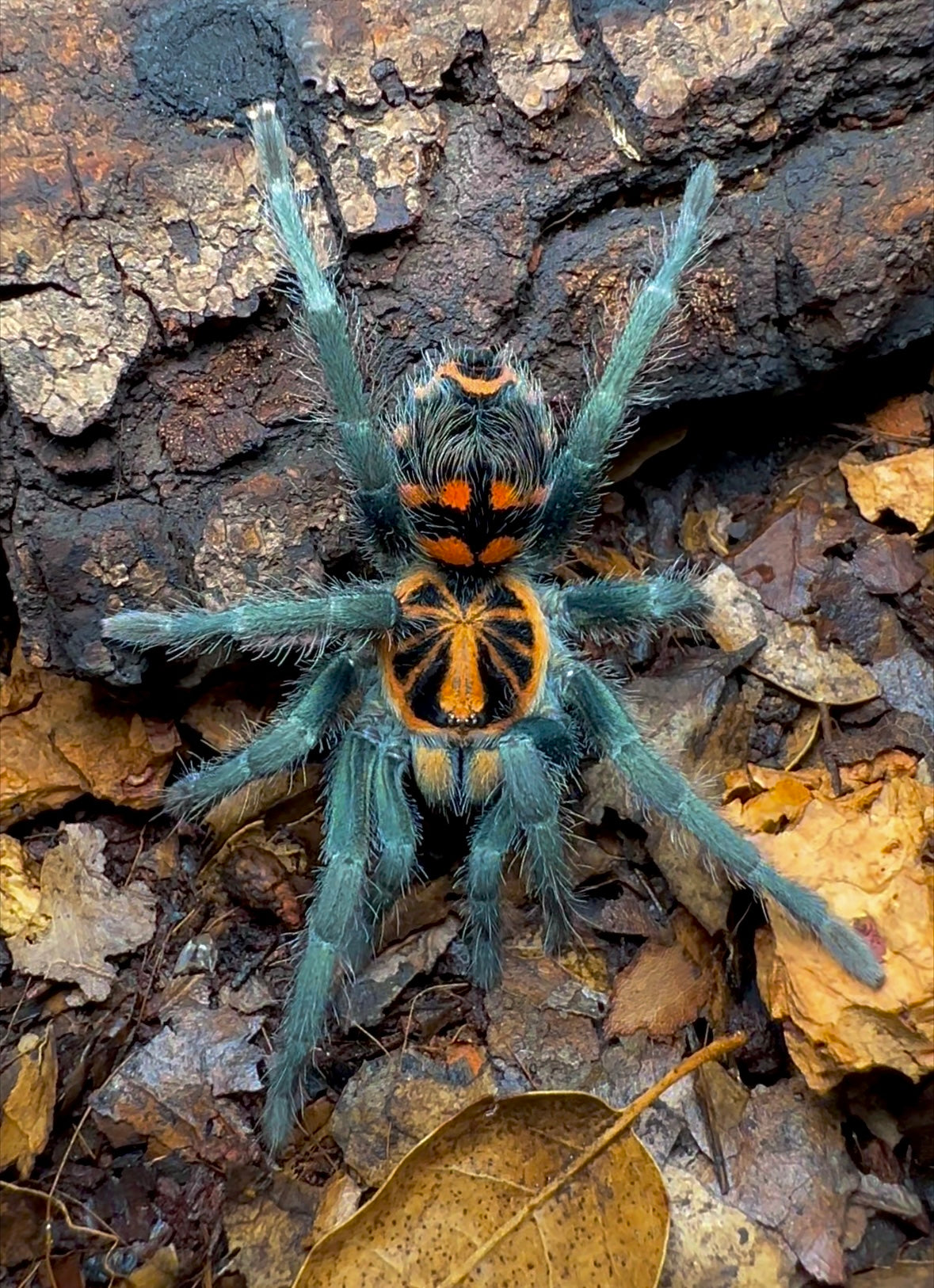
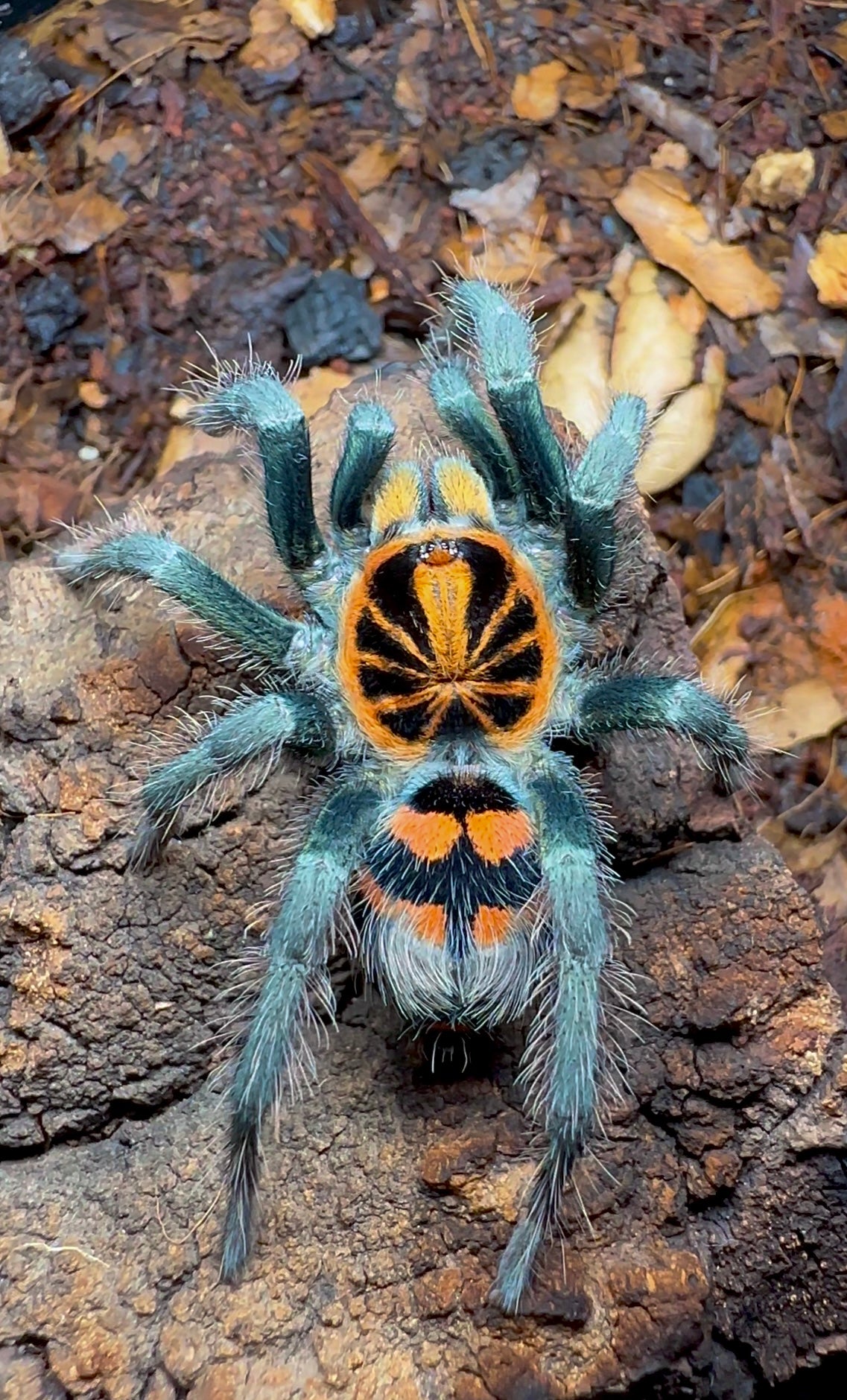
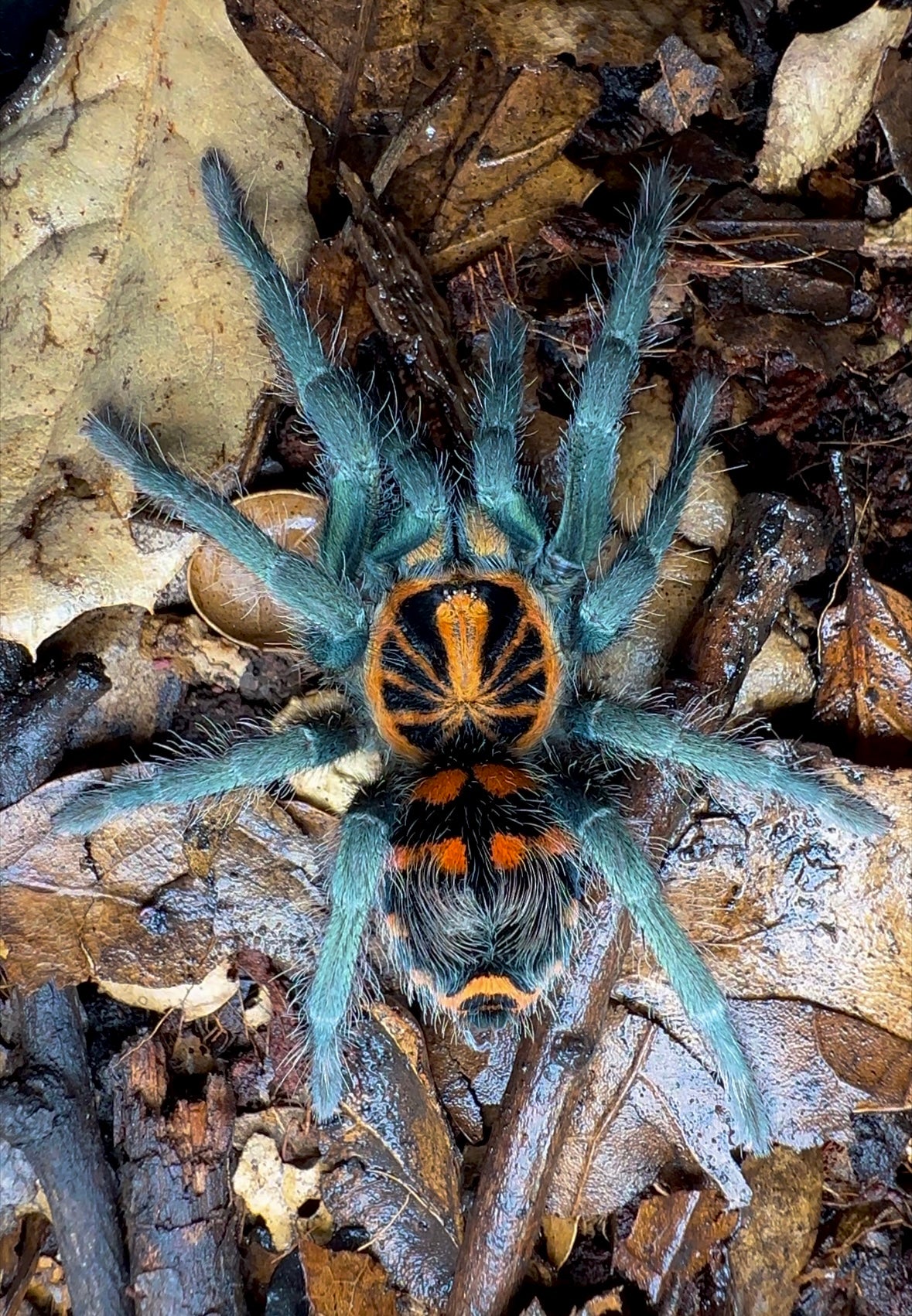
There are colorful tarantulas, and then there is the Ecuadorian Crowned Beauty. Hapalopus sp. “Planet Earth,” formerly circulated in the hobby as “Yasuni,” is genuinely one of the craziest-looking New World tarantulas I have ever worked with. Just look at the photos, aquamarine-blue legs, a golden-yellow crown across the carapace, and a jet-black abdomen covered in vivid orange markings. The contrast almost doesn’t look real. This is one of those species where pictures immediately grab your attention, but somehow the animal looks even better in person.
A Tarantula That Looks Hand-Painted
What makes Planet Earth so special isn’t just that it’s colorful—it’s the combination and placement of those colors. The carapace develops an incredible black-and-gold radial pattern that almost looks like a crown when viewed from above. That flows into cool blue-green legs before ending with an abdomen covered in bold orange markings against a deep black background. There really isn’t another tarantula in my collection that looks quite like it.
And They Get BIG
The appearance becomes even crazier once you realize this isn’t some tiny dwarf species. Planet Earth can develop into a large, incredibly impressive tarantula, making that wild coloration even more dramatic as the animal matures. A large female sitting completely out in the open with those aquamarine legs and that golden crown is an absolute centerpiece animal.
Extremely Rare in the U.S. Hobby
This is where Planet Earth goes from beautiful to serious collector territory. This species is exceptionally scarce in American collections, and established specimens almost never become publicly available. Unlike species that appear on import lists year after year, this is the type of tarantula where you simply cannot assume another opportunity will come around anytime soon. That’s exactly why I’ve put so much effort into maintaining rare bloodlines like this at Westside. When something this uncommon becomes established in the U.S., producing and maintaining it in captivity is how we keep it from eventually disappearing from the hobby.
Surprisingly Calm for Something This Exotic
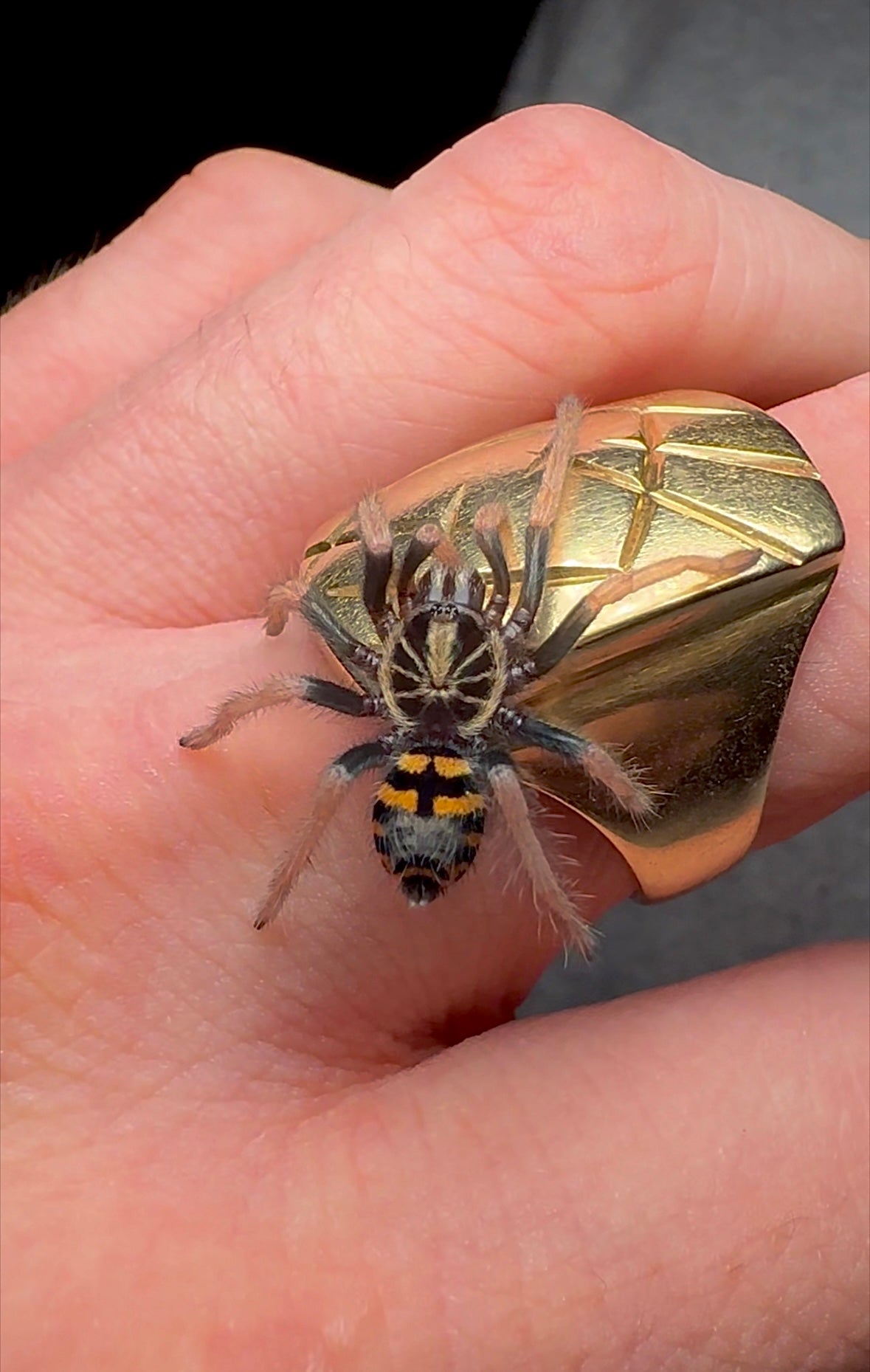
The personality surprised me almost as much as the coloration. My Planet Earth have been confident, relatively calm, and much more comfortable remaining visible than you might expect from such an exotic-looking tarantula. Rather than immediately disappearing every time the enclosure is opened, established specimens regularly sit right out on display. Individual temperament can always vary, and they can certainly move quickly when they want to, but mine have been remarkably confident animals.
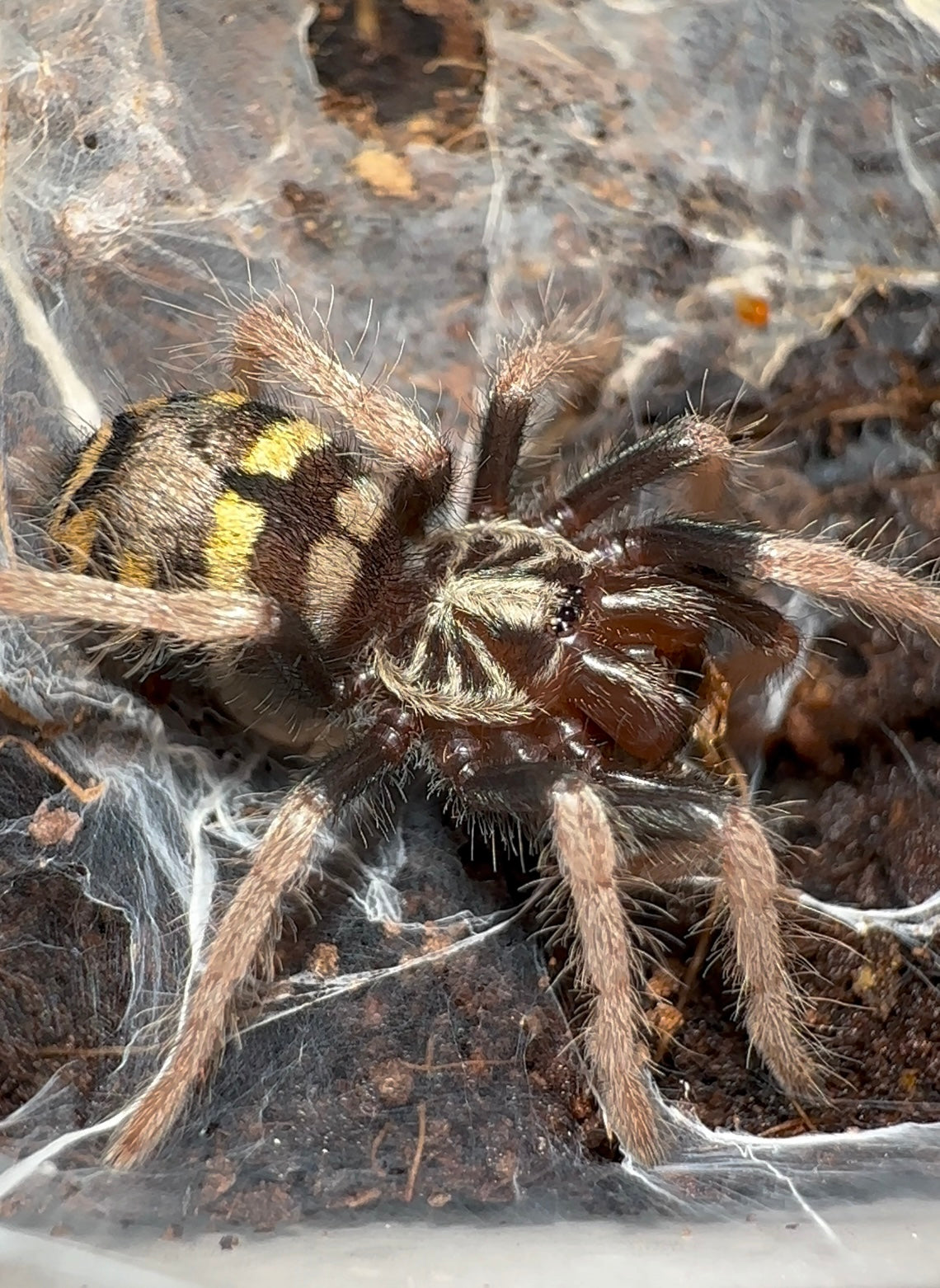
A Webbing Machine
Give this species enough cork, branches, plants, and other anchor points and they’ll eventually turn the enclosure into their own silk fortress. They’re fantastic webbers and will connect different areas of the enclosure with thick sheets and tunnels of silk. Watching them hunt through that webbing is one of my favorite things about keeping them. The second prey touches the silk, the entire personality changes—they are incredibly fast and precise predators with an awesome feeding response.
Rare Doesn’t Mean Difficult
Despite how exotic they look, Planet Earth are surprisingly straightforward to maintain once you understand what they want. Younger specimens appreciate more moisture while establishing, while larger juveniles can gradually be maintained drier. The biggest things I focus on are good ventilation, access to water, adequate moisture when young, and lots of structure for webbing. This isn’t one of those collector species that requires some impossible husbandry routine. Give them the right enclosure and they do the rest.
One look at this animal tells you why it’s special.
This is exactly the type of tarantula Westside Tarantulas is all about. You get insane coloration, large adult size, heavy webbing, an incredible feeding response, a surprisingly confident personality, and genuine rarity all in the same animal. There are plenty of rare brown tarantulas that are exciting because of the name on the label. Planet Earth doesn’t need a label to impress anyone.