
Skip to product information
1 of 1

Westside Tarantulas

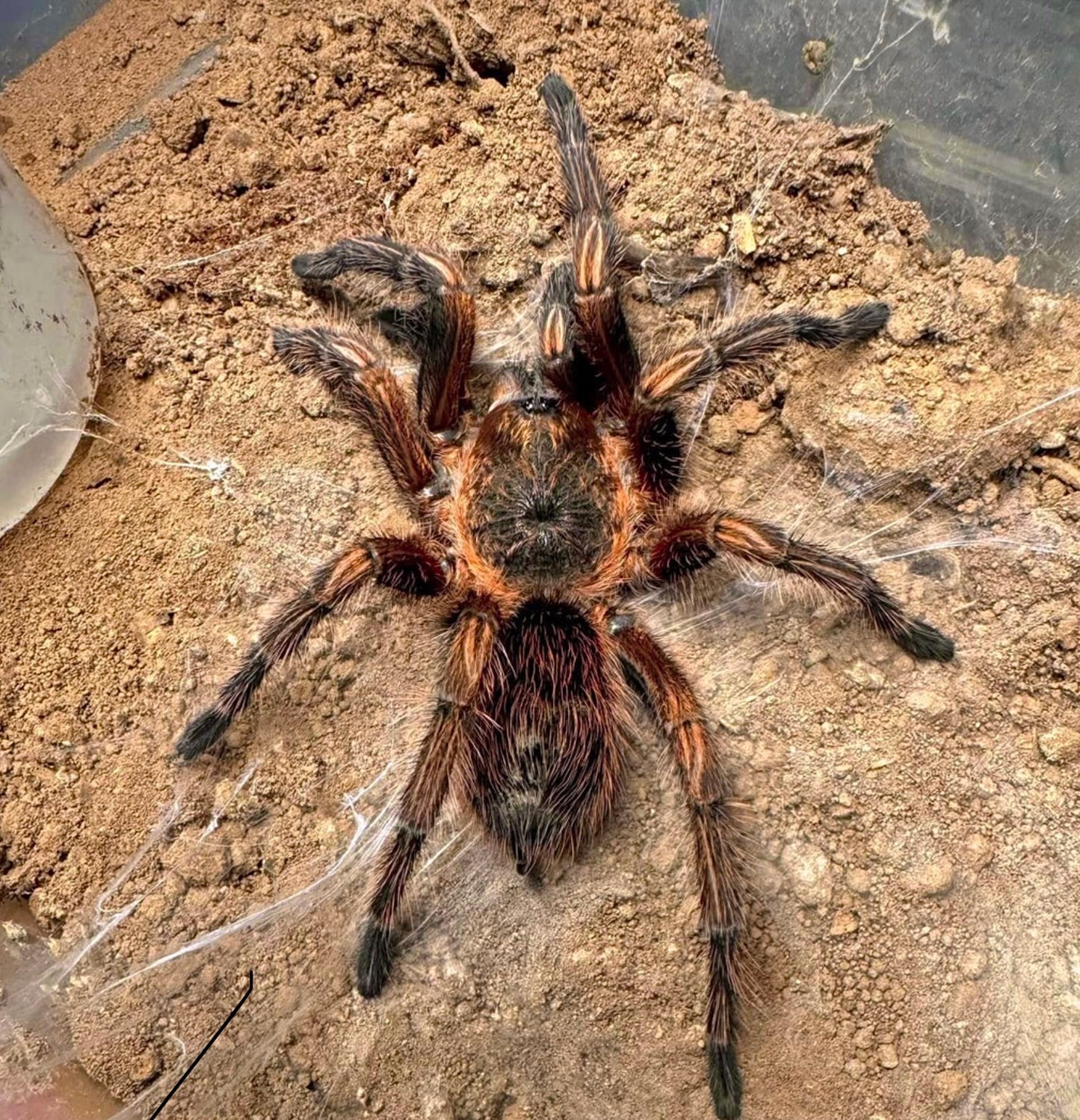
Theraphosinae sp. subaureum - Peruvian Ember Heart - New To HOBBY!

Theraphosinae sp. subaureum - Peruvian Ember Heart - New To HOBBY!

Regular price $235.00
Regular price Sale price $235.00
Sale Sold out
Shipping calculated at checkout.
Size and Sex

Peruvian Ember Heart – Theraphosinae sp. subaureum

A Fire-Blooded Mystery from the Andes

There are rare tarantulas… and then there’s Theraphosinae sp. subaureum — better known in the hobby as the Peruvian Emberheart. This species is wrapped in a blazing coat of volcanic copper and ember-red tones, all contrasted by bold black leg striping and a smoky, matte carapace that makes it look like it crawled straight out of scorched earth. But beyond its unforgettable coloration lies a mystery: no one is quite sure what genus this species actually belongs in. Currently sitting under the placeholder genus Theraphosinae, many experts believe this species is more accurately classified under Thrixopelma, based on its behavior, proportions, and region of origin. Native to the lowland valleys and dry forests of Peru, this is a New World terrestrial species with very limited presence in the U.S. hobby — and its true identity only adds to the intrigue. If you’re a collector of rare bloodlines, this is a species that practically demands a spot in your collection.

Behavior, Temperament and Care!

Despite its wild coloration, the Peruvian Emberheart is surprisingly grounded — literally and behaviorally. This is a calm, confident, and predictable terrestrial species that rarely kicks hairs and is typically content to stay out in the open. Like many Thrixopelma types, it isn’t prone to bolting or hiding, and will often patrol the edges of its enclosure looking for prey. It has a bold feeding response and handles enclosure maintenance well, making it perfect for hobbyists of all experience levels — especially those looking for something unique without the drama. Like most Peruvian terrestrials, this species prefers a semi-arid to dry setup — dry coco fiber or sandy loam substrate, a hide, and a water dish. Occasional misting is fine, but consistent dryness is the default. This species tends to lightly web in corners or around its hide, but doesn’t burrow heavily or stay hidden for long. It’s a great display species with an equally strong feeding response.

Experience Level - Beginner 

Personality - Docile, calm, slow moving and tolerant of handling 

Adult size - Medium sized (5 to 6 inches DLS) 

Life span - 25 to 30+ years

Growth rate - very slow!

Theraphosinae sp. Subaureum Care - Keep this species on dry substrate and make sure to give her a water dish! They do not burrow but will hide as slings. Make sure there enclosure is 3 to 5 times the size of their legspan as The Peruvian Ember Heart does explore its enclosure! A unique behavior not seen in many tarantula species!

View full details
WESTSIDE TARANTULAS

Species Profile

Everything You Need To Know At A Glance.
Experience Level
Beginner
Temperament
Active, Curious & Docile
Type
Terrestrial / New World / Moderate Webber
DLS
Adult Size
5-6+” DLS
Country of Origin
Peru
Life Span
♀25+ Years

Care & Husbandry Guide

🏠 Enclosure & Substrate

Use a terrestrial enclosure with several inches of compactable substrate, a cork-bark hide, and plenty of usable floor space. Provide enough depth for optional burrowing and keep climbing height low. A simple setup with a moisture gradient makes it easier to observe the spider's preferences while it establishes itself.

🌡️ Temperature & Humidity

A conservative starting range is 70–76°F, pending more reliable information about this species' native habitat. Keep one portion of the substrate slightly moist while allowing the other to dry. Provide good ventilation and avoid excessively hot, wet, or stagnant conditions.

 🍽️ Feeding & Water 

Offer growing specimens appropriately sized crickets or roaches about once a week, adjusting according to appetite and abdomen size. Larger specimens can be fed every 7–14 days depending on body condition. Keep a clean water dish available for established juveniles and adults, and remove uneaten prey during premolt.

🕷️ Species-Specific Care 

Peruvian Ember Hearts are an uncommon, undescribed tarantula with limited published husbandry information. I recommend a terrestrial setup with compactable substrate, a secure cork-bark retreat, and access to both moist and dry areas. Give the spider room to explore and enough substrate to dig if it chooses. Avoid constantly wet conditions and adjust the setup based on how your specimens behave.