

Westside Tarantulas
Thrixopelma ockerti - The Peruvian Strawberry Rump - For Sale
Thrixopelma ockerti - The Peruvian Strawberry Rump - For Sale
Couldn't load pickup availability
Thrixopelma ockerti – Peruvian Strawberry Rump
The Sweetest Tarantula in the Hobby
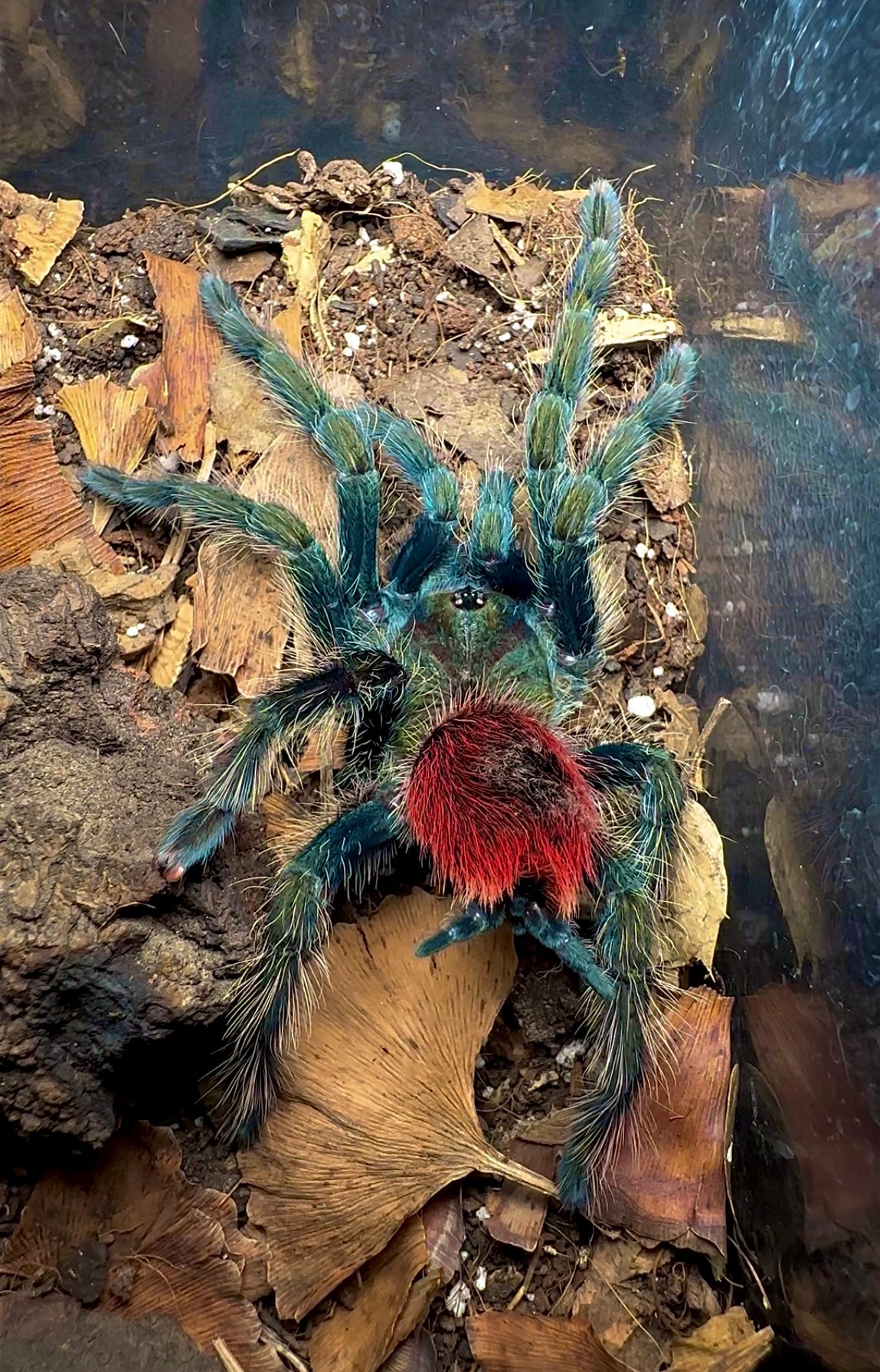
Few tarantulas have a common name that fits as perfectly as the Peruvian Strawberry Rump Tarantula. One glance at this species and it’s immediately obvious why. Sitting atop its emerald-green body is an unbelievably fluffy abdomen that ripens from rosy pink into a vibrant, strawberry-red masterpiece with every molt. Combined with shimmering teal-blue legs and soft golden hairs, the entire spider looks like something straight out of a fantasy world. It’s cute, colorful, and unlike anything else you’ll find in the tarantula hobby. Native to Peru, Thrixopelma ockerti has quietly become one of the hobby’s hidden gems—an uncommon species that instantly steals the spotlight in any collection.
Like a Living Strawberry Growing on Emerald Moss
The color combination of Thrixopelma ockerti is simply mesmerizing. Rich emerald and turquoise greens cover the body while metallic blue highlights shimmer across the legs. Then comes the showstopper—the famous Strawberry Rump. As the spider matures, the abdomen transforms into a deep, velvety red that’s so vibrant it genuinely resembles a freshly picked strawberry. The contrast between the lush green body and brilliant crimson abdomen creates one of the most unique and instantly recognizable color combinations of any New World tarantula. Every molt makes the colors richer, brighter, and even more breathtaking, rewarding patient keepers with one of nature’s most spectacular living works of art.
Impossible Not to Smile At
Some tarantulas are intimidating… this one is simply adorable. Between its fuzzy appearance, oversized “strawberry” abdomen, curious personality, and constantly visible behavior, Thrixopelma ockerti has earned a reputation as one of the most lovable species in the hobby. It’s the type of tarantula that even people who normally aren’t fans of spiders can’t help but admire. If you’re looking for a species with undeniable personality, charm, and display value, this one checks every box.
The Perfect Blend of Beauty & Simplicity
Not every breathtaking tarantula has to be difficult to keep. The Peruvian Strawberry Rump is a hardy New World species that combines incredible coloration with forgiving husbandry, making it an outstanding choice for both beginners and experienced keepers alike. It spends plenty of time out on display, develops incredible colors with each molt, and has an enthusiastic feeding response that makes watching it hunt just as enjoyable as admiring its appearance.
A Hidden Gem Every Collector Should Own
While giant bird eaters and flashy Old Worlds often dominate conversations, Thrixopelma ockerti quietly stands in a league of its own. It doesn’t rely on massive size or intimidating behavior—it wins people over with pure beauty. The emerald-green body, metallic blue highlights, fluffy golden hairs, and iconic strawberry-red abdomen create a color combination found nowhere else in the hobby. If you’re searching for a species that is rare, unbelievably photogenic, easy to care for, and guaranteed to become one of the favorites in your collection, the Peruvian Strawberry Rump Tarantula deserves a spot at the very top of your wish list.
Experience Level – Beginner
Personality – Calm, curious, active, display-oriented, and an enthusiastic feeder.
Life Span – Females 18–25+ years
Native Country of Origin – Peru
Adult Size – 6+ inches DLS
Thrixopelma ockerti Care - The Peruvian Strawberry Rump is an incredibly hardy terrestrial species that thrives in a simple enclosure with several inches of dry to slightly moist substrate, a cork bark hide, and a shallow water dish. Maintain temperatures between 68–80°F, allow the enclosure to dry between light waterings, and always provide good ventilation. Feed appropriately sized crickets, roaches, or other feeder insects every 7–10 days for juveniles and every 10–14 days for adults. Like many South American New World tarantulas, this species is forgiving, adaptable, and easy to maintain, making it an excellent choice for beginners. With proper care, Thrixopelma ockerti will reward you for decades with one of the cutest, most colorful, and most unique displays found anywhere in the tarantula hobby.
Share