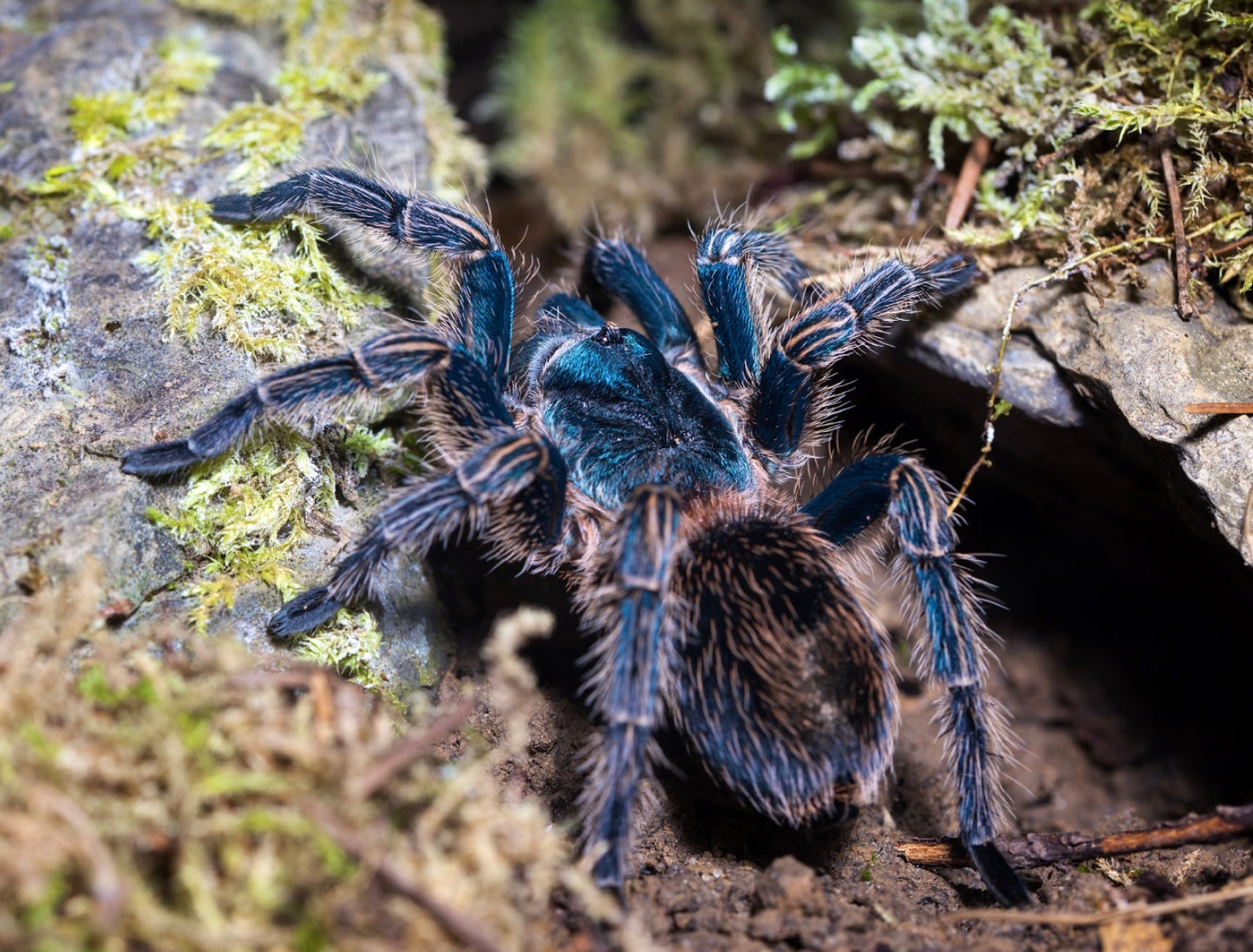
Ewok cyaneolus - (Cobalt Blue Rump)
A True Blue Showpiece That Beginners Can Actually Enjoy
Introducing one of the most eye-catching and underrated blue tarantulas in the hobby: Ewok cyaneolus “Blue,” better known as the Cobalt Blue Rump. This stunning New World species stays dressed in vivid electric blue tones from legs to rump, giving it a clean, icy, almost glowing appearance that instantly stands out in any collection. Reaching a very manageable 4 to 5 inches DLS, this species offers all the visual appeal of a rare blue tarantula without the overwhelming size or attitude that often comes with other colorful species.
Now Recognized As Its Own Distinct Species
What makes this tarantula even more exciting is that it is now recognized as its own distinct species, Ewok cyaneolus “Blue.” In the past, it was sometimes lumped in with Thrixopelma cyaneolum, but hobbyists now recognize this tarantula as something truly special in its own right. It can be distinguished by its brighter solid blue coloration, smaller adult size, and its lack of the reddish abdominal hairs associated with the other species. The result is a tarantula with a much cleaner, colder, and more vibrant blue overall look.
One of the Best Beginner Blue Tarantulas You Can Own
This is where the species really shines. Most tarantulas with intense blue coloration tend to be fast, defensive, or better suited for advanced keepers. Ewok cyaneolus “Blue” breaks that mold completely. This species is known for being docile, slow moving, hardy, and very tolerant of handling, making it a fantastic choice for beginners who want something visually spectacular without taking on a difficult species. If you’ve been wanting a tarantula that looks exotic and impressive but still behaves in a calm, manageable way, this is exactly the kind of species you should be looking at.
A Hardy Species With Serious Hobby Appeal
Not only is this species gorgeous, but it is also incredibly practical to keep. It is a hardy New World tarantula that adapts well to captivity and does not require overly complicated care. That combination of rare blue coloration, easy temperament, and simple husbandry is what makes this tarantula such a sleeper hit. Whether you’re just getting started or looking to add a truly unique blue species to your lineup, this one checks all the boxes. It’s uncommon, beautiful, easy to manage, and honestly one of the coolest tarantulas we offer.
Why Hobbyists Love This Species
Hobbyists love this species because it offers something very few tarantulas can: true blue coloration in a calm, beginner-friendly package. It has the kind of color that grabs attention instantly, but unlike many other striking species, it doesn’t come with a reputation for being overly defensive or unpredictable. It’s the type of tarantula that looks like an advanced keeper species, yet behaves like something far more forgiving and enjoyable to own.