


Westside Tarantulas
Thrixopelma sp. Cuzco - Peruvian Royalty Tarantula - Female For Sale
Thrixopelma sp. Cuzco - Peruvian Royalty Tarantula - Female For Sale
Couldn't load pickup availability
Thrixopelma sp. “Cuzco” – Peruvian Royalty Tarantula
A Tarantula Fit for Royalty!
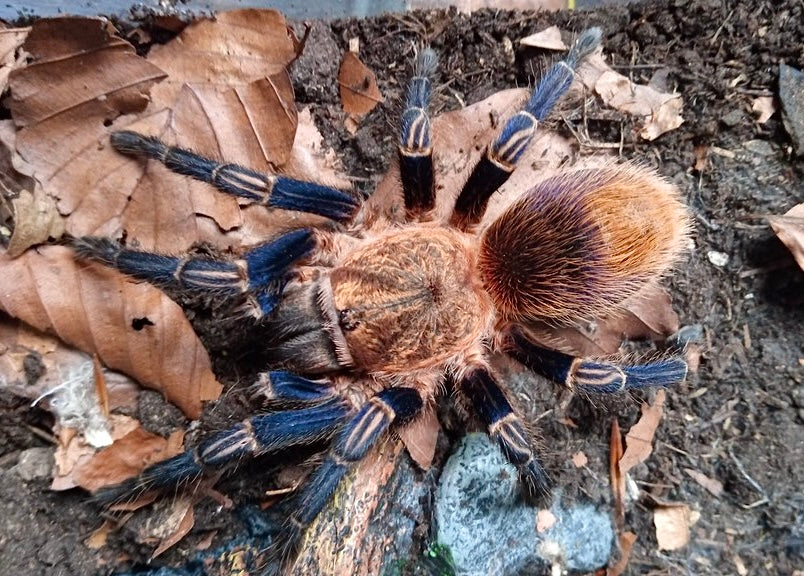
The Peruvian Royalty is easily one of the most beautiful and underrated Thrixopelma species I’ve ever worked with. Imagine a tarantula covered in metallic blues, rich golds, and fiery reds, all on the same animal!
And unlike many brightly colored tarantulas, this species has an incredibly relaxed personality, grows to an impressive 6+ inches DLS, and is surprisingly easy to care for.
All the Color Without the Attitude!
This is probably my favorite thing about Thrixopelma sp. “Cuzco”.
These guys are extremely docile, slow-moving, curious, and very tolerant of gentle handling. My specimens rarely show defensive behavior and are much more interested in slowly exploring their surroundings than running away or throwing up a threat posture. You get the incredible coloration of an exotic collector species with the relaxed personality of a classic beginner tarantula.
Extremely Rare — And PAINFULLY Slow Growing!
Here’s where the Peruvian Royalty gets really interesting. These are some of the slowest-growing Thrixopelma I’ve worked with. It can take over three years just to reach 2.5” DLS!
That means finding larger juveniles, let alone adult females, is incredibly difficult. Most keepers simply aren’t willing to spend years raising tiny specimens, and with so few established animals circulating in the hobby, this species remains a genuine collector rarity.
The Colors Only Get Better!
One of the coolest things about raising Peruvian Royalty is watching their coloration develop. Younger specimens already show beautiful combinations of gold, red, and blue, but those colors become richer and more defined with every molt. By the time they reach adulthood, you end up with a large, beautifully colored terrestrial that looks completely different from the tiny sling you started with. And because they grow so slowly, every molt feels like an accomplishment!
Hardy Enough for Beginners!
Despite their rarity, Peruvian Royalty are incredibly forgiving to keep.
I maintain mine in simple terrestrial enclosures with mostly dry substrate, a clean water dish, and good ventilation. They tolerate a wide range of moisture conditions, so there’s no need to constantly mist or chase a specific humidity percentage.
They’re also comfortable spending time out in the open rather than disappearing into deep burrows, making them awesome display animals.
A Rare Species That Actually Has It All!
Metallic blues. Fiery reds. Rich golds. A 6+ inch adult size. And one of the calmest personalities you could ask for. The only thing you need with this species is patience. If you love the relaxed personality of a Grammostola but want something considerably more colorful and unusual, the Peruvian Royalty is an awesome species to add to your collection.
Share




Species Profile
Care & Husbandry Guide
🏠 Enclosure & Substrate
Provide a terrestrial enclosure with 2–3 inches of mostly dry, compactable substrate and plenty of usable floor space. These guys are naturally curious and enjoy exploring their enclosure, so I prefer giving them a little more room than many other terrestrials. A cork-bark hide can be offered, although my established specimens rarely use one. Keep excessive climbing height low since adults become large, heavy-bodied tarantulas.
🌡️ Temperature & Humidity
Keep this species around 68–78°F with good ventilation. They're remarkably tolerant of different moisture conditions, so I prefer keeping most of the substrate dry while occasionally moistening one section. Normal room temperatures work well, although slightly warmer conditions may encourage feeding and growth. Avoid prolonged excessive heat or constantly wet, stagnant setups.
🍽️ Feeding & Water
Peruvian Royalty are reliable eaters but have an extremely slow growth rate, so they don't require heavy feeding. Growing specimens can be offered an appropriately sized cricket or roach about once a week, while larger animals can be fed every 7–14 days depending on body condition. Always provide a clean water dish. Don't be surprised if they occasionally refuse food for extended periods, especially around a molt.Peruvian Royalty are reliable eaters but have an extremely slow growth rate, so they don't require heavy feeding. Growing specimens can be offered an appropriately sized cricket or roach about once a week, while larger animals can be fed every 7–14 days depending on body condition. Always provide a clean water dish. Don't be surprised if they occasionally refuse food for extended periods, especially around a molt.Peruvian Royalty are reliable eaters but have an extremely slow growth rate, so they don't require heavy feeding. Growing specimens can be offered an appropriately sized cricket or roach about once a week, while larger animals can be fed every 7–14 days depending on body condition. Always provide a clean water dish. Don't be surprised if they occasionally refuse food for extended periods, especially around a molt.Peruvian Royalty are reliable eaters but have an extremely slow growth rate, so they don't require heavy feeding. Growing specimens can be offered an appropriately sized cricket or roach about once a week, while larger animals can be fed every 7–14 days depending on body condition. Always provide a clean water dish. Don't be surprised if they occasionally refuse food for extended periods, especially around a molt.Peruvian Royalty are reliable eaters but have an extremely slow growth rate, so they don't require heavy feeding. Growing specimens can be offered an appropriately sized cricket or roach about once a week, while larger animals can be fed every 7–14 days depending on body condition. Always provide a clean water dish. Don't be surprised if they occasionally refuse food for extended periods, especially around a molt.Peruvian Royalty are reliable eaters but have an extremely slow growth rate, so they don't require heavy feeding. Growing specimens can be offered an appropriately sized cricket or roach about once a week, while larger animals can be fed every 7–14 days depending on body condition. Always provide a clean water dish. Don't be surprised if they occasionally refuse food for extended periods, especially around a molt.Peruvian Royalty are reliable eaters but have an extremely slow growth rate, so they don't require heavy feeding. Growing specimens can be offered an appropriately sized cricket or roach about once a week, while larger animals can be fed every 7–14 days depending on body condition. Always provide a clean water dish. Don't be surprised if they occasionally refuse food for extended periods, especially around a molt.
🕷️ Species-Specific Care
Peruvian Royalty are extremely hardy, docile, and surprisingly easy to care for despite their rarity. Think of them almost like a more colorful Grammostola, with the same relaxed, slow-moving personality. They prefer a simple terrestrial setup with plenty of floor space, mostly dry substrate, and a clean water dish. My specimens rarely burrow and spend plenty of time sitting completely out in the open, making them fantastic display tarantulas.