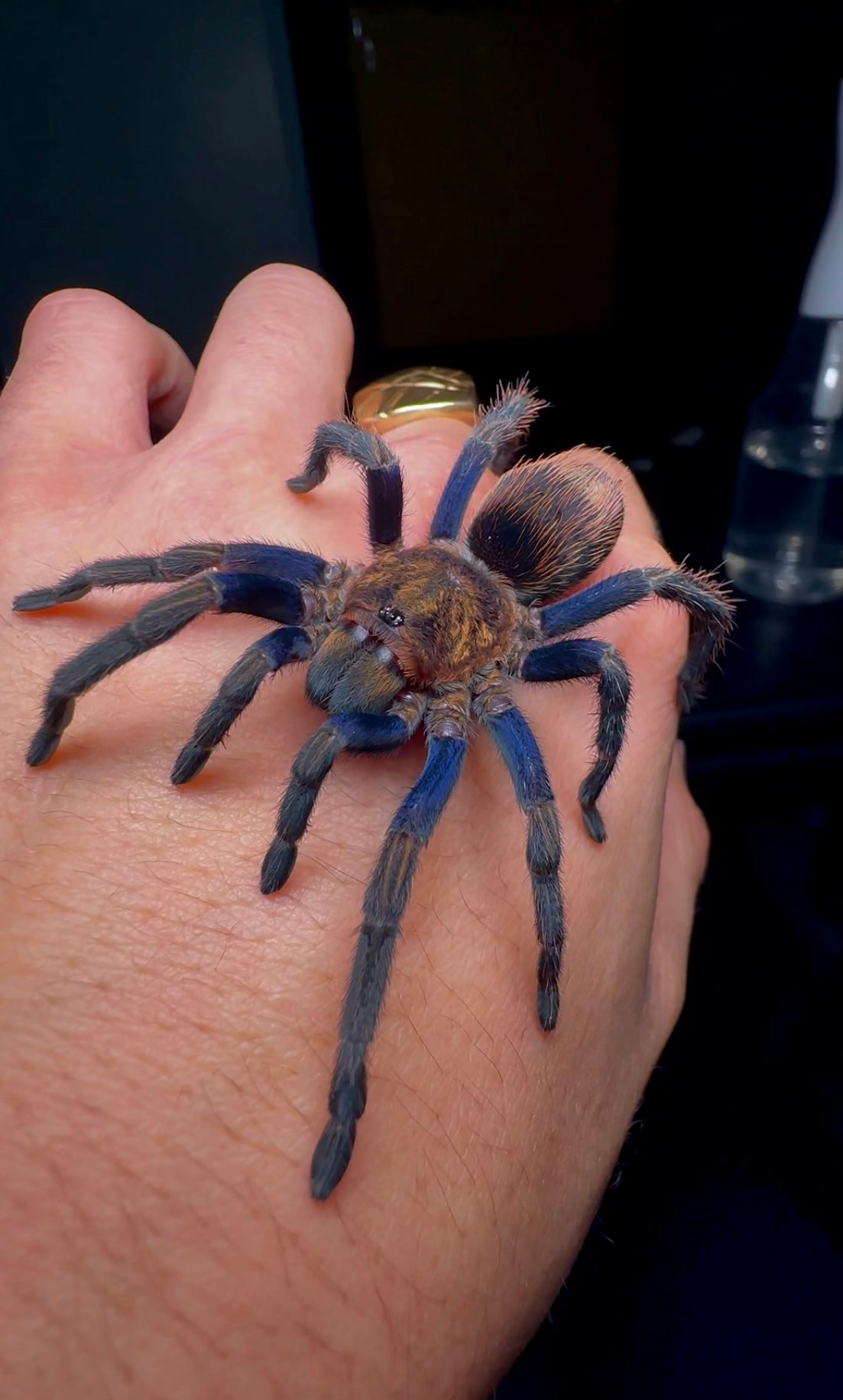
Thrixopelma sp. Golden Blue – Peruvian Gold & Blue
A Golden Carapace With Metallic Blue Legs!
The Peruvian Gold & Blue is easily one of the most beautiful and underrated Thrixopelma species I’ve worked with. Imagine a tarantula with deep metallic sapphire-blue legs, a brilliant golden-bronze carapace, and fiery copper-colored hairs across its abdomen.
The contrast is absolutely incredible, especially after a fresh molt when those metallic colors really come alive! And unlike many of the bright blue tarantulas in the hobby, this species is incredibly calm and easy to care for.
All the Color Without the Attitude!
This is one of my favorite things about Thrixopelma. Extremely docile, slow-moving, curious, and very tolerant of gentle handling. My Golden Blues have that same relaxed personality you would expect from a Grammostola, but with a completely different combination of colors.
They also enjoy exploring their enclosures and regularly spend time sitting completely out in the open. So instead of owning a beautiful tarantula that spends its entire life hiding, you actually get to see and enjoy this one!
Extremely Rare & PAINFULLY Slow Growing!
Finding a true Thrixopelma sp. “Golden Blue” isn’t easy. These guys are extremely slow growers, meaning it takes years to raise a small sling into a larger juvenile, let alone an adult female. And because this undescribed Peruvian species is so uncommon in the U.S. hobby, established specimens are especially difficult to come across. For collectors who appreciate rare Thrixopelma, this is exactly the kind of species worth taking your time to raise.
The Colors Just Keep Getting Better!
One of the coolest things about raising Golden Blues is watching their adult coloration develop. As they grow, the blue legs become richer and more metallic, while the golden carapace develops that beautiful bronze shine. The copper-colored abdominal hairs add another layer of contrast.
By the time they reach their full 5–6” DLS, you’ve got a seriously impressive terrestrial with a color combination you rarely see in the hobby.
Hardy Enough for Beginners!
Despite how rare they are, Golden Blues are surprisingly easy to care for.I keep mine almost exactly like a Chaco Golden Knee. Mostly dry substrate, a clean water dish, good ventilation, and normal room temperatures are really all they need. Younger specimens may spend more time hiding, but established animals generally prefer staying above ground and exploring their enclosure.
One of the Best-Kept Thrixopelma!
Metallic blue legs. A golden-bronze carapace. An incredibly docile personality. And genuine collector rarity. The only downside is how slowly these guys grow.
But if you’re looking for a rare, colorful terrestrial that’s just as enjoyable to keep as it is to look at, the Peruvian Gold & Blue is hard to beat!