







Which Brazilian Jewel Is Right For You?
Choose between our lower-cost Starter Brazilian Jewel or skip the most delicate early-life stage with one of our well-established juveniles.
$494 delivered
$715 delivered
Typhochlaena seladonia – Brazilian Jewel Tarantula
The Crown Jewel of the Tarantula Hobby
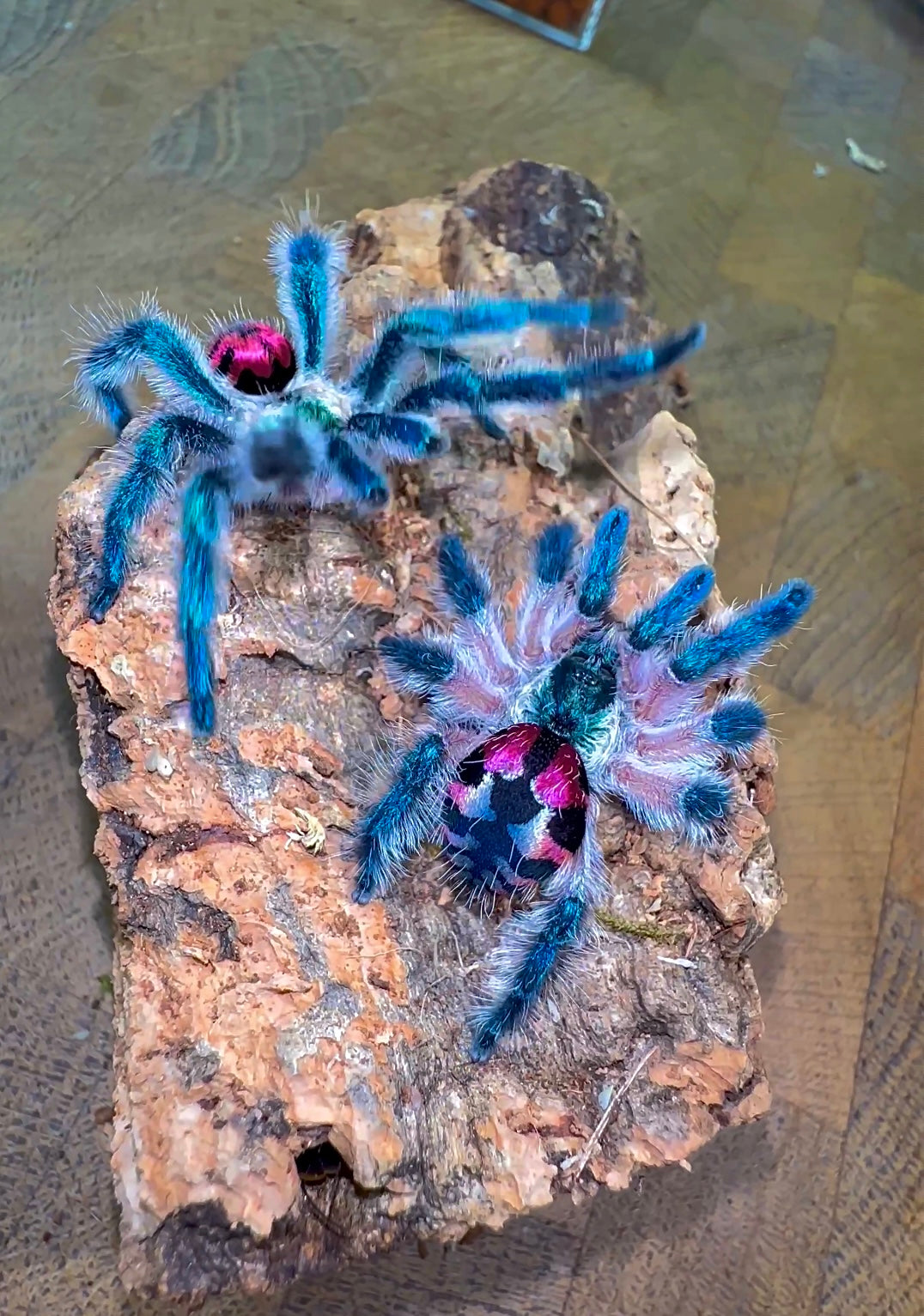
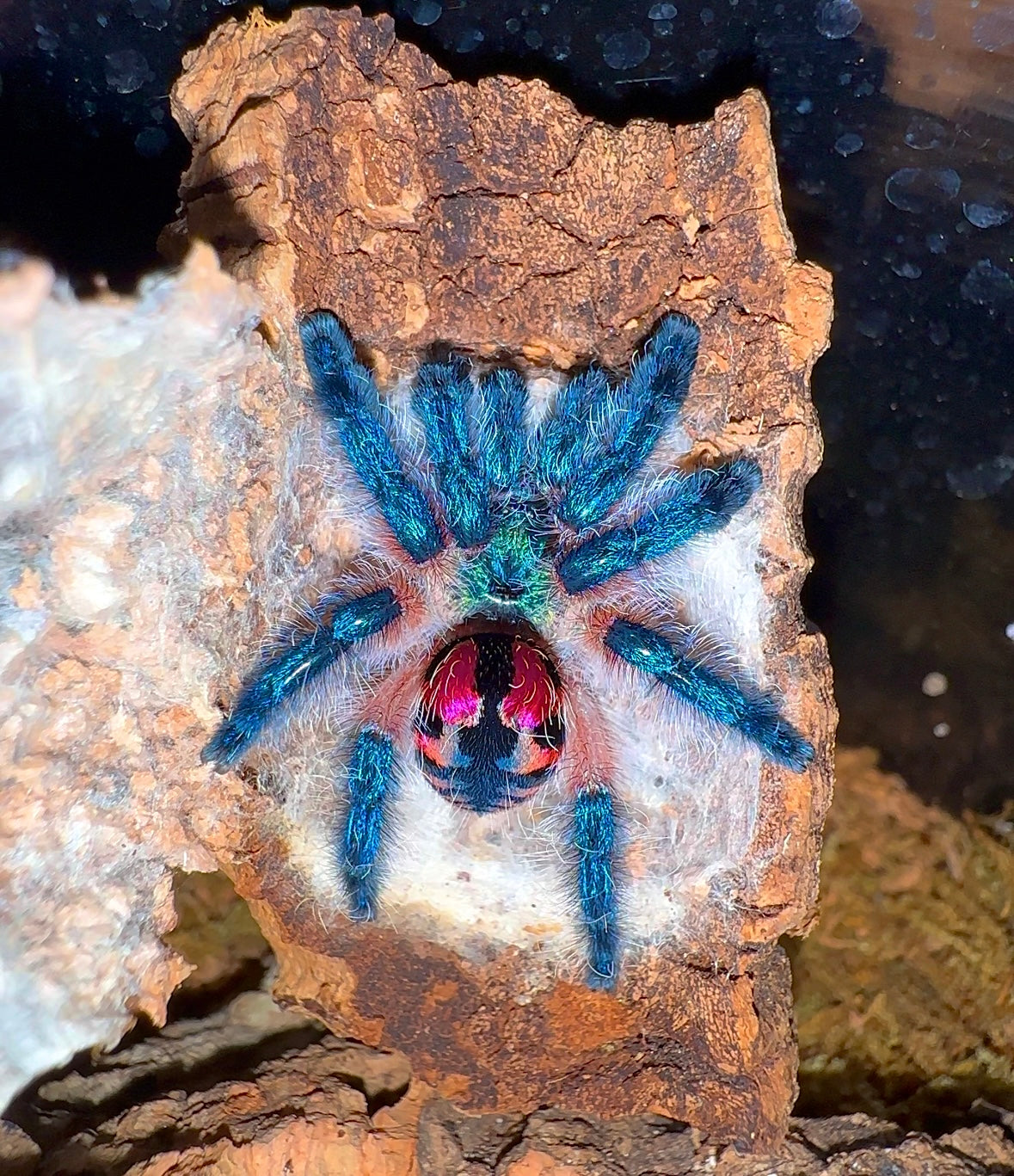
Few tarantulas come close to the Brazilian Jewel, Typhochlaena seladonia. Metallic emerald greens, sapphire blues, ruby-pink coloration and its incredible trapdoor-building behavior have made this tiny Brazilian species one of the most sought-after tarantulas in the hobby.
But with Brazilian Jewels, the stage of development you purchase matters just as much as the specimen itself.
Choose Your Starting Point
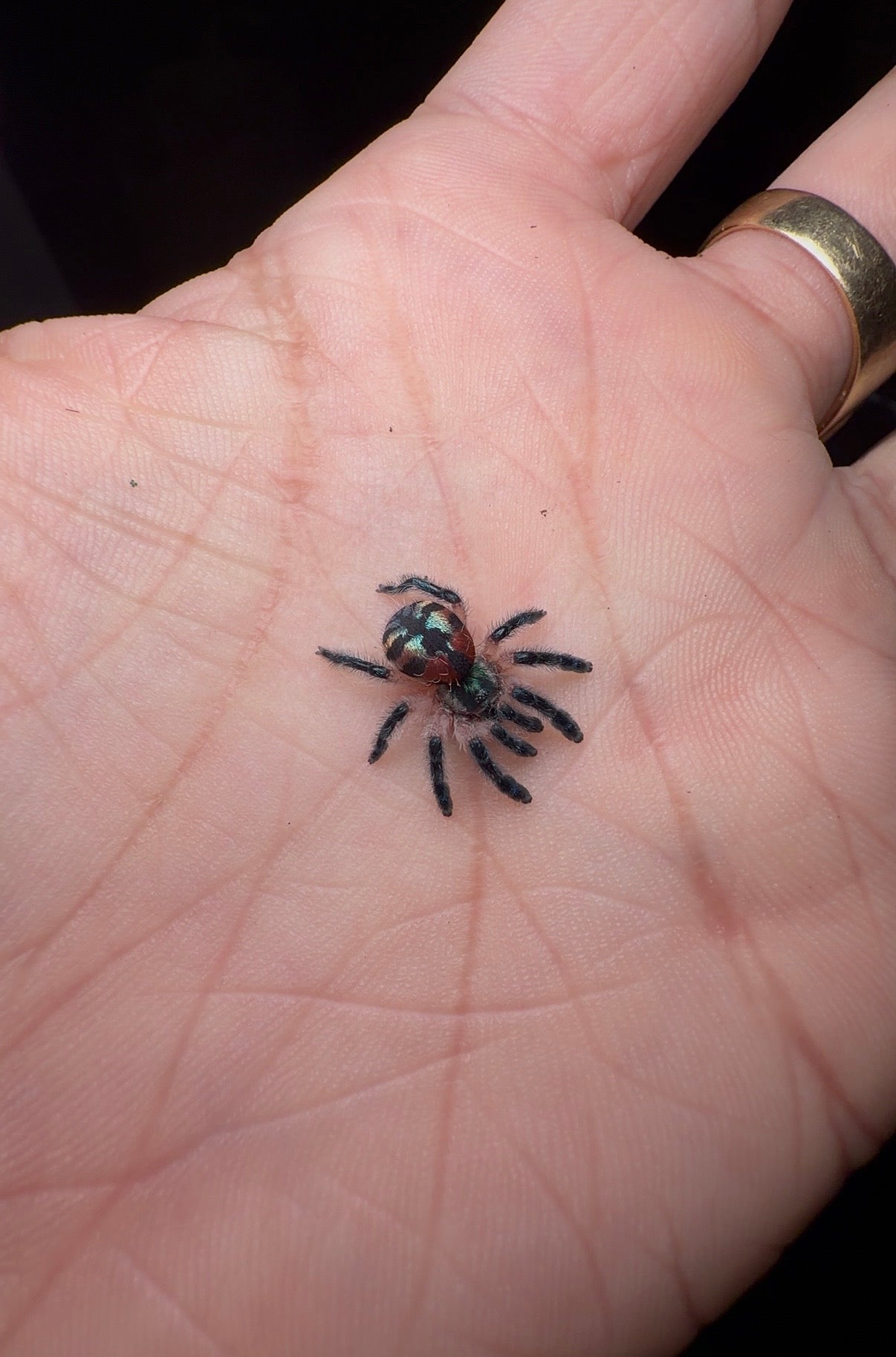
Westside Tarantulas offers two different stages of Brazilian Jewel. The Starter gives experienced keepers the opportunity to raise this species from an extremely early stage, while the Established juvenile allows you to bypass the delicate period responsible for much of T. seladonia’s reputation for being difficult to raise.
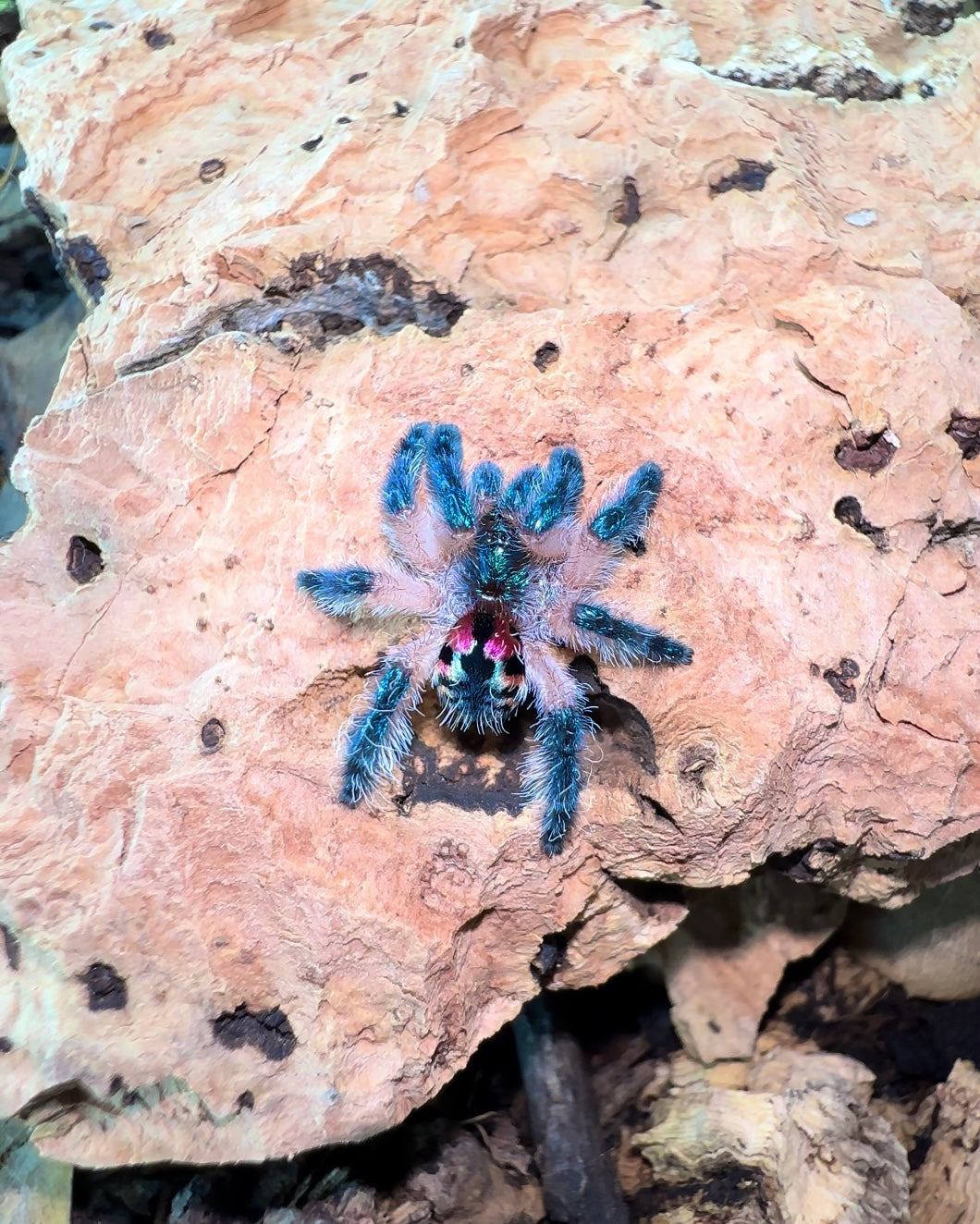
My Established Brazilian Jewels are held back for 7+ months, reach 0.75+” DLS and complete a minimum of five successful molts before I offer them for sale. During that time, I take on the feeding, monitoring and early-development risk myself.
In other words: I raise them through the hardest part so you don’t have to.
Why Established Is Westside Recommended
For customers experienced with extremely small slings, the Starter is a great opportunity to begin with a Brazilian Jewel at an earlier stage.
For everyone else—including beginners—I recommend the Established juvenile. You’re receiving a substantially larger, hardier and more proven individual that has already progressed beyond the species’ most vulnerable early-life stage.
The difference isn’t simply size. You’re paying for 7+ months of development, at least five successful molts and months of individual care already completed before the spider ever reaches you.
A Professional Setup Is Included
Every Brazilian Jewel includes a professionally prepared setup with appropriate substrate, sphagnum moss and cork-bark material for its signature trapdoor-building behavior.
That means you aren’t left guessing about enclosure size, substrate or building materials when your Brazilian Jewel arrives.
A Species Unlike Anything Else
Once established, T. seladonia constructs an intricate camouflaged trapdoor from substrate, moss and cork, disappearing beneath it and emerging rapidly when prey approaches. Combined with the jewel-like coloration that gives this species its name, it’s easy to understand why Brazilian Jewels remain centerpiece animals even in advanced collections.
Want to raise one from the beginning? Choose Starter. Want Westside to handle the hardest seven-plus months for you? Choose Established.
Species Information
Experience Level: Established – Beginner Friendly & Collector Recommended | Starter – Experienced Keepers
Personality: Shy, reclusive, generally calm
Growth Rate: Medium
Adult Size: Approximately 2.5–3” DLS
Life Span: Females approximately 15+ years
Native Country of Origin: Brazil
Brazilian Jewel Care - Brazilian Jewels do best in a well-ventilated enclosure allowed to dry between light mistings. Lightly mist the side approximately once per week to provide drinking droplets without creating constantly wet or stagnant conditions. Good cross-ventilation is important.
Provide sphagnum moss and small cork-bark pieces at the surface for trapdoor construction, feed appropriately sized prey, and avoid unnecessarily disturbing an established retreat. Starter specimens require particularly careful attention to hydration, prey size and ventilation because of their extremely small size.