Xenenthis intermedia - Venezuelan Blue Bloom
One of the Most Insane-Looking Giant Tarantulas in the Hobby!
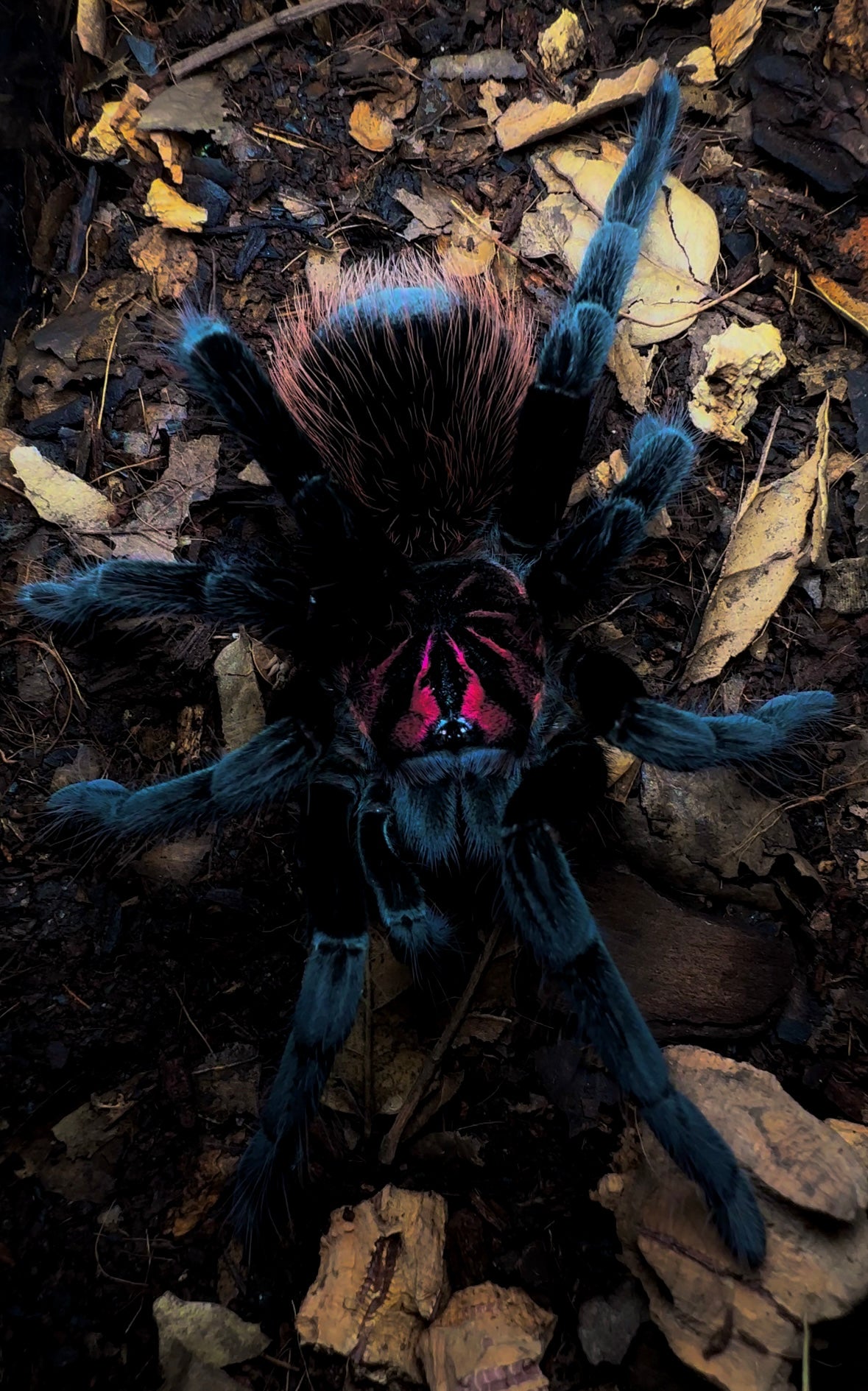
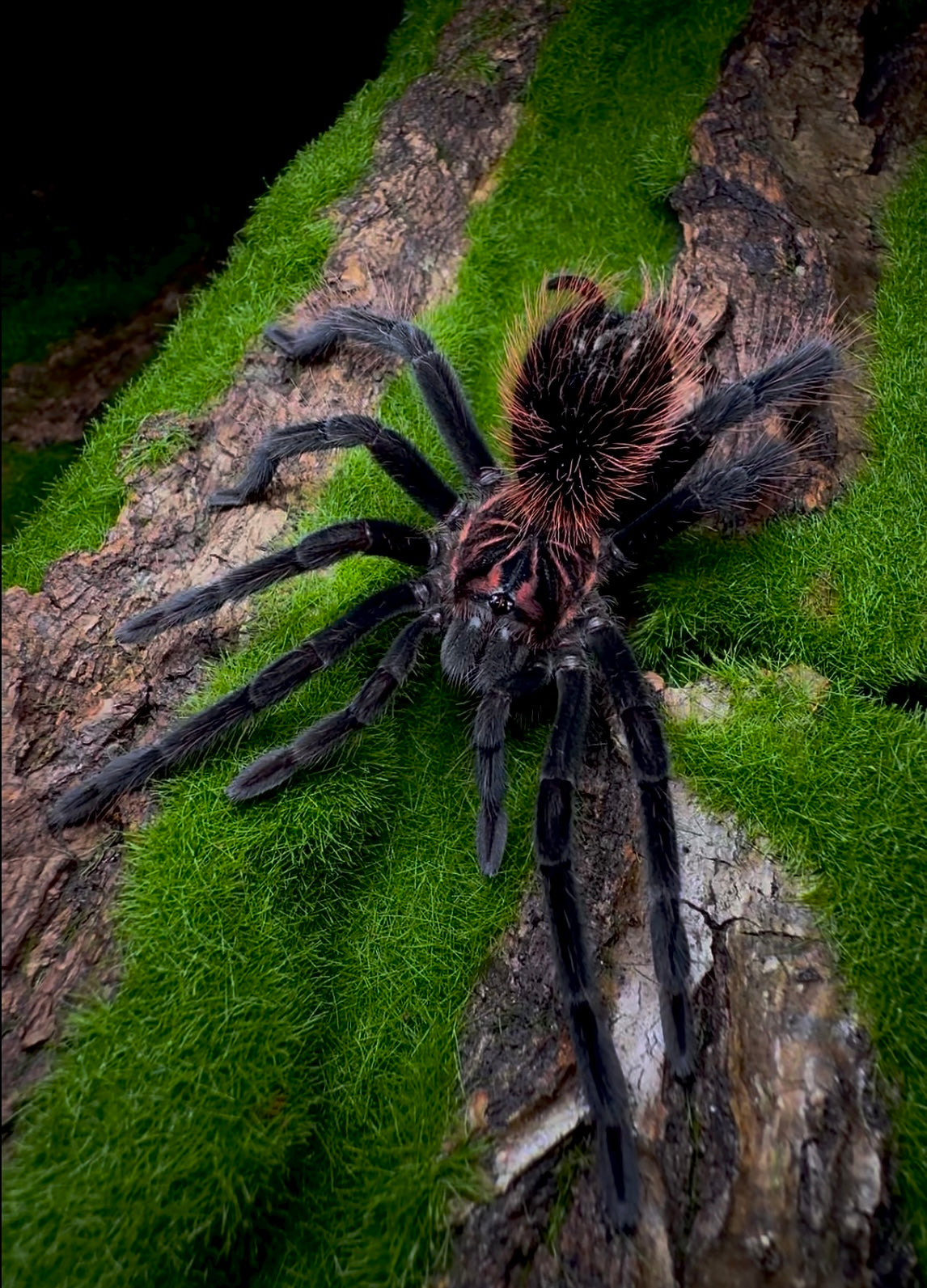
The Venezuelan Blue Bloom is an absolute BEAST! Imagine a massive, jet-black tarantula with a brilliant neon-pink starburst carapace, thick velvety legs, and an adult leg span approaching 8–9 inches! And unlike many colorful tarantulas that stay relatively small, Xenesthis intermedia combines that incredible coloration with the enormous size and heavy build of a true giant bird-eater. A large female sitting out in the open with that glowing pink carapace is something you have to see in person!
That Iconic Pink Starburst!
This is what makes X. intermedia so special. As juveniles grow, their carapace develops a gorgeous metallic pink-to-magenta starburst that contrasts beautifully against their dark body and legs. The coloration becomes increasingly impressive as they mature, especially following a fresh molt. And the males? They develop their own incredible look, with metallic blue and purple coloration across their femurs, making both sexes absolutely stunning in completely different ways!
Massive Size & Monster Feeding Response!
These guys don’t just look intimidating. They have the appetite to match! X. intermedia are fast-growing, powerful feeders that can take down surprisingly large prey. Watching a giant female launch herself onto an adult Dubia roach is one of the coolest feeding responses you’ll ever see from a terrestrial tarantula.
And with females capable of reaching 8–9” DLS, you end up with a seriously impressive animal that only gets better with size.
A Giant That’s Surprisingly Easy to Keep!
Despite their exotic appearance, Venezuelan Blue Blooms are relatively straightforward to care for. Give them a spacious terrestrial enclosure, a secure retreat, access to fresh water, and some moisture in the lower substrate. Younger specimens may dig more, while larger animals often become increasingly comfortable sitting out in the open. They can be bold and incredibly food-responsive, so I wouldn’t mistake their confidence for guaranteed docility. But for someone comfortable keeping large New World terrestrials, they’re extremely rewarding animals to raise.
A True Collector’s Xenesthis!
There are plenty of giant tarantulas in the hobby, but very few combine a neon-pink starburst, deep black coloration, metallic blue-purple males, and an enormous adult size quite like Xenesthis intermedia.
Native to Venezuela, this species is an incredible example of why Xenesthis has become such a sought-after genus among serious collectors.
If you love giant bird-eaters but want something with absolutely ridiculous coloration, the Venezuelan Blue Bloom is hard to beat!