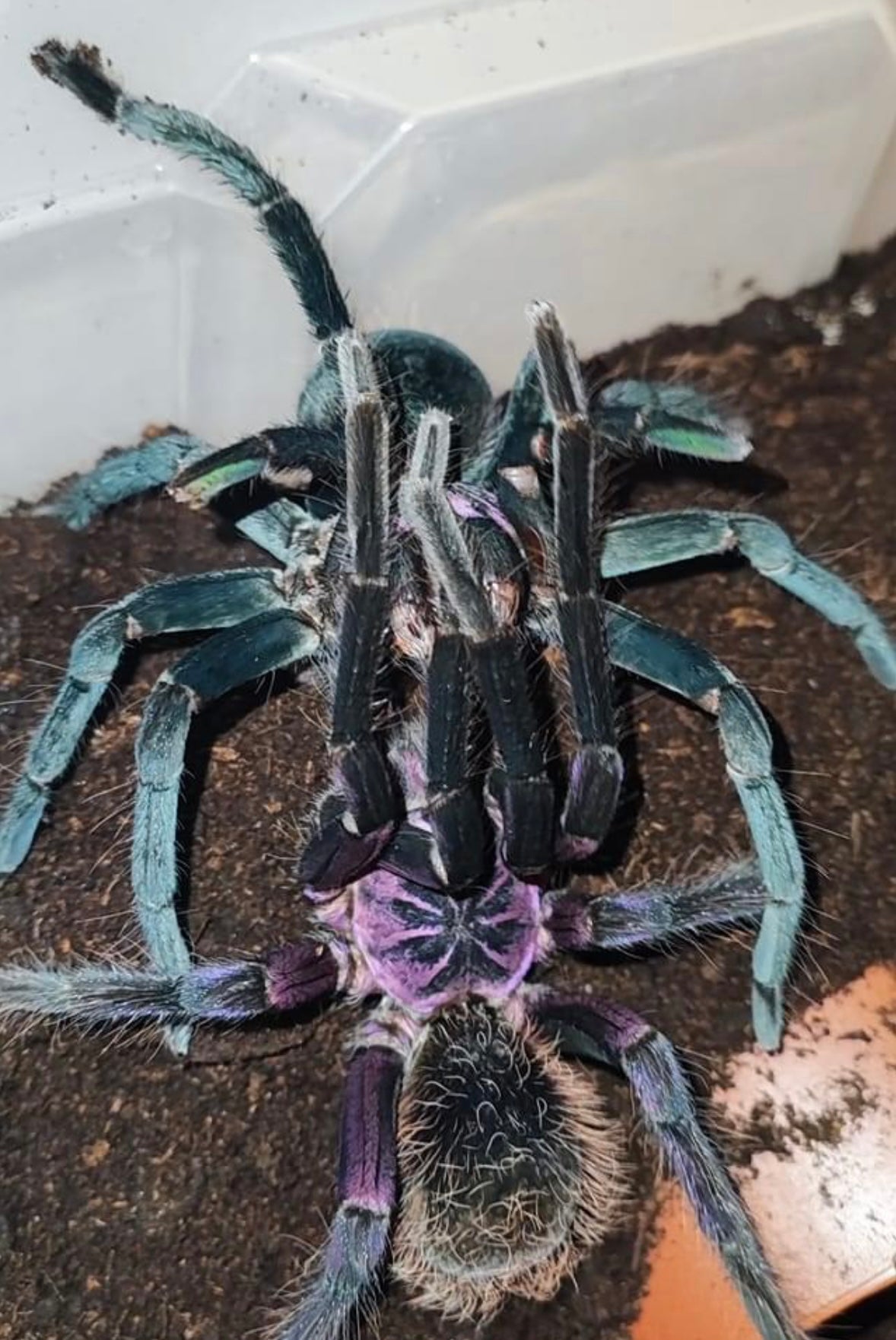
Xenesthis sp. “Light” – Shiny Colombian Bird-Eater
A Turquoise Giant Unlike Any Other!
If you’re like me and love collecting Xenesthis, you know that many species in the genus look fairly similar. Xenesthis sp. “Light” completely breaks that mold!
Imagine a massive Colombian bird-eater with shimmering turquoise-blue legs, a bright pink carapace, and an almost metallic teal sheen covering its body. Under the right lighting, the colors look absolutely ridiculous!
And we’re not talking about some tiny blue tarantula either. This monster can reach 8+ inches DLS!
The Most Colorful Xenesthis?
This is what makes the Shiny Colombian Bird-Eater so special. While many Xenesthis develop darker, more subdued coloration, the “Light” form has an unmistakable combination of turquoise, metallic blue, and bright pink.
After a fresh molt, those colors become even more impressive. The legs take on an almost polished appearance, giving this species a look that I haven’t seen in any of the other Xenesthis I’ve worked with. It’s easily one of the most visually distinct species in the entire genus!
An Absolute Colombian Heavyweight!
Looks are only half the appeal. These guys become massive, thick-bodied terrestrial tarantulas with the powerful build that makes Xenesthis so impressive. And their feeding response? Absolutely insane!
Like other giant bird-eaters, they have an incredible appetite and won’t hesitate to launch themselves at prey. Watching a large female take down an adult Dubia roach is exactly the kind of feeding response giant-tarantula collectors love.
Surprisingly Confident & Easy to Care For!
Despite their enormous size, my established “Light” specimens have been confident, relatively relaxed, and comfortable spending time out in the open.
They’re also surprisingly straightforward to care for, although their cooler mountain origins make them a little different from some tropical Xenesthis.
I prefer keeping mine around 70–75°F, with moisture available in the lower substrate and plenty of ventilation.
Extremely Rare in the U.S. Hobby!
Here’s the catch. Finding Xenesthis sp. “Light” is incredibly difficult. This undescribed Colombian form is seldom offered in the United States, and established specimens are especially hard to come across. And unlike some rare tarantulas where you need a microscope or a species label to appreciate what makes them different, the Shiny Colombian Bird-Eater practically identifies itself through its incredible coloration. For collectors trying to build a serious Xenesthis collection, this is one of those unusual forms worth keeping an eye out for.
One of My Favorite Xenesthis — Period!
Turquoise-blue legs. A bright pink carapace. An enormous 8+ inch adult size. And an incredible feeding response.
What more could you want from a giant Colombian bird-eater?
If you love Xenesthis but want something that looks completely different from the usual giants, the Shiny Colombian Bird-Eater is hard to beat!